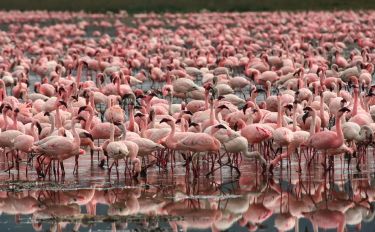
Study says red carotenoids that give the Common Crossbill its red coloration are produced in the liver, not the skin Where do birds get their red feathers from? According to Esther del Val, from the National History Museum in Barcelona, Spain, and her team, the red carotenoids that give the common crossbill (Loxia curvirostra) its red coloration are produced in the liver, not the skin, as previously thought. Their findings, published online in Springer's journal Naturwissenschaften, have implications for understanding the evolution of color signaling in bird species.Carotenoids have important physiological functions, including antioxidant, immunomodulating, and photoprotectant properties. Carotenoid pigments are also used by many bird species as colorants, and are responsible for most of their red, orange and yellow coloration. In particular, carotenoid-red coloration in birds has been shown to act as an ornament, signaling the nutritional and health status of the individual and its ability to locate high quality resources. Recent studies have suggested that the transformation of carotenoid pigments takes place directly in the follicles during feather growth.Del Val and her team show for the first time that, contrary to previous assumptions, the liver acts as the main site for the synthesis of carotenoids responsible for the birds' coloration, not the skin.The researchers examined the carotenoid content of the liver, blood, skin and feathers of seven common crossbills (finches) in which adult males display carotenoid-based coloration on the throat, breast and rump. They were particularly interested in the anatomical origin of the birds' red plumage. They found the primary red feather pigment of male crossbills in the birds' liver and blood, implying that the carotenoids are synthesized in the liver and then travel to the peripheral tissues via the bloodstream.Del Val concludes: "This surprising divergence with previous studies raises the question whether there are inter-specific differences in anatomical sites for conversion of carotenoids. Understanding inter-specific variation in mechanisms of color production may be the key to comprehend the different evolutionary pathways involved in color signaling."?Reference1. Del Val E et al (2009). The liver but not the skin is the site for conversion of a red carotenoid in a passerine bird. Naturwissenschaften DOI 10.1007/s00114-009-0534-9 SpringerWhat do flamingos and salmon have in common? Flamingos are flamboyantly colored birds, displaying startling shades of pink, red, or orange.With their bright feathers and strongly hooked bills, flamingos are among the most easily recognized water birds. Flamingos are social birds, and tens of thousands can live together in a single colony.Flamingos are one of the oldest species of birds, with fossil remains dating back 30 to 50 million years. They live in tropical and sub-tropical latitudes, either far inland or in large lakes or lagoons, such as tidal flats or mangrove swamps close to the sea.Flamingos are generally non-migratory birds, but a colony may relocate under the pressures of climate or water level changes. Populations that breed in high-altitude lakes, which may freeze over in the winter, move to warmer areas, returning to their native colony to breed. When flamingos migrate, they do so mainly at night.There are six different species of flamingo, found in locations ranging from the Caribbean and South America to Africa, India, and the Mediterranean.Lesser Flamingos at Lake Nakuru. Flamingos at a Caribbean coastal lagoon. Flamingo feather coloration ranges from pale pink to crimson according to species. The Caribbean flamingos (Phoenicopterus ruber rubber) are the brightest, showing their colors of red, pink, or orange on their legs, bills, and faces.How they feedFlamingos are filter feeders, living off algae and tiny animals such as shrimp, mollusks, and insect larvae that live in the mud at the bottom of shallow pools. Their long legs allow them to wade into deep water to forage. Their unusually shaped bill, held upside down, contains lamellae, plates that act like tiny filters to trap shrimp and other water creatures. They use their tongues to suck water in at the front of the bill and pump it out through the sides.Lesser, James, and Andean flamingos eat algae, cyanobacteria, and hard-shelled, single-celled plants. They have larger bills and stiff lamellae to filter fine particles from the water. Caribbean, Chilean, and Greater flamingos eat larger organisms, such as insects, invertebrates, and small fish, using their feet to stir up shrimp and larvae from the waterbed.Why are they pink?Flamingo feathers obtain their wonderful rosy pink color from pigments in the organisms they eat. The flamingos' feathers, legs, and face are colored by their diet, which is rich in alpha and beta carotenoid pigments.Carotenoids in crustaceans such as those in the flamingo diet are frequently linked to protein molecules, and may be blue or green. After being digested, the carotenoid pigments dissolve in fats and are deposited in the growing feathers, becoming orange or pink. The same effect is seen when shrimp change color during cooking. The amount of pigment laid down in the feathers depends on the quantity of pigment in the flamingo's diet. An absence of carotenoids in its food will result in new feather growth that is very pale; the existing pigment is lost through molting.Captivity and feedingFlamingos in captivity require a special diet to ensure they preserve their striking colors. Zoos like the San Diego Zoo and Animal Park use special flamingo pellets enriched with pigment. Captive flamingos also require water so that they can eat by pumping water through their bills, as they do in the wild. Flamingos at San Francisco Zoo. In the wild, flamingos eat algae, crustaceans, brine shrimp, diatoms, and aquatic plants. At the zoo, a special "flamingo fare" is served. To preserve their rosy color at the zoo, flamingos are fed a commercially prepared diet high in carotenoids. Initially, zoos fed carrots, red peppers, and dried shrimp to flamingos, but it was found that if synthetic canthaxanthin was added to their feed, nesting and breeding were more successful.What do zoo flamingos and farmed salmon have in common?Both salmon farmers and zookeepers rely on doses of a carotenoid, such as canthaxanthin or a similar pigment, to keep fish and flamingos colorful. In both cases, this pigment is responsible for mimicking the color found naturally in wild species. In zoos, flamingos need a diet rich in carotenoids to maintain their distinctive plumage. Carotenoids also occur in mollusks and crustaceans, so flamingos may be fed shrimp and clams. Spoonbills and pink ibis also rely on ingested carotenoids for their coloring. Salmon and trout owe their pink color to carotenoids deposited in their body fat. In fish farms and bird parks, carotenoids are added to the feed to create a pleasing pink color, but this has no effect on palatability or health. A synthetic "nature-identical" version of the carotenoid astaxanthin has been developed, and it is also possible (but expensive) to obtain commercial quantities of the natural color from cultured yeast and algae.


