Showing posts with label Invasive species. Show all posts

Monday, May 31, 2010

Are Invasive Species Bad? Not Always, Say Researchers


New research at Brown University challenges the notion that invasive species can't coexist with native animals. The researchers studied the Asian shore crab, which has proliferated along the Atlantic shore. In a paper in Ecology, the team explains why the crab has been successful in its new home without hurting native species.

In 1988, a mysterious invader washed upon the New Jersey shore. The Asian shore crab likely arrived in ballast from commercial ships, and it found its new home to be quite agreeable. More than two decades later, the crab, Hemigrapsus sanguineus, has expanded its range along the Atlantic coast northward to Maine and southward to North Carolina. Its numbers continue to expand, and wildlife biologists have found them in greater densities along New England's cobbled shores.

Another tale of an invasive species conquering a native ecosystem? Not so fast, says Andrew Altieri, a marine ecologist at Brown University and the author of a new paper in Ecology that scrutinizes the crabs' success. Altieri and colleagues have found that the Asian shore crab has found a hospitable niche in its new environs and in fact gets along just fine with native species. While the crab has exploited the conditions set up by the native cordgrass and ribbed mussels that dominate the cobbled beach ecosystem, it does not appear to do so at the expense of other species that call the shoreline home.

"Usually, when you think of invasions," Altieri said, "you think it will be bad. Yet we found here a situation where that doesn't occur. We've found a place where the natives and invasives get along quite well."

Altieri and team members Bregje van Wesenbeeck, a visiting scholar at Brown from the Dutch environmental research institute Deltares, and Mark Bertness, chair of the Department of Ecology and Evolutionary Biology at Brown and Altieri's adviser, counted crabs, which measure about 1 1/2 inches wide, at four sites on Narragansett and Mount Hope bays in Rhode Island in summer 2003-2004. They found crab density (an indicator of their numbers) to be highest where cordgrass and ribbed mussels proliferated. Crab density was more than 100 times higher in those areas compared to spots along the beaches where cordgrass or mussels were missing. The crabs have found their transplanted home so inviting that their populations are denser in North America than in their native range in Asia.

>From the field observations, the team, which also included Brian Silliman from the University of Florida, determined the Asian shore crab took advantage of the moist, shady environment created by the cordgrass and the mussels. In ecological terms, the researchers found a "facilitation cascade." The cordgrass attracts ribbed mussels by giving the molluscs something to attach themselves to as well as a shady spot; the mussels, in turn, give the crabs crevices in which to avoid predators as well as the harsh sun. The cordgrass also provides valuable shade for the crabs.

"It's a moist, stable environment in an otherwise harsh environment," Altieri said. "It's the key to their success, the reason why they're so abundant."

The team found that the crabs' exploitation of their habitat did not crowd out native species, such as the common periwinkle, small crustaceans, blue mussels and barnacles. Indeed, the field studies showed the more invasive crabs, the greater the number of native species.

In other words, the cordgrass-ribbed mussel environment has enough room to accommodate another tenant. "They may be promoting co-existence," Altieri said, "allowing for this ecosystem to absorb a new species."

Previous research suggests the crabs do prey upon juvenile American lobsters, and the Brown scientists also want to study whether the crabs eat other crab species.

The research also seems to highlight the importance of cordgrass to provide shade, a service to species that may grow even more important with warming air and water temperatures forecast to accompany changes in the climate.

The research was funded by the National Oceanographic and Atmospheric Administration, the Rhode Island Sea Grant program and the Dutch Royal Academy's Schure-Beijerinck-Popping fund.

Friday, May 14, 2010

Invasive 'Tunicate' Appears in Oregon's Coastal Waters


An aggressive, invasive aquatic organism that is on the state's most dangerous species list has been discovered in both Winchester Bay and Coos Bay, and scientists say this "colonial tunicate" -- Didemnum vexillum -- has serious economic and environmental implications.

Its propensity to foul surfaces of boats, fishing nets, water intakes, docks and buoys could make it costly to control, and its ability to smother shellfish beds and sensitive marine environments threatens other marine life.

"This is not a welcome addition to our bays and now the clock is ticking," said Sam Chan, an invasive species specialist from Oregon State University and chair of the Oregon Invasive Species Council. "The fouling potential from tunicate invasions can be severe, given its ability to reproduce asexually by budding, or breaking off as fragments, and through sexual reproduction where tadpoles emerge, swim and attach themselves to surfaces to form new colonies.

"Didemnum vexillum was found in Puget Sound several years ago and the expense for treating this invasive species can be quite high," added Chan, who is affiliated with the OSU-based Oregon Sea Grant Extension program. "So it is important to determine how widespread the invasion may be."

A team of scientific divers, coordinated by the Oregon Coast Aquarium, will begin looking in Newport's Yaquina Bay -- and perhaps other locations -- for colonies of Didemnum vexillum.

The Didemnum invertebrates were first discovered in Winchester Bay, and later in Coos Bay. They are native to Japan and can live from the estuary to the continental shelf. In calm water, colonies may grow in long, beard-like expanses on substrates such as docks, mooring lines, boat hulls and aquaculture infrastructure.

In faster currents, Didemnum forms low, undulating mats overgrowing seabeds of pebbles, boulders and jetty rock. The organisms will grow over, and choke clams, oysters, mussels, anemones and other marine creatures by covering their feeding siphons, and can serve as a barrier between bottom-feeding fish and their prey.

What most concerns scientists, Chan said, is that the tunicates' reproduction cycle begins during the next two months, increasing the chances that colonies will spread. Didemnum is on the list of "100 Worst Invasive Species to Keep out of Oregon."

Between 2007 and 2009, the Washington State Department of Fish and Game spent $850,000 managing the tunicate invasion in Puget Sound, Chan pointed out.

The Winchester Bay tunicate patch was discovered earlier this year by Lorne Curran and Fritz Batson, while Curran was surveying marine life for the organization, REEF. They spotted the organisms in an area called "the triangle" -- an enclosed portion of the lower bay shaped like a wedge of pie. Curran photographed the tunicates, and contacted Chan, who then shared the images with tunicate expert Gretchen Lambert, and others, who confirmed the identification.

On April 26, Curran and several divers from the Oregon Coast Aquarium surveyed nearby Salmon Harbor Marina in Winchester Bay to see if the invasion had spread across the bay -- and to their relief, it had not. But that relief was short-lived when they returned to the triangle and found that the tunicate colonies appeared to be thriving.

"It appears that the infestation is growing rapidly," Curran said. "Where in February I saw mostly one-foot-square colonies, this time I encountered more colonies that were two-foot to three-foot square." The tunicates were found on both jetty rocks and on some of the mooring lines and "stringers" of an oyster-growing facility in the triangle.

As Chan was working with scientists, community officials and divers on the Winchester Bay discovery, he received word that a second invasion had been discovered by University of Oregon scientist Richard Emlet in the Charleston Boat Basin in Coos Bay. Emlet notified Oregon Department of Fish and Wildlife shellfish biologist Scott Groth, who contacted Chan.

"Based on the size and morphology of both Didemnum vexillum populations, we think they probably became established at roughly the same time -- about two years ago," Chan said. "The origin is still unclear and we have to be careful not to point fingers."

Chan said tunicate infestation can be introduced through a variety of vectors, including boats and aquaculture.

The Oregon Department of Fish and Wildlife is in the final stage of a risk assessment. When completed, recommendations will be made and an action plan developed.

"We're reviewing the literature for successful eradication projects on rocky outcrops or jetties, but we're not finding a lot," said Rick Boatner, ODFW's aquatic invasive species coordinator. "This is new ground for Oregon, and we'll have to be creative with our solutions."

Chan and ODFW officials say the best approach may be to establish a pilot "adaptive learning" control and monitoring project within the triangle in early summer before water temperatures warm enough to trigger the tunicates' reproductive cycle. Support for such a project may come through an "Invasive Species Control" fund established by the Oregon Legislature and signed by Gov. Ted Kulongoski in 2009. The Oregon Invasive Species Council must declare an emergency to activate this account, Chan said.

Possible methods of eradication include "smothering" the colonies, physically removing them and vacuuming all traces, or applying a vinegar and/or bleach solution. The Oregon Invasive Species Council will hold workshops in affected coastal communities later this spring to inform the public about tunicates before the pilot control project begins.

Vallorie Hodges, dive safety officer for the Oregon Coast Aquarium, said the Winchester Bay tunicates resembled certain species of soft corals.

"The colonies I observed were all of that cream color and had a sort of undulating soft, lobed or folded appearance in some areas," she said, "while more of a flat mat in others. I saw them not only on the mooring lines (of the oyster facility) but also on the stringers themselves -- and on the shellfish."

Despite their invasive nature and ability to "foul" marine structures, tunicates also are being studied as a natural product for unique compounds that may have biomedical applications.

Friday, April 16, 2010

Aquatic Ecosystems Threatened by the Size of Non-Native Fish


Fish introduced into rivers by human intervention over the past 150 years have modified the average body size of fish assemblages in many areas of the world. A study conducted by researchers from CNRS, the University of Toulouse, IRD and MNHN, as well as the universities of Antwerp (Belgium) and Utrecht (the Netherlands), shows that non-native fish are larger than native species by an average of 12 cm.


This modification in the size structure of fish assemblages poses a serious risk in terms of the alteration of aquatic ecosystems. The results of the project are published in the April 2010 issue of Ecology Letters.
Since the Neolithic era, human beings have been transporting and introducing new species. This practice has accelerated over the past 150 years along with the development of transportation methods and international trade. The phenomenon extends to freshwater fish, several hundred species of which have been introduced throughout the world, either unintentionally or for food or recreation purposes.
By cross-referencing data on the fish present in 1,050 river basins around the world, researchers at the University of Toulouse, CNRS, IRD and MNHN, as well as the universities of Antwerp (Belgium) and Utrecht (the Netherlands), have determined that the fish species introduced by human intervention are an average of 12 cm larger than the species naturally present in these rivers, which increases the average body size of the fish assemblages in a given river by about 2 cm. This modification affects, to a moderate but significant degree, Bergmann's empirical rule. A general rule that applies to most living beings, it expresses the fact that the farther an organism lives from the equator, the greater its body mass. This principle is the result of the joint evolution of species and their environment over millions of years, and, as this research reveals, humankind seems to be in the process of altering its profile.
Beyond these historical considerations, the introduction of species whose ecological characteristics differ from those of the native species can also affect the functioning of the ecosystem. Some of the larger species widely introduced throughout the world are predators (trout, black bass, catfish, etc.) whereas others are detritus feeders or herbivorous (carp, tilapias, etc.). These ecological characteristics are likely to modify the food chain or the recycling of organic matter. Modifications in the average body size of assemblages observed in river basins on a global scale could thus go hand-in-hand with modifications in the functioning of aquatic ecosystems. S. Blanchet, G. Grenouillet, O. Beauchard, P. A. Tedesco, F. Leprieur, H. H. Dürr, F. Busson, T. Oberdorff; S. Brosse. Non-native species disrupt the worldwide patterns of freshwater fish body size: implications for Bergmann's rule. Ecology Letters, April 2010

Friday, February 12, 2010

Divers, Fishermen Battle Keys Lionfish Invasion


An unwanted visitor has show up in the Florida Keys and now the locals are trying to figure out the best way to get rid of it or at least minimize the damage it can cause.

The lionfish, native to waters of the Pacific and Indian Oceans, is a beautiful but highly venomous invasive species that is slowly begun spreading throughout the Florida Keys, wreaking havoc to the fragile reef system.

More than eighty have been documented in the last year from Key Largo to the Dry Tortugas, all have been juveniles. The fish, which can grown to 18 inches has no known predators and is a voracious eater.

When divers and fishermen first spotted the lionfish in the Keys about a year ago, it was pretty much expected, according to CBS4 news partners The Miami Herald. The highly territorial fish was first spotted off Miami in 1985. Since then it has spread throughout the Caribbean and the eastern seaboard.

Marine researches believe the original invaders came from aquariums. Keys environmental groups worry that the lionfish could severely damage their fragile coral reef system. Since lionfish eat just about any kind of juvenile fish at an alarming rate, not only do they decimate the populations of those species but also species like grouper and snapper because they take away their food source. They also eat fish that perform the vital task of cleaning the reef.

Since they have no known predators, marine experts, fishermen, researchers and divers are working together in an effort to stop them from spreading. Divers and fisherman are being urged to report any lionfish they may spot. Specially trained volunteers will then be sent out to try and capture them.

In a rare move the National Oceanic Atmospheric Administration (NOAA), which oversees Florida Keys National Marine Sanctuary, has issued permits to trained volunteer dives so they can remove lionfish from the sanctuary's 18 no-take zones.

Tuesday, February 02, 2010

Giant Squid Invading Newport Beach, California


Giant squid weighing up to 60 pounds have invaded the California waters off Newport Beach and are being caught by sport fishermen by the hundreds. The squid showed up last week and anglers started booking twilight fishing trips over the weekend to catch them. The animals weigh between 20 and 40 pounds, but a few fishermen have reeled in 60-pound creatures. The Humboldt squid is also called the jumbo squid or jumbo flying squid and squirts ink to protect itself. They can grow up to 100 pounds and 6 feet long and follow food sources. The squid have also recently been spotted off San Diego, Oregon and Washington. Robert Woodbury with Newport Landing Sportfishing says anglers in Orange County have caught about 400 of the big squid since Friday night.

Monday, February 01, 2010

Global Warming Brings Foreign Sea Creatures To Chile's Coast


“I felt a rush and a little fear when I saw it,” said Chilean surf champion Diego Medina after spotting what appeared to be a shark off the beaches of La Serena (Region IV). In reality, the creature was one of the large swordfish species that recently migrated to Chile's shores as a consequence of warming water currents. The swordfish is just one of several species that have migrated from afar to Chile due to global climate change. Spanish marine experts have been tracking the sudden southward migration of swordfish from tropical seas since June 2009.
Swordfish, not native to Chile’s coasts, are beginning to make an appearance due to climate change. Photo source: www.todosanimales.info
This summer has seen an unusually high number of unfamiliar wildlife sightings at many of Chile's beaches. Scientists blame El Nino, the environmental phenomenon that increases sea temperatures and consequently alters the sea’s ecosystems.
Due to climate changes, “cold-inclined sea animals are arriving to our shores from waters that at one time were much cooler,” said marine biologist Carlos Gaymer. There is also an alarming case of jellyfish proliferation that has affected northern, central, and parts of southern Chile, added Gaymer. Earlier this month, swarms of jellyfish in Region X forced the closure of several Osorno beaches (ST, Jan. 6).A large population of sea turtles that normally do not inhabit Chile’s coastline have also been making an appearance. “It's common to see an influx new species from distant areas when their previous environment is no longer habitable because of temperature increases,” warned Universidad de Antofagasta marine researcher Carlos Guerra. The oceans' warming is also taking its toll on local marine plant life. In some areas of Region V, biologists reported an overgrowth of “luche verde” algae, which has rendered many beaches dirty and foul-smelling. Another explanation for the seaweed's proliferation is excessive industrial activity along Chile's coast, which creates more space for the growth of invasive species, said Andres Bello University aquaculture engineer Ana Maria Mora. SOURCES: ABC ESPANA, LA TERCERABy Kamille Go (editor@santiagotimes.cl)

Thursday, January 14, 2010

Tilapia Feed on Fiji's Native Fish


The poster child for sustainable fish farming -- the tilapia -- is actually a problematic invasive species for the native fish of the islands of Fiji, according to a new study by the Wildlife Conservation Society and other groups.

Scientists suspect that tilapia introduced to the waterways of the Fiji Islands may be gobbling up the larvae and juvenile fish of several native species of goby, fish that live in both fresh and salt water and begin their lives in island streams.

The recently published paper appears in Aquatic Conservation: Marine and Freshwater Ecosystems. The authors include: Stacy Jupiter and Ingrid Qauqau of the Wildlife Conservation Society; Aaron P. Jenkins of Wetlands International-Oceania; and James Atherton of Conservation International.

"Many of the unique freshwater fishes of the Fiji Islands are being threatened by introduced tilapia and other forms of development in key water catchment basins," said Dr. Jupiter, a co-author of the study and one of the investigators examining the effects of human activities on the native fauna. "Conserving the native fishes of the islands will require a multi-faceted collaboration that protects not only the waterways of the islands, but the ecosystems that contain them."

The most surprising finding of the study centers on the tilapia, a member of the cichlid family of fishes from Africa that has become one of the most important kinds of fish for aquaculture, due in large part to its rapid rate of growth and palatability. Aside from its value as a source of protein, the tilapia is sometimes problematic to native fish species in tropical locations.

To gauge the impacts of tilapia and other human activities on native fish species in the Fiji Archipelago, researchers surveyed the fish species and other denizens of 20 river basins on the major islands of Vitu Levu, Vanua Levu, and Taveuni. In addition to catching and identifying fishes with gill and seine nets, the scientists also rated other environmental factors such as: the potential of erosion due to loss of forest cover and riparian vegetation; road density near rivers and streams; the distances and complexity of nearby mangroves and reefs; and the presence or absence of invasive species (tilapia mainly).

The team found that streams with tilapia contained 11 fewer species of native fishes than those without; species most sensitive to introduced tilapia included the throat-spine gudgeon, the olive flathead-gudgeon, and other gobies. In general, sites where tilapia were absent had more species of native fish.

Since tilapia are known to consume the larvae and juvenile fish, the researchers assume that the introduced species may be consuming the native ones as they make their way upstream and down. Absence of forest cover adjacent to streams was also correlated to fewer fish species.

Based on the spatial information compiled in the study, the researchers found that remote and undeveloped regions -- with waterways containing a full complement of native species and no tilapia -- on the three islands should be considered priority locations for management. The main management activities, the authors recommend, should include conserving forests around waterways and keeping the tilapia out.

"Protecting marine and aquatic biodiversity takes more than managing isolated rivers or coral reefs," said Dr. Caleb McClennen, Director of the Wildlife Conservation Society's Marine Program. "A holistic conservation approach is needed, one that incorporates freshwater systems, the surrounding forest cover, coastal estuaries and seaward coral reefs. As aquaculture continues to develop worldwide, best practices must include precautionary measures to keep farmed species out of the surrounding natural environment."

Friday, December 11, 2009

Asian carp raises fear and loathing on Great Lakes


After nearly four decades as a fishing guide on the Great Lakes, Pat Chrysler has seen enough damage from invasive species to fear what giant, ravenous Asian carp could do to the nation's largest bodies of freshwater."It's like introducing piranhas to the Great Lakes," Chrysler said from South Bass Island in Lake Erie, which teems with walleye, perch and other fish that draw anglers from near and far.Federal and state officials are mounting a desperate, last-ditch effort to prevent the marauding carp from breaching an electrical barrier and slipping into the Great Lakes from the Mississippi River. Michigan is drawing up a lawsuit demanding the closing of shipping locks between the lakes and the Mississippi. And last week, Illinois officials poisoned a 6-mile stretch of a canal to wipe out any of the carp.The prospect of a carp invasion alarms environmentalists and people whose livelihoods depend on a strong fishing and tourism economy, from charter boat skippers to those who sell bait and tackle, rent personal watercraft and operate lakefront restaurants and motels. The Great Lakes fishing industry alone is valued at $7 billion a year."I'm afraid they can wipe us out in a hurry," said Jim Conder, a charter boat operator on Michigan's St. Joseph River, which flows into Lake Michigan. "We need to spend all we can to keep them out."Over the years, parasitic sea lampreys, zebra mussels and other invasive species have killed trout and birds, left prized salmon and whitefish skinnier, and done other damage to the lakes.Now, many fear that the despised Asian carp, which can reach 4 feet long and weigh up to 100 pounds, will wreak havoc, too — not by attacking native fish, but starving them out by gobbling up plankton.The carp were imported from Asia to cleanse fish ponds and sewage lagoons in the Deep South but escaped into the Mississippi and have been working their way north since the 1970s.Much is unknown about what will happen — and how quickly — if they conquer the Great Lakes. But the carp's ability to take over is evident in places like the Illinois River, where it has caused native fish such as gizzard shad and bigmouth buffalo to go hungry.

Thursday, December 03, 2009

Fears mount over giant carp reaching Great Lakes


Fears that giant, voracious species of carp will get into the Great Lakes and wipe out other fish have led to rising demands that the government close the waterway connecting the lakes to the Mississippi River — an unprecedented step that could disrupt the movement of millions of tons of iron ore, coal, grain and other goods.The dispute could become an epic clash of competing interests: commerce, environmentalists and fishermen.Michigan Gov. Jennifer Granholm and five environmental groups threatened on Wednesday to sue the U.S. Army Corps of Engineers to force it to temporarily shut three shipping locks near Chicago because of evidence that Asian carp may have breached the electrical barrier that is supposed to hold them back from the lakes.The environmental groups went further than the governor and said the Great Lakes and the Mississippi should be permanently separated to avert what Granholm called "ecological disaster."Col. Vincent Quarles, commander of the Corps' Chicago district, said the agency is considering all options but would not close the locks without first studying the possible effects.Environmentalists fear that the fish, which consume up to 40 percent of their body weight daily in plankton, could starve out smaller and less aggressive competitors and cause the collapse of the $7 billion-a-year Great Lakes sport and commercial fishing industry.The carp — which can grow to 4 feet long and 100 pounds and are known for leaping out of the water when boats are near — were imported by Southern fish farms but escaped into the Mississippi in large numbers during flooding in the 1990s and have been making their way northward ever since.The Mississippi and the Great Lakes are connected by a complex, 250-mile network of rivers and canals engineered more than a century ago. It runs from Chicago, on the southern edge of Lake Michigan, to a spot on the Mississippi just north of St. Louis.The American Waterways Operators, a trade association representing the tug and barge industry, said closing the locks would lead to higher shipping costs because commodities would have to be sent overland via truck or train across Illinois before being put back onto vessels."The impact is going to be large," said Lynn Muench, the group's senior vice president for regional advocacy in St. Louis. "It could definitely impact day-to-day living."Tens of millions of tons of goods are moved annually along the shipping canals or through the locks that lead into Lake Michigan. Muench had no estimate of the value of the cargo, which includes salt, sugar, molasses, cement, scrap metal and petroleum.In the continuing struggle to keep the fish out, Illinois environmental officials planned to dump poison Wednesday night in a nearly six-mile stretch of the Chicago Sanitary and Ship Canal near Lockport to kill off the carp while the electrical barrier is turned off for maintenance. Crews planned to use large cranes with nets to scoop up an estimated 200,000 pounds of dead fish, which will be taken to a landfill.The electrical barrier, which was installed in 2002 to repel fish with a non-lethal jolt, has long been the only thing standing between the carp and Lake Michigan, the gateway to the four other lakes. But officials said two weeks ago that DNA from Asian carp had been found between the barrier and one of the locks on the lake. No actual carp have been found in Lake Michigan.Environmentalists and Granholm said the locks should be closed while the scope of the problem is established."This is an immediate threat to the Great Lakes, to our sport and commercial fishery, and as such it requires some emergency actions appropriate to the level of that threat," said Ken DeBeaussaert, director of Michigan's Office of the Great Lakes. "Closing the locks to prevent the possible spread of the Asian carp into the Great Lakes is an appropriate response on an emergency basis."The environmental groups also said the government should find a way to permanently separate — through physical barriers or other means — the Great Lakes and Mississippi watersheds so the invasive species has no way of passing between the two.Last fall, environmental groups offered several possible solutions, including erecting concrete walls, constructing more locks, even lifting barges over the locks.The issue "takes on a whole new urgency because of the Asian carp emergency," said Andy Buchsbaum of the National Wildlife Federation. "We don't know where the carp are, and the risk of their being in the canals is too great." Some fishing enthusiasts doubt the government will consider closing the locks. Dan Thomas, president of the Elmhurst, Ill.-based Great Lakes Sport Fishing Council, said too many industries and too many jobs would probably be affected. "Ideally it's the way to go, but many things that are ideal don't always come to fruition because there are too many other circumstances," he said. "They can still be contained, but only with concerted effort and a sense of urgency to do what is necessary on a timely basis." Scientists say more than 180 invasive species have entered the Great Lakes, multiplying rapidly and feeding on native species or competing with them for food. Millions of dollars have been spent trying to control the zebra mussel and the round goby fish, which already have moved between the Great Lakes and Mississippi River basins.

Monday, August 31, 2009

Devon river team's piranha shock


With razor-sharp teeth, a shoal can strip an entire animal in minutes A "killer" fish native to South America has been found in a Devon river.The Environment Agency said its staff were amazed to find a dead piranha in the East Okement tributary of the River Torridge. The piranha, which has razor-sharp teeth, is generally considered to be the most ferocious freshwater fish in the world. The 35cm (14in) fish was spotted by Bob Collett, Dave Hoskin and Eddie Stevens during a sampling trip on the river. Among the species the team would have expected to find in the river were salmon, brown trout, bullheads, stone loach and minnow. "What we actually discovered was something we would not expect to find in our wildest dreams - we could hardly believe our eyes," Mr Stevens said. "After completing 20m of the survey, a large tail emerged from the undercut bank on the far side of the river. "Our first thought was that a sea trout had become lodged in amongst the rocks and debris collected under the bank, but when it was removed from the river we were speechless to find it was a piranha." Tests carried out on the dead piranha revealed it had been eating sweet corn, which proved it must have been kept as a pet. The fish is thought to have been alive when it was dumped The Environment Agency said the average size of a piranha was 15 to 20cm (6in to 8in), making the fish found on the East Okement an exceptional size. A shoal of piranha fish is said to be able to strip the flesh of large animals within minutes. They have also been known to attack humans. In the wild, piranhas are found in the Amazon basin, in the Orinoco and the rivers of the Guyanas. The Environment Agency said it believed the piranha was alive when it was put in the river, possibly because it had become too big for its tank. Spokesman Paul Gainey said: "Whilst piranhas can't survive the colder climates of the UK, this latest find highlights a real issue - that releasing unwanted exotic pets or plants into rivers can have serious consequences for native wildlife. "Rather than dumping things in the wild, we would urge people to seek advice about what to do with exotic species." BBC

Tuesday, August 25, 2009

Northwest fears that invasive mussels are headed its way


Highly invasive mussels are lurking on the Northwest's doorstep, threatening to gum up the dams that produce the region's cheap electricity, clog drinking water and irrigation systems, jeopardize aquatic ecosystems and upset efforts to revive such endangered species as salmon.Despite efforts to stop them, the arrival of zebra and quagga mussels may be inevitable.Some scientists say the mussels could arrive within five years. Others say the mussels' larvae already may be spreading undetected, though no one is sure whether they'll survive or thrive in the Northwest's rivers, streams and lakes."They are getting closer and closer," said Jim Ruff of the Northwest Power and Conservation Council . "They are a huge concern."The mussels are among the fastest-spreading invasive species to arrive in the United States . The invasion began in the late 1980s in the Great Lakes , probably arriving in the ballast water of freighters that had been in the Caspian Sea .Originally from Eastern Europe and the Ukraine , the mussels now have been found in 22 states — including California , Nevada and Utah — and two Canadian provinces. They're in the Great Lakes and the Mississippi , Ohio , Cumberland , Hudson and a handful of other rivers. They've also infected the Colorado River system, on which 27 million people rely for drinking water, irrigation, hydropower and recreation.In May, a 26-foot boat on a trailer that had been on Lake Mead outside Las Vegas , on the Nevada - Arizona border, was stopped near Spokane, Wash. The mussels covered its bottom."If someone offered to bet me they would be in the Northwest within five years, I'd take it," said Stephen Phillips , a senior program manager with the Pacific States Marine Fisheries Commission , which was established by Washington state , Oregon , California , Idaho and Alaska to support activities that conserve, manage and develop marine resources.The mussels reproduce prodigiously. One study cited by the U.S. Geological Survey found that a single mussel can produce 1 million eggs a year.The fertilized mussel larvae float through the water, feeding on tiny phytoplankton and beginning to grow. Juvenile mussels attach themselves to just about anything solid, including the hulls of boats and barges, which spread them even farther.At one Michigan power plant, the mussels were found in densities of 700,000 for roughly every square yard and in layers a foot thick. According to the USGS, navigational buoys have sunk under their weight, and small mussels have been known to get into the engine cooling systems of boats."The history of these mussels is they keep moving into new territory," said Fred Nibling Jr. , of the Bureau of Reclamation's Ecological Research and Investigations Group in Denver . Nibling recently briefed members of the Northwest Power and Conservation Council , which oversees the development of comprehensive plans to meet the region's energy needs and restore salmon runs."They will become part of our life, just like rust," Nibling said.Power managers in the Northwest are especially concerned because the region has the most extensive hydroelectric system in the nation. Nearly half the wholesale power sold in the Northwest is produced at the 31 federal dams operated by the Bureau of Reclamation and the U.S. Army Corps of Engineers on the Columbia and Snake rivers and their tributaries.The dams produce enough electricity to power 20 cities the size of Seattle . Among them is Grand Coulee Dam , which ranks fifth in the world in terms of energy production. Grand Coulee also has made the Columbia Basin Irrigation Project possible, which has turned roughly 600,000 acres of central Washington desert into some of the nation's most productive agricultural land.Dam operators also are concerned that the mussels could clog fish ladders and other facilities that allow endangered salmon to bypass dams' spillways and turbines. The mussels' edges are sharp, and fish ladders could become a hazard for salmon."They could slice and dice the salmon," said Ruff of the Northwest Power and Conservation Council .That's not the only problem, however. The mussels filter microscopic organisms out of the water. An individual mussel can filter a quart of water a day. Some scientists think that the clearer water in Eastern rivers and lakes is as much a result of the mussels filtering the water as it is of environmental cleanup efforts. The microscopic organisms are at the bottom of a complicated food chain and the invasive mussels could disturb it, affecting animals farther up the chain. "It's a huge threat to the entire ecosystem of the Northwest if they get in here," Ruff said. If the mussels do arrive in the Northwest, fixing the problem won't be cheap or easy. The Coast Guard has estimated that economic losses and control efforts in states that already are infected cost $5 billion a year. Initial estimates for fighting the mussels on the federal Columbia River dams are nearly $25 million , with additional annual maintenance costs. Most of the efforts elsewhere have focused on painting with anti-fouling marine paint or using the small, slow release of diluted chlorine to kill the mussels. Because of endangered salmon, steelhead and other species, those approaches may be too toxic and would require federal permits in the Northwest, however. Other possibilities that are being tested include using bacteria, sound vibrations, ultraviolet light, electrical current, high-intensity water jets or hot water to kill the mussels. They also can be removed manually. For now, officials are watching and waiting. All four Northwestern states are checking recreational boats that come into the region on trailers, with special attention to those from Nevada or Arizona . Idaho has the most aggressive program: It checks every boat that comes into the state. Other states have launched similar efforts. California reportedly is using mussel-sniffing dogs.

Thursday, August 13, 2009

Round Goby invade Great Lakes


Canadian scientists uncover alarming invasion of round goby into Great Lakes tributaries: impact on endangered fishes likely to be serious.A team of scientists from the University of Toronto, the Ontario Ministry of Natural Resources and the University of Guelph has identified a drastic invasion of round goby into many Great Lakes tributaries, including several areas of the Thames, Sydenham, Ausable and Grand Rivers. A number of the affected areas are known as "species-at-risk" hot spots."This invasion poses many potential threats for native species of fish and mussels," says Mark Poos, a PhD Candidate in U of T's Department of Ecology and Evolutionary Biology. Poos is lead author of the study published recently in the international journal Biological Invasions. Up to 89 per cent of fish species and 17 per cent of mussel species are either known or suspected to be affected by the goby invasion. Of particular concern is the impact on species that have a conservation designation, including such endangered species as the small eastern sand darter fish and mussels such as the wavy rayed lampmussel.The Great Lakes and its tributaries are Canada's most diverse aquatic ecosystems, but are also the most fragile, notes Poos. Several of these rivers hold species found nowhere else in Canada, including 11 endangered species and two threatened species. Furthermore, the round goby, an aggressive ground-feeder, is a threat to three globally rare species: the rayed bean, northern riffleshell and snuffbox mussels. University of Toronto

Friday, August 07, 2009

Marine Pest Species Costing Billions In Damage To Fisheries, Coastal Communities And Infrastructure Are Spreading


Marine pest species costing billions in damage to fisheries, coastal communities and infrastructure are spreading as the world’s shipping nations continue to largely neglect bringing into effect an international treaty setting out requirements for consistent handling and treatment of ships’ ballast water.


Silent Invasion, a new report issued by WWF as International Maritime Organization (IMO) delegates met to consider environmental aspects of shipping in London July 13, details 24 cases where significant marine pests were most likely introduced or spread through discharges of ships ballast water during the five years in which the Convention on the Control and Management of Ship’s Ballast Water and Sediments was ratified by only one of the world’s top ten shipping states.
In that time, the North American comb jellyfish that virtually wiped out the anchovy and sprat stocks in the Black Sea in the 1990s has been expanding in the Caspian Sea, North Sea and the Baltic Sea.
The Chinese mitten crab has established itself on both sides of the north Atlantic and is estimated to have caused damage to river banks, fishing gear and industrial water systems to the tune of €80 million in Germany alone.
“The IMO Ballast Water Convention provides the set of agreed practices and standards for effective control of ballast water internationally, minimizing the spread of marine invasive organisms while imposing minimal costs upon shipping and trade,”. said Dr Anita Mäkinen, WWF’s head of delegation to the IMO meeting.
“Responsible flag states must urgently ratify and implement the Convention to effectively halt marine pest invasions from ballast water – in the long run saving tax payers’ money by avoiding clean ups of affected ecosystems, industry and infrastructure,”
An estimated 7,000 marine and coastal species travel across the world’s oceans every day in ballast tanks and 84% of the world’s 232 marine ecoregions have reported findings of invasive species.
International shipping is considered the main introduction pathway for many pest organisms, unwanted passengers on the voyages that shift approximately 90% of all internationally traded goods.
The vast majority of these travellers perish in the harsh conditions of the ballast tanks or shortly after entering their new habitat, but the hardy species that flourish in new environments can affect the productivity of fisheries and aquaculture, the economy and livelihoods of communities and the environmental health of coastal waters and estuaries.
Key elements of the global shipping industry are also clamouring for the introduction into force of the convention, as an alternative to ad hoc measures that vary from state to state and involve additional expenses, delays and possible jeopardy to crew and vessel safety.
“The industry needs to act with urgency to respond to this threat,” said Mr Arild Iversen, CEO of Wallenius Wilhelmsen Logistics. “What is needed are the framework conditions to support a global level playing field for owners and operators to implement technologies that are for the most part already available.
“The IMO Ballast Water Convention is the appropriate mechanism for this to happen.”
It is estimated that since the adoption of the convention in 2004, and until the end of 2009, global economic losses attributed to the spread of invasive marine organisms could be some US$50 billion.
According to Silent Invasion, not treating ballast waters imposes marine pest associated direct costs equivalent to about 70 US cents per tonne of untreated water – or US$ 7 billion per year for the ten billion tonnes of water transported globally each year.
A wide roll-out of water treatment methods facilitated by the entry into force of the Convention could lower costs to only 4 US cents per tonne of treated water - less than 6% of the annual costs of not addressing the issue of the damaging spread of marine pests.
The Convention comes into effect when ratified by 30 states representing 35% of the world’s merchant shipping tonnage. At this time, the figure stands at 18 states representing 15.4% of the world’s tonnage, with Liberia the only large flag state having ratified.
However, if the world’s largest shipping nation, Panama, signs the convention, with 22.6% of world shipping tonnage, along with additional 11 flag states of any size, the Convention will enter into force, providing the international framework the shipping industry and governments need to help stem the tide of invasions and take steps to minimise the threats.
“The old argument that technologies and treatments were not available is now obsolete,” said Dr Mäkinen.
“Panama as the world’s premier shipping nation should take the lead in ratifying and implementing the IMO Ballast Water Convention.”
Adapted from materials provided by World Wildlife Fund.

Saturday, June 27, 2009

Evolution Of A Contraceptive For Invasive Sea Lamprey


In addition to providing fundamental insights into the early evolution of the estrogen receptor, research by a team at the University of California, San Diego School of Medicine may lead to a contraceptive for female lampreys – a jawless fish considered an invasive pest species in the Great Lakes region of the United States. This could prove important to the Great Lakes region, where lampreys aggressively consume trout, salmon, sturgeon and other game fish.


"Since the introduction of sea lamprey to the Great Lakes, the fisheries have been devastated, and as a result, there is much interest in finding new methods to control the lamprey population," said Michael E. Baker, PhD, professor in UC San Diego's Department of Medicine, Division of Nephrology-Hypertension. "Our research could lead to a contraceptive for female lamprey, providing a method to control their reproduction in the Great Lakes." The researchers' findings will be published by PloS ONE on June 25.
Lampreys evolved about 450 million years ago, before the appearance of sharks. In contrast to sharks, fish and land vertebrates, lampreys have no jaw. They feed on fish by attaching themselves to the fish and sucking their body fluids. Their aggressive consumption of game fish has eliminated many natural predators of the alewife, another invasive species on the Great Lakes. This has allowed the alewife population to explode, with adverse effects on many native fish species.
As part of a program to understand the evolution of steroid hormone signaling, the UC San Diego researchers characterized the estrogen-binding site on the estrogen receptor in the sea lamprey. To accomplish this, Baker – along with David Chang, student in the UC San Diego Department of Biology, and Charlie Chandsawangbhuwana, graduate student of Bioengineering in UC San Diego's Jacobs School of Engineering – constructed a 3-D model of the structure of the lamprey estrogen receptor.
The active estrogen in lamprey is unknown, although recent research in the field suggested that lamprey estrogens contain a 15alpha-hydroxyl group, which is lacking in other types of vertebrate estrogen. The model developed by the UC San Diego research team uncovered a unique interaction between 15alpha-hydroxy-estradiol and an amino acid called methionine, found only in lamprey estrogen receptors.
"The unique aspect of this interaction suggests that there are compounds that can bind specifically to the lamprey estrogen receptor, but not to estrogen receptors in other animals," said Baker, adding that some of these compounds could interfere with estrogen action and act as contraceptives in female lamprey, providing a method to control their numbers.
Adapted from materials provided by University of California - San Diego, via EurekAlert!, a service of AAAS.

Monday, June 22, 2009

Not One, But Two Kinds Of Males Found In Invasive Round Goby Fish


Scientists have found the existence of two types of males of a fiercely invasive fish spreading through the Great Lakes, which may provide answers as to how they rapidly reproduce.The research, published in the Journal of Great Lakes Research, looks at the aggressive round goby, a bottom-dwelling fish which infested the Great Lakes watersheds around 1990. Presently, they are working their way inland through rivers and canal systems and can lead to the decline of native species through competition and predation.Researchers at McMaster University discovered evidence that in addition to round goby males which guard the nest from predators and look after their offspring, there exists what scientists call "sneaker" males – little males that look like females and sneak into the nests of the larger males."The existence of these two kinds of males will help scientists understand how round gobies reproduce, how quickly their populations grow, and track how these populations change over the course of invasion," says Julie Marentette, lead author and a Ph.D. student in the department of Psychology, Neuroscience & Behaviour at McMaster University. "This has the potential to have a significant impact on how researchers tackle what has become a very difficult problem in the Great Lakes."Because males expend lots of energy or eat less while guarding their nests, and attracting females while providing care can be difficult, males in some species have found a sneakier way to mate, Marentette explains. Instead of courting females and protecting the young, some males will parasitize the courtship –and sometimes the parenting duties –of conventional males. They do this by sneaking into the nests of big males or pretending to be females."Prior to our findings, only one type of male reproductive behaviour would have been incorporated into projections and modeling analyses of the population dynamics of round goby invasive capacities", says Sigal Balshine, associate professor in the department of Psychology, Neuroscience & Behaviour and academic advisor on the study. "Our results will shed light on how populations of this invasive species are likely to grow and spread through time and space."The McMaster scientists compared the physical, hormonal and sperm traits of hundreds of males, and found that the nest-guarding, parental males were big, black and had wide heads. The small female-like sneaker males were tiny, mottled brown and had narrow heads. Both types of males produced sperm, but sneakers produced more sperm than the parental males, and had bigger testes. By contrast, parental males have bigger glands used to produce pheromones that attract females.Funding for the research was provided by the Natural Sciences and Engineering Research Council of Canada (NSERC), Canada Fund for Innovation, the Ministry of Research and Innovation and the Department of Fisheries and Oceans (DFO).McMaster University.

Friday, April 24, 2009

Ecologists Put Price Tag On Invasive Species


Invasive species can disrupt natural and human-made ecosystems, throwing food webs out of balance and damaging the services they provide to people. Now scientists have begun to put a price tag on this damage. In a study published the week of April 20 in Frontiers in Ecology and the Environment e-view, ecologists have listed the invasive species that cause the most harm to environment and cost the most money to control."The impacts of many invaders go unnoticed, and our lives depend on the ecosystem services provided by species," says lead author Montserrat Vilà of the Estación Biológica de Doñana in Seville, Spain. "The presence, and many times the dominance, of non-native species can cause many ecological impacts that translate to changes in ecosystem services. These changes can be irreversible, and many are as important as the changes caused by climate change or pollution."Vilà and her colleagues present results on the more than 10,000 alien species known to exist in Europe. They used data from the Delivering Alien Invasive Species Inventories for Europe (DAISIE) project, which was commissioned by the European Union in 2005 to survey invasive species across Europe and assess their ecological and economic impacts.Ecosystem services are broken down into four categories: supporting major ecosystem resources, such as water and energy cycles; provisioning by producing goods, such as pollination of crops; regulating ecosystem processes, such as water filtration; and cultural or non-material benefits, such as recreation and aesthetics.Vilà and her colleagues produced a list of the top 10 invasive species in Europe by assessing which species had the most impacts in the most categories. Among the top invaders were Canada geese, zebra mussels, brook trout, the Bermuda buttercup and coypu, also known as nutria. Terrestrial vertebrates produced the widest range of impacts, often showing effects in all of the ecosystem service categories."Many terrestrial vertebrates are top predators, and their introduction causes cascading effects in the food web," Vilà says.By contrast, terrestrial invertebrates such as insects and spiders had the narrowest range of effects, but wreaked the most financial havoc. Vilà points out that terrestrial invertebrates cause the most damage to crops and forests, sectors in which there are well-established methods to quantify the costs of food and lumber production. The authors estimate annual crop losses in the United Kingdom due to alien arthropods at €2.8 billion (about $3.7 billion); other studies say that the cost of eradicating the 30 most common weeds could be more than €150 million ($197 million).The authors also describe the alien species generating the highest reported financial investment, including costs of monitoring, controlling and eradicating the invader, along with environmental education programs. Among the most expensive invaders were water hyacinth (€3.4 /$4.5 million), coypu (€2.8/$3.7 million) and a marina alga (€8.2/$10.9 million).The major issue for management of invasives, Vilà says, is that so many of their impacts are currently unknown. In Europe, the impacts of only about 10 percent of invasive species are known to ecologists and economists, she writes. Although the U.S. has quantified many of the mechanisms by which invasive species disrupt ecosystems, it still lags behind Europe in creating an inventory of known invasive species."It is important, first, to continue exploring the impacts of the 'unknown' species," says Vilà. Once scientists have a more comprehensive idea of what makes an invasive invade, she says, researchers can make better predictions about the future damage.Vilà's team suggests that existing federal, state and local assessments in the U.S. would provide a good start for an inventory of the North American continent. Such a database could interface directly with DAISIE."We need to harmonize the existing information on impacts across species and across regions," Vilà says. "Then, finally, we will be able to create institutional bodies across sectors, such as agriculture, environment, health and transportation, to tackle the prevention and management of the impacts of biological invasions."Ecological Society of America

Wednesday, March 04, 2009

Invasives threaten salmon in Pacific Northwest

Survey of non-indigenous species finds they may outrank established dangers.Many native fishes in the Pacific Northwest are threatened or endangered, notably salmonids, and hundreds of millions of dollars are expended annually on researching their populations and on amelioration efforts. Most of the attention and funding have been directed toward to the impacts of habitat alteration, hatcheries, harvest, and the hydrosystem-the "all H's." A study published in the March 2009 issue of BioScience concludes, however, that nonindigenous species, notably invasive fishes, appear to pose at least as much of a threat to native salmonids as the all H's, principally through predation.The study, by Beth L. Sanderson of the Northwest Fisheries Science Center in Seattle, Washington and two colleagues, made use of a spatially explicit database that identified the presence of invasive species in roughly 1800-square-kilometer, hydrologically connected areas throughout Washington, Oregon, and Idaho. The number of invasive species in each area ranged between 86 and 486, the majority being plants and fish.Sanderson and colleagues assembled reports of predation by six nonindigenous fish species: catfish, black and white crappie, largemouth bass, smallmouth bass, walleye, and yellow perch. Hundreds of thousands to millions of juvenile salmonids were being consumed by these species at just a handful of sites, and for some of the species, salmonids constituted a large fraction of their diet. Yet despite the clear evidence of a substantial impact of invasive species on economically important salmonids, only a very small percentage of research funding is devoted to the potential harms to salmon resulting from invasives. American Institute of Biological Sciences

Tuesday, January 27, 2009

New Invasive Fish Spreads Through The Ebro Delta


A Spanish research team has researched and described for the first time in Europe the spread of the invasive dojo loach (Misgurnus anguillicaudatus) fish species. The fish comes from East Asia and was first discovered in the Ebro delta in 2001. Since then, it has occupied various parts of the river during its lightning spread, and is now definitively established. The researchers do not rule out that it could occupy new areas within coming years and threaten the survival of native species.


The spread of the dojo loach (Misgurnus anguillicaudatus) or weather loach, as this oriental fish from the same family as the colmilleja (Cobitis Paludica) of Spain and Portugal is commonly known, contrasts starkly with the decline of native fish in the rivers and wetlands throughout the Iberian Peninsula, where 80% of species are threatened. The introduction of species from different areas is one of the most serious threats to the preservation of biodiversity, as explained in this study published in the latest issue of Biological Invasions.
“Aquatic ecosystems on the continent are the most seriously affected by invasive species, with fish populations being particularly devastated,” Miguel Clavero, the report’s lead author and researcher at the Forest Technology Centre of Catalonia, tells SINC. Nowadays, the majority of river basins throughout the Iberian Peninsula contain more foreign species than native ones.
The dojo loach is a small yellowish fish measuring around 20cm, which was first discovered in 2001 in the Sèquia Mare, a channel draining the rice fields of the Ebro delta, located on the northern hemidelta (left side of the river), although individuals were also seen in the river itself. Within a few years, the dojo loach has come to occupy most of the hemidelta and has moved towards the southern part, where it was first found in 2005.
Clavero explains that “today, the species occupies a minimum of 31 1x1km UTM quadrants within the interior of the delta, and several thousand individuals have been caught during operations to monitor ichtyofauna carried out by the Ebro Delta National Park”. There is a high probability of the species expanding towards new areas. In fact, the researchers say that in the spring of 2007 the dojo loach was detected in the basin of the River Onyar, which is a tributary of the River Ter, in an area very close to the urban centre of Girona.
Salinity is a barrier
Despite its rapid expansion, Clavero and his team have shown that the distribution of the dojo loach “seems to be limited by salinity”, as it only occupies waters with a low salt concentration. This is one of the reasons why the fish has not invaded lagoons, swamps and other natural wetland areas in the delta.
“The presence of the dojo loach, like that of many other invasive fish species in the Ebro delta, is linked to the continuous flow of river water channelled from the Azud de Xerta reservoir to irrigate the rice fields, which cover 60% of the surface area of the delta,” the researcher points out.
Introduction of species is a threat
The researchers believe that the dojo loach population first appeared in the Ebro delta “after some individuals escaped from tropical fish maintenance and distribution facilities”. Centres that breed and maintain exotic fish pose a serious danger and are “an epicentre of the biological invasion process”.
This fish could be responsible for parasitic platelminths becoming established in the area, and could indirectly compete for resources with native species. “Each addition of a new species to an ecosystem has an impact on its other inhabitants which, in the case of fish at any rate, are always negative,” stresses the scientist. In the lower part of the Ebro, the presence of the dojo loach could threaten the survival of the freshwater blenny (Salaria fluviatilis) and the colmilleja (Cobitis paludica).
The dojo loach or weather loach is, according to Clavero, one of the most recent introductions of an invasive species in the Iberian Peninsula. With a long, somewhat flattened body, it is a fish designed to live in waters with weak currents, where it feeds on snails and insect larvae. It can survive temperatures close to freezing, and tolerates very low levels of dissolved oxygen.
Although it is not so common in Europe, it is spreading in other parts of the world such as the Philippines, United States, Central Asia, Australia and various Pacific islands, where it is used as an aquarium fish, as well as for live bait and as a food source.
Journal reference:
Franch, Nati; Clavero, Miguel; Garrido, Montse; Gaya, Norbert; Lopez, Verónica; Pou-Rovira, Quim; Queral, Josep María. On the establishment and range expansion of oriental weatherfish (Misgurnus anguillicaudatus) in NE Iberian Peninsula. Biological Invasions, 2008; 10 (8): 1327 DOI: 10.1007/s10530-007-9207-9
Adapted from materials provided by Plataforma SINC.

Wednesday, January 14, 2009

Great Lakes might be in trouble!


Dozens of foreign species could spread across the Great Lakes in coming years despite policies designed to keep them out, causing significant environmental and economic damage, a federal report says.The National Center for Environmental Assessment issued the warning in a study released this week. It identified 30 nonnative species that pose a medium or high risk of reaching the lakes and 28 others that already have a foothold and could disperse widely.Among the fish that scientists fear could cause ecological and environmental damage are the monkey goby, the blueback herring and the tench, also known as the "doctor fish."The report described some of the region's busiest ports as strong potential targets for invaders, including Toledo, Ohio; Gary, Ind.; Duluth, Minn.; Superior, Wis.; Chicago and Milwaukee."These findings support the need for detection and monitoring efforts at those ports believed to be at greatest risk," the report said.Exotic species are one of the biggest ecological threats to the nation's largest surface freshwater system. At least 185 are known to have a presence in the Great Lakes, although the report says just 13 have done extensive harm to the aquatic environment and the regional economy.Perhaps the most notorious are the fish-killing sea lamprey and the zebra mussel, which has clogged intake pipes of power plants, industrial facilities and public water systems, forcing them to spend hundreds of millions on cleanup and repairs.Roughly two-thirds of the new arrivals since 1960 are believed to have hitched a ride to the lakes inside ballast tanks of cargo ships from overseas ports.For nearly two decades, U.S. and Canadian agencies have required oceangoing freighters to exchange their fresh ballast water with salty ocean water before entering the Great Lakes system. Both nations also recently have ordered them to rinse empty tanks with seawater in hopes of killing organisms lurking in residual pools on the bottom.Despite such measures, "it is likely that nonindigenous species will continue to arrive in the Great Lakes," said the report by the national center, which is part of the Environmental Protection Agency.Some saltwater-tolerant species may survive ballast water exchange and tank flushing, it said. And aquatic invaders could find other pathways to the lakes — perhaps escaping from fish farms or being released from aquariums.The report does not predict which species might get through. Instead, it urges government resource managers to monitor waters under their jurisdiction in hopes of spotting attacks in time to choke them off."Early detection is crucial," said Vic Serveiss, a scientist with the National Center for Environmental Assessment and the report's primary writer.Hugh MacIsaac, a University of Windsor biologist and director of the Canadian Aquatic Invasive Species Network, said he expected very few invaders to reach the Great Lakes in ballast water now that both nations are requiring tank flushing at sea. Flushing and ballast water exchange should kill 99 percent of organisms, he said."I would be very surprised if their prediction comes true," he said, referring to the EPA report's suggestion that numerous invaders could reach the lakes despite the new ballast rules.The report reinforces the need for further measures to keep foreign species out, including requiring onboard technology to sterilize ballast tanks, said Jennifer Nalbone, invasive species director for the advocacy group Great Lakes United."We are only beginning to invest the tremendous amount of resources needed," Nalbone said. "We're being hammered by invasive species and are still woefully behind."

Tuesday, October 07, 2008

Invasive species is found on key shellfish habitat: eelgrass


Over the last 10 years, Mary Carman has documented how slimy sea squirts have invaded coastal New England, multiplying on rocks, docks, boat bottoms, moorings, and other hard surfaces. Their rubbery bodies create a nuisance and, perhaps more importantly, render some areas uninhabitable for native species of oysters, mussels, scallops, and other marine life.
Until this summer, Carman had only rarely seen the creatures anchoring themselves to softer structures. So she did a double take when she spotted two sea squirts that she studies, known to scientists as Didemnum vexillum and Dipolsoma listerinum, clinging to acres of underwater eelgrass. The thick, waving meadows of eelgrass provide crucial nurseries for sea life, and are a prime habitat for prized shellfish—bay scallops.
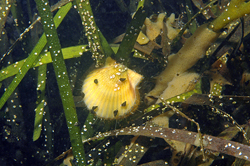
Carman, a researcher at Woods Hole Oceanographic Institution, found sea squirts coating eelgrass in Sengekontacket Pond and Lake Tashmoo on Martha’s Vineyard, Mass. Under ordinary circumstances, juvenile scallops dangle from eelgrass blades like holiday ornaments, until they grow big enough to release their hold and then swim freely or rest in sediments. But in these spots at least, sea squirts were moving into the scallops' neighborhood.
Was this the first hint of a trend? Alarmed at the possibility, Carman contacted David Grunden, the shellfish constable in the island’s town of Oak Bluffs.
“We’re worried about it,” Grunden said. After seeing the sea squirts, he quickly agreed to partner with Carman to map their spread. “It’s a potential disaster if we find them growing on eelgrass in a large extent.”
(Mary Carman narrates a short video on her work mapping the spread of sea squirts that can have come from Europe and Asia and are crowding out native species of plants and animals. Watch the video »)
Clam copsMartha’s Vineyard shellfish fisheries are so important to the resort island off Cape Cod that each town has a shellfish constable. Locals sometimes jokingly call them “clam cops” and “shellfish sheriffs, ” but jobs like Grunden’s are serious—looking after bay scallops, oysters, clams, and other marine life that live in one of the nation’s most productive shellfish regions.
Though small in size, coastal Massachusetts is one of the top 10 producers of shellfish in the United States. Bay scallops have been important to its residents since colonial times, when settlers picked the shellfish by hand at low tide. At peaks in the 1980s, the state harvest exceeded 1,200 metric tons and was valued at $11 million. On Martha’s Vineyard, where people flock for summer vacations fueled by plates of fresh, garlic-and-butter-infused seafood, bay scallops remain ingrained in the island’s culture.
Since the 1980s, bay scallops—a species with a lifespan of just two years—have been in decline. Research suggests that an increase in nutrients (in the form of fertilizers and sewage from septic systems) that have flowed into coastal waters has spurred rampant growth of marine algae. This diminishes water quality and blankets the water surface, blocking sunlight from penetrating to eelgrass. An influx of sea squirts could make it even harder for bay scallop populations to survive.
One sunny Thursday morning before Labor Day weekend, Carman, Grunden, and several volunteers—including a concerned local fisherman, an underwater photographer, and Carman’s high-school-age daughter—motored into Major’s Cove in Sengekontacket Pond. Wearing snorkeling gear, they jumped overboard to find out just how much of the five-acre eelgrass meadow had been overtaken by sea squirts.
After diving about eight feet to the mucky bottom, Carman surfaced and gently spread several slender, bright green strands on the boat’s deck. Most of the blades were coated at least partially with sea squirts. They looked like rotten scrambled eggs and felt cold and slippery to the touch.
“Look how it is growing right next to the scallop,” she said, gesturing to a thumbnail-size shell attached to the plant. During the next two hours, she and the volunteers swam over the meadows, taking samples and marking locations using a handheld GPS unit.
“They are all the way to the beach, on both sides of the cove,” she said when she swam back to the boat. “They are definitely spreading. That’s not good.”
Sea squirt crusader Carman’s single-minded dedication to learning, and teaching others, about sea squirts began 10 years ago when she was a naturalist who coordinated youth education programs. To answer her students’ questions about the weird-looking, rubbery creature (which some kids called “alien vomit”), she began doing research. She quickly found no ready answers. Since then she has acquired grants and a place in the WHOI Geology and Geophysics Department.
Sea squirts feed on algae and bacteria, using one tube to suck in water and another tube to squirt it out (hence their name). They are tunicates, a name derived from a firm, rubbery outer covering called a “tunic.”
Of the nine types of sea squirts found on Cape Cod, six are invasive species introduced in the last 80 years from Asia and Europe. Carman’s research focuses on a species of the genus Didemnum, which forms dense mats from many small, linked individuals.
The creatures take over new areas in several ways, some traveling in from affected areas by clinging to boat bottoms or aquaculture gear, others by simply traveling from place to place by clinging to a piece of wood, a plastic bottle, or a blade of eelgrass.
“It’s a tremendous management challenge,” said James Carlton, a professor of marine sciences at Williams College in Connecticut. “We can tell the boater to scrub his boat bottom before he hauls it to new area, but how do you prevent grass with sea squirts clinging to it from rafting into new areas?”
On Martha’s Vineyard, with many connected waterways, Carman said it’s easy to imagine how easily they could move and settle into new areas.
“Everywhere I go on the Cape, I’m looking for them,” she said. Her daughter Mimi has been helping look for squirts since kindergarten. Now 16, she joins her mother on snorkeling excursions and can identify native and non-native sea squirts at a glance.
Growing concernOf their growth on Martha’s Vineyard, Carman said, “I’ve never see them in an open area like this and not to this extent.” In late September, she attended a workshop on aquatic invasive species where she confirmed with colleagues that Didemnum vexillum and Dipolsoma listerianum have not been previously documented growing on eelgrass. So far, Grunden said, sea squirts have not had a direct, negative impact on wild populations of bay scallops or on other shellfish that use eelgrass for habitat, such as oysters, quahogs, or clams. However, they are a nuisance to those in the aquaculture industry. They cling to aquaculture equipment, including cages used to encourage bay scallop spawning each year in several ponds on Martha’s Vineyard.
“Oyster farmers find Didemnum to be a pest species that impedes the flow of food and water, are time-consuming to remove, unsightly, and generally just a headache to deal with,” said Diane Murphy, who works with shellfish growers on Cape Cod and Martha’s Vineyard in her job with Cape Cod Cooperative Extension.
Fishermen also want to see less of them. Jeff Clements, a commercial shellfisherman in New England for 35 years, volunteered the use of his boat and time before Labor Day to help Carman’s research.
After toweling off in the boat, he said, “I’ve seen it over the years, but not in such quantities. It’s something I’m worried about.” —Amy E. NevalaFunding for Mary Carman's research came from the Sailors' Snug Harbor of Boston Foundation and the Link Foundation.