Showing posts with label loggerhead turtle. Show all posts

Thursday, March 25, 2010

Increasingly Threatened Loggerheads Follow Their Own Paths in Travel, Eating


With loggerhead sea turtle nests in dramatic decline, researchers would love to know more about where the turtles go, and what they eat, so they can better protect the creatures' habitat.


Now, a team of University of Florida biologists from the Archie Carr Center for Sea Turtle Research teasing that information from the turtles' shells is reporting some surprising findings.
Doctoral student Hannah Vander Zanden writes in the March 23 online edition of the journal Biology Letters that analyses of the chemical elements in the shells of 15 living female loggerheads suggests the turtles are remarkably individualistic in their range, diet, or both. The findings are unexpected because loggerheads -- named for their large heads -- are known to swim thousands of miles and eat 80 types of prey, often including crabs, whelks and many other ocean-bottom-dwelling creatures.
"The fact is, you have this big range of potential things they can eat, and potential places they can go, and it seems that individuals are not using that whole range," Vander Zanden said.
Although the findings need to be refined, the research could one day help scientists and public policy makers find and protect areas of the open ocean or coastal waters where loggerheads congregate or feed heavily. Such protection may be more and more urgent: On March 10, federal agencies proposed upgrading the turtle's status from "threatened" to "endangered" among seven Atlantic and Pacific populations.
Vander Zanden's findings also shed light on the turtles' habits over a span of 12 years, at least three times as long as the longest study involving satellite-tagged turtles -- proving the worth of analyzing shells, or similar tissues in other animals, that contain forms of elements known as stable isotopes.
"It really revolutionizes our way of looking at these animals that have this kind of tissue," said Karen Bjorndal, UF professor of biology and director of the Archie Carr Center for Sea Turtle Research, noting such animals include whales with tooth-like baleen and mammals with tusks or horns. "This loggerhead research offers the longest records that I am aware of obtained from living individuals."
Agreed James Estes of the University of California at Santa Cruz, "The length of the method -- because of the isotopic analysis method -- is really unprecedented."
Vander Zanden used a small biopsy punch tool to gather pencil-eraser sized shell samples from adult female turtles while they were nesting at Cape Canaveral National Seashore in Florida. Removing the samples, which cut away only the dead tissue of the shell, is harmless and painless to the turtles.
She ground the samples into thin layers and analyzed them using a mass spectrometer, a machine that separates stable isotopes according to charge and mass.
The higher an animal on the food chain, the more heavy stable isotopes it accumulates, the greater the ratio of heavy to light isotopes in its tissue. Different ocean latitudes, meanwhile, have different ratios of light and heavy isotopes, ratios also incorporated into shells or other tissues.
So while the analyses revealed that the turtles were surprisingly different in their individual diet or travels -- and that they maintained these differences over the dozen years of growth reflected in the shell samples -- it did not specify discrete food items or locations.
"The problem with stable isotopes is that diet and habitat are kind of confounded," Vander Zanden said. "So we can't necessarily parse out what is causing these differences. Whether this turtle is eating just blue crabs or is eating whelks. Whether this turtle is eating in New Jersey or in the Bahamas."
She said she will seek to sort out that question in the remainder of her dissertation research -- with luck filling in major gaps about a species once celebrated as healthy but today viewed as in jeopardy. While population numbers for adult members of the species are somewhat mysterious, it is known that nests in the U.S. have declined 41 percent in the past 10 years, Bjorndal said.
"It is very important to know where they are, and what they are doing, so this work is critical," she said.

Friday, March 19, 2010

How Can Accidental Captures of Loggerhead Turtles Be Reduced?


Spanish scientists have studied interactions between the loggerhead turtle (Caretta caretta) and fishing gear such as longline hooks used at the water surface, mass beachings, and the effects of climate change on these animals. In order to reduce captures of this marine species without causing economic losses for fishermen, the scientists are proposing that fishing in the summer should only be carried out by night and in areas more than 35 nautical miles from land.Populations of loggerhead turtles (Caretta caretta) are in decline all over the world, and particularly in the Mediterranean Sea, where more than 20,000 animals are accidentally caught each year. Finding responsible and sustainable fisheries solutions was one of the prime objectives of this research study, published in the latest issue of the Journal of Applied Ichthyology.Researchers from the Spanish Institute of Oceanography (IEO) in Malaga, the University of Malaga (UMA) and the Sea Classroom, also in Malaga, tested whether using different kinds of animal bait would reduce captures of loggerhead turtles, and how these changes could impact on fishing yields.The scientists used real commercial fisheries data taken by scientific observers on board fishing boats. The results were clear. "Using fish as bait could greatly reduce incidental catches of loggerhead turtles, but could also severely affect catches of swordfish," José Carlos Báez, lead author and a researcher at the IEO, said.The research team also showed that stopping using small molluscs such as squid as bait could not ensure that incidental catches of loggerhead turtles would be prevented, since "as an opportunistic predator it also preys on hooks baited with fish, and can find these more easily when molluscs are used," explains the expert.The study proposes other measures that, the researchers say, would not involve modifying the equipment used in any way that "could result in low economic yields because of a decline in fish catches," says Báez. These techniques would reduce the number of turtles caught while maintaining fishermen's profits."Most accidental catches happen during the day, more than 35 nautical miles from the coast, and in the summer, meaning that it would be enough to limit longline fishing at these times and places in order to drastically reduce captures of this species," says Báez, who adds that these measures should be tested before being adopted.Longline fishing is practised by 356 vessels in Spanish waters, and provides employment for many coastal towns. However, accidental captures of species such as the loggerhead turtle are also damaging to fishermen's interests, because of the economic losses caused and the time spent in freeing the turtles.

Friday, March 12, 2010

Endangered listing eyed for US loggerhead turtles


The federal government on Wednesday recommended an endangered-species listing for the loggerhead turtles in U.S. waters, a decision that could lead to tighter restrictions on fishing and other maritime trades.The massive, nomadic sea turtles have been listed since 1978 as threatened, a step below endangered, but federal scientists proposed ratcheting up the designation after reviewing the state of the species.Researchers said primary threats to the loggerheads include injury and death from fishing gear and damage to their nesting areas.The joint proposal by the National Oceanic and Atmospheric Administration's fisheries division and the U.S. Fish and Wildlife Service is not a final decision. If approved, it puts loggerheads on track for an endangered listing by the summer of 2011. The proposal now enters a public comment period.Environmental groups who'd been pushing an endangered listing said the proposal was a "turning point" they hope will lead to greater turtle protections."I think it's huge day for loggerhead sea turtles," said Elizabeth Griffin, a marine wildlife scientist at Oceana. "I think it really draws attention to the fact these turtles are not doing well and more needs to be done to protect them."No one really knows how many loggerheads there are, or how many are being killed by fishing gear or other activities. A species doesn't need falling numbers to be endangered, it can get the listing if it's shown to be threatened by one of five factors, such as disease or "manmade factors affecting its continued existence."Griffin cites a 40 percent drop in the number of nesting females in Florida over the last decade as evidence of trouble. But the Fisheries Survival Fund, an East Coast scallopers group, said in a letter early this month that nesting beach surveys can't provide good evidence of decline because they measure only mature females, who take at least 30 years to reach breeding age.Shaun Gehan, an attorney for the Fisheries Survival Fund, said an endangered listing is unneeded for a species there's no evidence is in danger of extinction. If new protections are mandated for the turtle, it could affect not only fishermen, but maritime traffic, coastal development and waterfront use, Gehan said."We are extremely disappointed that they've taken this approach," he said.Loggerheads are named for their large heads, which contain potent jaws that can crush the hard shells of prey such as conch. The turtles are about the size of a fist when they hatch and make a frenzied dash to the surf. But they typically grow to more than three feet in length and 250 pounds. The animal can log thousands of miles as it travels across oceans.Barbara Schroeder, national sea turtle coordinator for NOAA's fisheries division, said the biggest threats to the North Pacific loggerhead include damage to primary nesting sites, which are mainly in Japan, as well as accidental snaring of the turtles in fishing gear.Andrea Treece of San Francisco-based Center for Biological Diversity said the turtles get hooked by Hawaiian longline fishermen targeting swordfish and tuna and can be injured or drowned.On the East Coast, the main threat to turtles is gear from the region's various fisheries, Schroeder said.Gehan said that scallopers have developed dredges to keep the turtles out with a chain mat that covers the opening. Critics say the dredges keep turtles out, but also crush them, though survival fund officials say there's no evidence of that.A primary benefit of the endangered status would be increased public pressure on protecting the species, Griffin said. But the government would also have to determine "critical habitats," such as where the turtles reproduce or forage. Such places could be subject to additional protections for the turtles, including restrictions on maritime development or fishing.A balance needs to be found to help a species Griffin called "the ambassadors of our oceans" because they travel great distances and can be seen up close when they venture on land."I think that really gives people an appreciation for our turtles and marine life," she said.

Thursday, March 11, 2010

How Sea Turtle Hatchlings Use Their Flippers to Move Quickly on Sand


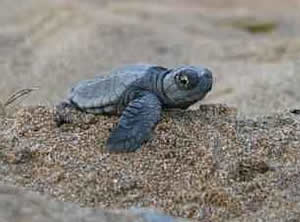
Life can be scary for endangered loggerhead sea turtles immediately after they hatch. After climbing out of their underground nest, the baby turtles must quickly traverse a variety of terrains for several hundred feet to reach the ocean.

While these turtles' limbs are adapted for a life at sea, their flippers enable excellent mobility over dune grass, rigid obstacles and sand of varying compaction and moisture content. A new field study conducted by researchers at the Georgia Institute of Technology is the first to show how these hatchlings use their limbs to move quickly on loose sand and hard ground to reach the ocean. This research may help engineers build robots that can travel across complex environments.

"Locomotion on sand is challenging because sand surfaces can flow during limb interaction and slipping can result, causing both instability and decreased locomotor performance, but these turtles are able to adapt," said Daniel Goldman, an assistant professor in the Georgia Tech School of Physics. "On hard-packed sand at the water's edge, these turtles push forward by digging a claw on their flipper into the ground so that they don't slip, and on loose sand they advance by pushing off against a solid region of sand that forms behind their flippers."

Details of the study were published online on February 10, 2010 in the journal Biology Letters. This research was supported by the Burroughs Wellcome Fund, National Science Foundation, and the Army Research Laboratory.

In collaboration with the Georgia Sea Turtle Center, biology graduate student Nicole Mazouchova studied the movement of sea turtle hatchlings of the species Caretta caretta at Jekyll Island on the coast of Georgia. She and research technician Andrei Savu worked from a mobile laboratory that contained a nearly three-foot-long trackway filled with dry Jekyll Island sand.

The trackway contained tiny holes in the bottom through which air could be blown. The air pulses elevated the granules and caused them to settle into a loosely packed solid state, allowing the researchers to closely control the density of the sand.

In addition to challenging hatchlings to traverse loosely packed sand in the trackway, the researchers also studied the turtles' movement on hard surfaces -- a sandpaper-covered board placed on top of the sand. Two high-speed cameras recorded the movements of the hatchlings along the trackway, and showed how the turtles altered their locomotion to move on different surfaces.

"We assumed that the turtles would perform best on rigid ground because it would not give way under their flippers, but our experiments showed that while the turtles' average speed on sand was reduced by 28 percent relative to hard ground, their maximal speeds were the same for both surfaces," noted Goldman.

The researchers' investigations showed that on the rigid sandpaper surface, the turtles anchored a claw located on their wrists into the sandpaper and propelled themselves forward. During the thrusting process, one of the turtle's shoulders rotated toward its body and its wrist did not bend, keeping the limb fully extended.

In contrast, on loosely packed sand, pressure from the thin edge of one of the turtle's flippers caused the limb to penetrate into the sand. The turtle's shoulder then rotated as the flipper penetrated until the flipper was perpendicular to the surface and the turtle's body lifted from the surface.

"The turtles dug into the loosely packed sand, lifted their bellies off the ground, lurched forward, stopped, and did it again," explained Goldman.

To extend their biological observations, Goldman and physics graduate student Nick Gravish designed an artificial flipper system in the laboratory. The flipper consisted of a thin aluminum plate that was inserted into and dragged along the trackway filled with Jekyll Island sand. Calibrated strain gauges mounted on the flipper provided force measurements during the dragging procedure.

"Our model revealed that a major challenge for rapid locomotion of hatchling sea turtles on sand is the balance between high speed, which requires large inertial forces, and the potential for failure through fluidization of the sand," explained Goldman. "We believe that the turtles modulate the amount of force they use to push into the sand so that it remains below the force required for the ground to break apart and become fluidlike."

Goldman and his team plan to conduct further field studies and laboratory experiments to determine if and how the turtles control their limb movements on granular media to avoid sand fluidization. They are also developing robots that move along granular media like the sea turtle hatchings.

"These research results are valuable for roboticists who want to know the minimum number of appendage features necessary to move effectively on land and whether they can just design a robot with a flat mitt and a claw like these turtles have," noted Goldman.

Saturday, February 27, 2010

How Can Accidental Captures of Loggerhead Turtles Be Reduced?


Spanish scientists have studied interactions between the loggerhead turtle (Caretta caretta) and fishing gear such as longline hooks used at the water surface, mass beachings, and the effects of climate change on these animals. In order to reduce captures of this marine species without causing economic losses for fishermen, the scientists are proposing that fishing in the summer should only be carried out by night and in areas more than 35 nautical miles from land.

Populations of loggerhead turtles (Caretta caretta) are in decline all over the world, and particularly in the Mediterranean Sea, where more than 20,000 animals are accidentally caught each year. Finding responsible and sustainable fisheries solutions was one of the prime objectives of this research study, published in the latest issue of the Journal of Applied Ichthyology.

Researchers from the Spanish Institute of Oceanography (IEO) in Malaga, the University of Malaga (UMA) and the Sea Classroom, also in Malaga, tested whether using different kinds of animal bait would reduce captures of loggerhead turtles, and how these changes could impact on fishing yields.

The scientists used real commercial fisheries data taken by scientific observers on board fishing boats. The results were clear. "Using fish as bait could greatly reduce incidental catches of loggerhead turtles, but could also severely affect catches of swordfish," José Carlos Báez, lead author and a researcher at the IEO, said.

The research team also showed that stopping using small molluscs such as squid as bait could not ensure that incidental catches of loggerhead turtles would be prevented, since "as an opportunistic predator it also preys on hooks baited with fish, and can find these more easily when molluscs are used," explains the expert.

The study proposes other measures that, the researchers say, would not involve modifying the equipment used in any way that "could result in low economic yields because of a decline in fish catches," says Báez. These techniques would reduce the number of turtles caught while maintaining fishermen's profits.

"Most accidental catches happen during the day, more than 35 nautical miles from the coast, and in the summer, meaning that it would be enough to limit longline fishing at these times and places in order to drastically reduce captures of this species," says Báez, who adds that these measures should be tested before being adopted.

Longline fishing is practised by 356 vessels in Spanish waters, and provides employment for many coastal towns. However, accidental captures of species such as the loggerhead turtle are also damaging to fishermen's interests, because of the economic losses caused and the time spent in freeing the turtles.

Friday, February 26, 2010

Field study exposes how sea turtle hatchlings use their flippers to move quickly


Life can be scary for endangered loggerhead sea turtles immediately after they hatch. After climbing out of their underground nest, the baby turtles must quickly traverse a variety of terrains for several hundred feet to reach the ocean.While these turtles' limbs are adapted for a life at sea, their flippers enable excellent mobility over dune grass, rigid obstacles and sand of varying compaction and moisture content. A new field study conducted by researchers at the Georgia Institute of Technology is the first to show how these hatchlings use their limbs to move quickly on loose sand and hard ground to reach the ocean. This research may help engineers build robots that can travel across complex environments."Locomotion on sand is challenging because sand surfaces can flow during limb interaction and slipping can result, causing both instability and decreased locomotor performance, but these turtles are able to adapt," said Daniel Goldman, an assistant professor in the Georgia Tech School of Physics. "On hard-packed sand at the water's edge, these turtles push forward by digging a claw on their flipper into the ground so that they don't slip, and on loose sand they advance by pushing off against a solid region of sand that forms behind their flippers."Details of the study were published online on February 10, 2010 in the journal Biology Letters. This research was supported by the Burroughs Wellcome Fund, National Science Foundation, and the Army Research Laboratory.In collaboration with the Georgia Sea Turtle Center, biology graduate student Nicole Mazouchova studied the movement of sea turtle hatchlings of the species Caretta caretta at Jekyll Island on the coast of Georgia. She and research technician Andrei Savu worked from a mobile laboratory that contained a nearly three-foot-long trackway filled with dry Jekyll Island sand.The trackway contained tiny holes in the bottom through which air could be blown. The air pulses elevated the granules and caused them to settle into a loosely packed solid state, allowing the researchers to closely control the density of the sand.In addition to challenging hatchlings to traverse loosely packed sand in the trackway, the researchers also studied the turtles' movement on hard surfaces -- a sandpaper-covered board placed on top of the sand. Two high-speed cameras recorded the movements of the hatchlings along the trackway, and showed how the turtles altered their locomotion to move on different surfaces."We assumed that the turtles would perform best on rigid ground because it would not give way under their flippers, but our experiments showed that while the turtles' average speed on sand was reduced by 28 percent relative to hard ground, their maximal speeds were the same for both surfaces," noted Goldman.The researchers' investigations showed that on the rigid sandpaper surface, the turtles anchored a claw located on their wrists into the sandpaper and propelled themselves forward. During the thrusting process, one of the turtle's shoulders rotated toward its body and its wrist did not bend, keeping the limb fully extended.In contrast, on loosely packed sand, pressure from the thin edge of one of the turtle's flippers caused the limb to penetrate into the sand. The turtle's shoulder then rotated as the flipper penetrated until the flipper was perpendicular to the surface and the turtle's body lifted from the surface."The turtles dug into the loosely packed sand, lifted their bellies off the ground, lurched forward, stopped, and did it again," explained Goldman.To extend their biological observations, Goldman and physics graduate student Nick Gravish designed an artificial flipper system in the laboratory. The flipper consisted of a thin aluminum plate that was inserted into and dragged along the trackway filled with Jekyll Island sand. Calibrated strain gauges mounted on the flipper provided force measurements during the dragging procedure."Our model revealed that a major challenge for rapid locomotion of hatchling sea turtles on sand is the balance between high speed, which requires large inertial forces, and the potential for failure through fluidization of the sand," explained Goldman. "We believe that the turtles modulate the amount of force they use to push into the sand so that it remains below the force required for the ground to break apart and become fluidlike."Goldman and his team plan to conduct further field studies and laboratory experiments to determine if and how the turtles control their limb movements on granular media to avoid sand fluidization. They are also developing robots that move along granular media like the sea turtle hatchings."These research results are valuable for roboticists who want to know the minimum number of appendage features necessary to move effectively on land and whether they can just design a robot with a flat mitt and a claw like these turtles have," noted Goldman.

Friday, September 04, 2009

Loggerhead turtles at risk of extinction


It's a scene that scientists say is all too common: A commercial fishing boat pulls in a net full of shrimp or tuna and finds a loggerhead sea turtle mixed in with the catch.Biologists like Matthew Godfrey say one or two such takings can happen every day among fishing fleets off the Southeast coast. Those numbers can add up to thousands annually for a turtle species that has traveled the oceans for 200 million years but now faces a growing array of threats.Godfrey is among the authors of the latest federal report on loggerheads that says most groups of the ancient reptile are at risk of extinction — in large part due to increased commercial fishing.The study, released last month, predicted broad population declines across the globe in the coming years, including in a nesting area along the southeastern United States that is one of the world's largest."Unfortunately, a lot of times the target fish habitat and the turtle habitat overlap," said Godfrey, of the North Carolina Wildlife Resources Commission. "The turtles are air breathers, so they need to get to the surface, but if they're tangled up in the net, they can't get to the surface, and they essentially drown."Loggerheads have been listed as a threatened species since 1978. This latest report puts new pressure on the government to upgrade their status to endangered and further restrict commercial fisheries.But even the increased awareness that an endangered listing would bring might not save the turtles, which migrate thousands of miles through the sea.Meaningful protections require broad global cooperation given the turtles' far-flung travels. Fishing operators already are chafing under regulations aimed at protecting the animals, and further restrictions could draw strong opposition and fresh concerns about hurting coastal economies."These trends are very difficult to reverse. It's like turning a big battleship," said Blair Witherington, a research scientist with the Florida Fish and Wildlife Conservation Commission who helped write the report. "We really ought to be doing it now."The report was commissioned by the National Marine Fisheries Service as a result of petitions from environmental groups, who say the government is moving too slowly to protect loggerheads and have sued to force stronger actions. Many of the study's authors work for the federal agencies that will decide whether to change its status to endangered.For the first time, the study called for dividing loggerhead populations into nine distinct global populations, a potentially key recommendation that would allow each to be studied and protected as a separate species.It said seven of those nine populations are in danger of extinction, including two along U.S. coasts: the major population in the Atlantic Ocean, which has nesting concentrated along the coasts of Florida, Georgia and the Carolinas, and a smaller population that migrates through Pacific waters off the West Coast and Hawaii.Aside from fishing, the report said other major threats include coastal development that disrupts nesting, such as erosion-control barriers and other structures that prevent mothers from nesting and bright lights that can disorient hatchlings. The animals and their eggs are also still hunted for consumption in some parts of the world, the report said, and will probably be threatened by changing sea levels from climate change, which could wash away nesting habitats.The U.S. and other countries already have adopted a number of protections, but the report said their effectiveness has been incomplete.Since the mid-1990s, shrimp trawlers have been required to use gear that allows turtles to escape, for example. But the National Marine Fisheries Service has estimated that nearly 650 turtles a year are still killed by shrimpers in the U.S. Gulf of Mexico.In April, federal regulators restricted the use of long fishing lines for catching red grouper off Florida's western coast after studies showed that as many as 800 loggerheads were caught by the lines every 18 months. The temporary ban, from mid-May to mid-October — when sea turtles feed in the warm Gulf waters — angered fishing operators, who said it could kill their business."I don't know what else they could expect us to do," said Woody Moore, a commercial fisherman out of Jacksonville, Fla., who said he thinks the dangers posed by fishing fleets are exaggerated."I've never in my life caught a dead one," he said. "And I've been fishing 30 years." Elizabeth Griffin, fisheries campaign manager at Oceana, an advocacy group that has sued the government to protect loggerheads more aggressively, acknowledged that significant steps have been taken but said the turtles remain largely unprotected in the water. She said the United States, which hosts about 90 percent of loggerhead nesting off the Atlantic Ocean, should heed its own scientists' advice. "We're a key player in preventing loggerheads from going extinct in the Atlantic so we really need to be a leader on this issue," Griffin said. Therese Conant, deputy director of the Fisheries Service's endangered species division and another of the report's authors, said the government would probably issue a proposed decision in February on whether to change the turtles' status.

Friday, May 29, 2009

FWC officers rescue sea turtle from intake pump


A loggerhead sea turtle survived a life-threatening situation, thanks to the quick work of officers with the Florida Fish and Wildlife Conservation Commission (FWC). On Monday, May 25, Lt. Rob Laubenberger and Officer Dale Twist responded to a call of a sea turtle trapped in an intake pump at the Florida Power and Light (FPL) Power Plant in Port Everglades in Broward County. Rescuing the trapped turtle was no easy task. There is a 15-foot drop to the water's edge within a small, concrete-enclosed compartment. Officers worked closely with FPL plant operators to retrieve the turtle. Using a mechanical rake, normally used to lift trash out of the holding area, officers carefully lifted the sea turtle up to the working platform. The sea turtle was not hurt. Officers brought the turtle to a waiting FWC patrol vessel, which transported it a couple of miles offshore for a successful release back into the ocean. "It was a great feeling to end up saving the life of an endangered sea turtle," Laubenberger said. "Usually we respond to calls where the situation is serious. But in this case, a bad scenario had a good outcome."

Friday, May 01, 2009

Turtles returning to local beaches


A loggerhead sea turtle that scientists first tagged on Casey Key 21 years ago is recovering from an illness at Mote Marine Laboratory, a reminder of the growing number of sick sea turtles statewide and the beginning of nesting season.The turtle, like hundreds of others this time of year, was probably on its way back to Casey Key to mate and nest. Mote scientists have recorded the same turtle laying eggs on the beach 11 times in the past, most often in June.It is unclear whether she will recover in time to nest this year.Nesting season begins May 1, but male and female sea turtles are starting to congregate offshore now to mate. In addition to watching for turtles on the beach, boats should look out for turtles at sea, said Mote spokeswoman Nadine Slimak.The sick turtle was found by wildlife officers near the Naples Beach Hotel and Golf Club. Doctors at Mote believe she is suffering from lethargic loggerhead syndrome, a mysterious illness affecting hundreds of turtles.Tagging data reveals that the Mote turtle nested several times on Casey Key in 1988, 1996, 1999 and 2003. Most turtles nest more than once during the season and always return to the beach where they were born.Casey Key is the most popular nesting beach in Sarasota County. Last year, scientists identified 452 loggerhead nests on that beach, out of more than 1,100 nests total countywide.The start of the season triggers a handful of beach regulations meant to help the turtles and their hatchlings survive their brief stay on land.When turtles hatch, they follow the moonlight to find their way to sea. During nesting season, beach residents must keep their lights out at night, or use special lighting, to avoid confusing the hatchlings. Beach furniture must also be carried in at night, to avoid trapping adults.Despite Sarasota County's high numbers, loggerheads are nesting 26 percent less statewide compared wth two decades ago. Many more turtles each year are also being found dead or sick.The sick female is responding to treatment, Slimak said. If she becomes healthy enough for release, Mote will put a radio transmitter on her to find out where she winters.Heraltribune.com By Kate Spinner

Saturday, April 04, 2009

TURTLES, STRANDING, FATAL - USA


Turtles fill bubbling pools at the Marine Science Center in Ponce Inlet, Florida, these days as its staff scrambles to keep up with mass strandings along Florida's northeast coast. About 170 turtles, both greens and loggerheads, have been found either dead or sick and emaciated on beaches from Jacksonville to Brevard County since January 2009.That's more than 3 times the normal number, said Allen Foley, a biologist with the Florida Fish and Wildlife Conservation Commission. About half the turtles were green turtles and half were loggerheads. Foley said that is also unusual, because normally they get 2 stranded loggerheads for every green turtle.The science center has received 48 turtles since24 Feb 2009, said Tammy Langer, an environmental specialist. "We are terribly swamped," Langer said Thursday [26 Mar 2009], in between giving the up to 3 times daily tube feedings required by some of the turtles. The science center mixes a blend of ground fish, Pedialyte, Ensure and other ingredients to help boost the turtles' calorie intake and promote weight gain. "We've lost a couple, but for the most part they're doing good," Langer said. They're gaining weight and some are now eating on their own.The center had 4 loggerheads and 12 green turtles Thursday. The rest were sent to other rehabilitation centers in Florida and southern Georgia, because the center's small facility in Ponce Inlet is full.A pathologist at the University of Florida's College of Veterinary Medicine has examined many of the dead turtles, trying to figure out what caused the mass stranding. Foley said they don't have any answers yet. "It might be some type of toxin from an algae bloom," he said. "But that's just a guess for lack of anything else." No single disease, bacteria or viral disease has been found in the turtles, he said. If the cause is a harmful algal bloom or a toxin, researchers might never pinpoint it, Foley said. "We can only test for a few and there are thousands out there."Langer has noticed most of the turtles have secondary problems, such as deep gashes in their shells from collisions with boats or heavy barnacle growth. Whatever the cause, Foley said it doesn't seem to be killing anything else.That's an important clue because some toxic blooms, such as red tide, affect many kinds of animals including dolphins, manatees and birds.On Wednesday, 3 more turtles arrived at the science center. On Thursday 26 Mar 2009] , the center received a turtle that died later. But there were no new arrivals by 5 p.m. Friday [27 Mar 2009]. If the center went a day with no new turtles, it would be the 1st since the strandings began.[Byline: Dinah Voyles Pulver]

Monday, January 19, 2009

Recovery Plan For The Northwest Atlantic Loggerhead Sea Turtle Revised


NOAA's Fisheries Service and the U.S. Fish and Wildlife Service (USFWS) announced today the availability of the final revised recovery plan for the Northwest Atlantic population of the loggerhead sea turtle (Caretta caretta). The species is listed globally as threatened under the U.S. Endangered Species Act."Loggerhead sea turtles face many domestic and international threats, and thousands die around the world every year," said Jim Balsiger, NOAA acting assistant administrator for NOAA's Fisheries Service. "This plan will help our agency and our partners to conserve and recover the species by providing a blueprint to address threats in the northwestern Atlantic."The revised plan reviews and discusses the species ecology, population status and trends, and identifies threats to the loggerhead turtle in the northwestern Atlantic. It lays out a recovery strategy to address the threats, based on the best available science, and includes recovery goals and criteria. In addition, the plan identifies actions needed to address the threats to the species and achieve recovery.An initial recovery plan for the loggerhead turtle was approved on September 19, 1984. This initial plan was a multi-species plan for all six species of sea turtles occurring in the U.S. On December 26, 1991, a separate recovery plan for the U.S. Atlantic population of the loggerhead turtle was approved. In 2001, NOAA's Fisheries Service and USFWS, which share federal jurisdiction for sea turtles, initiated the process to revise the loggerhead plan for a second time."This report highlights the threats that sea turtles face and offers some new approaches to better monitor their status," said Sam D. Hamilton, USFWS southeast regional director. "It will help focus recovery efforts with all the many partners to help save these magnificent creatures."This revised plan is significant in that it identifies five unique recovery units, which comprise the population of loggerhead turtles in the Northwest Atlantic, and describes specific recovery criteria for each recovery unit.Loggerhead turtles in the northwestern Atlantic mature to reproductive age at about 35 years. During their lifetime, they travel and live in the waters of several nations, including the U.S. They face many challenges and threats, including development and loss of nesting habitat, bycatch in fisheries, and degradation of their marine habitats. The recovery of any species takes time, but scientists say that for the loggerhead turtle it could take even longer due to the long time to reach maturity and the variety and magnitude of the threats they face.The recovery plan is available online at NOAA's Office of Protected Resources or the USFWS North Florida field office.Source: National Oceanic And Atmospheric Administration

Thursday, December 18, 2008

Loggerhead Turtle Territories Defined By Salinity of Sea Water In Western Mediterranean


Spanish researchers have shown that the salinity of sea water could act as a “barrier”, preventing the turtles from moving between the areas of the Western Mediterranean. This is why loggerhead turtles from the south and north of the Western Mediterranean do not mix as juveniles. This finding could help in the development of measures to protect this migratory species.


The Franco-Spanish research group started to tag more than 1,500 immature loggerhead turtles (Caretta caretta) in 1993, of which 36 were progressively recaptured until 2005 at an average interval of 390 to 462 days. The majority of the turtles were recaptured in the same region where they were tagged.
The results of this tagging exercise where recently published in Scientia Marina, and reveal only limited exchanges between the immature turtles as a result of a “barrier” dividing the species and their territories, with the Atlantic ones remaining in the south of the Western Mediterranean and the Eastern Mediterranean ones staying in the north of the Western Mediterranean.
Mónica Revelles, lead author of the study and a researcher in the Animal Biology Department at the University of Barcelona (UB), tells SINC that “before, we did not know the Atlantic turtles stayed in the southern Mediterranean, and the Mediterranean ones in the northern part, but the genetic data and satellite tracking led us to suspect this.”
The study shows the immature individuals are oceanic (unlike the adults, which remain close to the coast), but that they do not stray beyond the areas they are used to. For this reason, the experts believe that water salinity could play a significant role.
Maps of ocean currents and salinity show that salinity is lower in water masses moving around the southern area than in those circulating around the northern part of the Western Mediterranean.
The fact that exchanges between the turtles of Atlantic and Mediterranean origin are limited is “important”, because projects to protect immature turtles in the Western Mediterranean will have to be divided into at least two groups. Revelles says “the studies carried out in the northern and southern areas will relate to the Mediterranean and Atlantic populations, respectively”.
Limited exchanges between the two groups, and human activities such as long line fishing, could impact on those turtles travelling through the southern Mediterranean and nesting along the Atlantic coasts. This is why scientists insist upon the need for measures to protect this migratory species.
Same species, different genes
In terms of origin and place of birth, the Atlantic turtles tend to stay within the southern Mediterranean, while the Mediterranean ones establish themselves in the northern area, although the occasional individual does move from one area to the other, with some even travelling as far as the Caribbean. “This limited exchange between the north and the south means the populations do not interbreed,” says Revelles.
The researchers say the different origins of the loggerhead turtles mean those from the south and north of the Mediterranean exhibit “slightly” different behaviours. They are the same species, but with genetic and morphological differences between the Atlantic and Eastern Mediterranean populations, with the Atlantic animals being larger, while the Mediterranean ones grow less but become adult earlier.
The Western Mediterranean, where the immature animals from both species are found, is the feeding habitat for juvenile turtles. They return to the area where they were born in order to reproduce – the east of the Mediterranean for those from the north of the Western Mediterranean, and the Atlantic for those from the south of the Western Mediterranean.
In addition to the UB, the Spanish Institute of Oceanography (IEO), the Marine Animal Rescue Centre (CRAM), the University of Valencia, the University of Montpellier, France, and the University of Perpignan, also in France, took part in the study.
Journal reference:
Revelles, Mónica; Caminas, Juan Antonio; Cardona, Luis; Parga, Mariluz; Tomás, Jesús; Aguilar, Alex; Alegre, Ferrán; Raga, Antonio; Bertolero, Albert; Oliver, Guy. Tagging reveals limited exchange of immature loggerhead sea turtles (Caretta caretta) between regions in the western Mediterranean. Scientia Marina, 72(3): 511-518 SEP 2008
Adapted from materials provided by Plataforma SINC.

Thursday, November 13, 2008

Loggerhead Turtle Release To Provide Vital Information To Scientific Community


On Thursday, November 6, 2008, Dr. Kirt Rusenko, Marine Conservationist, and staff from Gumbo Limbo Nature Center in Boca Raton will release two juvenile loggerhead sea turtles raised in captivity into the Indian River Lagoon near Sebastian Inlet.


The loggerheads, dubbed Milton and FeeBee, hatched on Boca Raton's beaches in July 2002 and were part of a sex ratio study conducted by Dr. Jeanette Wyneken of Florida Atlantic University. The gender of sea turtles is determined mostly by the temperature of the sand. Warmer temperatures produce more females, while cooler temperatures produce more males. The study aims to better learn how many males and females are born every year to more successfully determine the health of threatened sea turtle populations. The sex of sea turtles cannot be determined using obvious external characteristics until they are adults.
Milton and FeeBee, along with hundreds of other turtles were raised for 2-3 months until they weighed 4 ounces. Then, their gender was determined by examining internal characteristics using a laparoscope. After the study, Milton (male) and FeeBee (female) were raised at Gumbo Limbo Nature Center and became ambassadors for their species to the thousands of visitors who come to Gumbo Limbo each year. The Florida Fish and Wildlife Conservation Commission requires that once turtles reach a shell length of 18 inches they be released. The turtles, which have reached this size, will be released in the Indian River Lagoon because loggerhead turtles of this size are typically found in this body of water.
The pair of sea turtles will be satellite tagged by Dr. Kate Mansfield of the University of Miami's Rosenstiel School of Marine and Atmospheric Science. Captive-raised turtles are rarely satellite tagged, so this release will give scientists a unique opportunity to see if these turtles behave differently than wild turtles. It will also allow the general public to follow the paths of Milton and FeeBee on their journey in the Atlantic Ocean through the Gumbo Limbo Nature Center and its site http://www.gumbolimbo.org/.
Adapted from materials provided by University of Miami Rosenstiel School of Marine & Atmospheric Science, via EurekAlert!, a service of AAAS.

Wednesday, November 05, 2008

Loggerhead Turtle Release To Provide Vital Information To Scientific Community

On Thursday, November 6, 2008, Dr. Kirt Rusenko, Marine Conservationist, and staff from Gumbo Limbo Nature Center in Boca Raton will release two juvenile loggerhead sea turtles raised in captivity into the Indian River Lagoon near Sebastian Inlet.The loggerheads, dubbed Milton and FeeBee, hatched on Boca Raton's beaches in July 2002 and were part of a sex ratio study conducted by Dr. Jeanette Wyneken of Florida Atlantic University. The gender of sea turtles is determined mostly by the temperature of the sand. Warmer temperatures produce more females, while cooler temperatures produce more males. The study aims to better learn how many males and females are born every year to more successfully determine the health of threatened sea turtle populations. The sex of sea turtles cannot be determined using obvious external characteristics until they are adults.Milton and FeeBee, along with hundreds of other turtles were raised for 2-3 months until they weighed 4 ounces. Then, their gender was determined by examining internal characteristics using a laparoscope. After the study, Milton (male) and FeeBee (female) were raised at Gumbo Limbo Nature Center and became ambassadors for their species to the thousands of visitors who come to Gumbo Limbo each year. The Florida Fish and Wildlife Conservation Commission requires that once turtles reach a shell length of 18 inches they be released. The turtles, which have reached this size, will be released in the Indian River Lagoon because loggerhead turtles of this size are typically found in this body of water.The pair of sea turtles will be satellite tagged by Dr. Kate Mansfield of the University of Miami's Rosenstiel School of Marine and Atmospheric Science. Captive-raised turtles are rarely satellite tagged, so this release will give scientists a unique opportunity to see if these turtles behave differently than wild turtles. It will also allow the general public to follow the paths of Milton and FeeBee on their journey in the Atlantic Ocean through the Gumbo Limbo Nature Center and its site http://www.gumbolimbo.org.Source: University of Miami Rosenstiel School of Marine & Atmospheric Science

Thursday, October 16, 2008

High Mortality Of Endangered Loggerhead Sea Turtles In Baja California


Along the southern coast of Baja California, Mexico, scientists have been counting the carcasses of endangered sea turtles for a decade as part of an effort to assess and eliminate threats to loggerhead sea turtle populations. Their findings, published this week, are shocking: almost 3,000 sea turtles were found dead along a 27-mile stretch of coast during a five-year period from 2003 to 2007.


Led by Hoyt Peckham, a graduate student at the University of California, Santa Cruz, the study underscores the enormous impact of bycatch (marine life accidentally killed by fishing operations) on sea turtles. Bycatch and, to a lesser degree, poaching are both significant threats to the survival of the endangered Pacific loggerhead sea turtle population, Peckham said.
"We saw what are apparently the highest documented stranding and fisheries bycatch rates in the world," he said. "But the high bycatch rates offer us all an unexpected conservation opportunity. By working with just a handful of fishermen to diminish their bycatch, we can save hundreds of turtles."
Peckham and his coauthors, whose findings appear in a special bycatch issue of Endangered Species Research, are working to increase awareness of the problems facing sea turtles in Baja California Sur. They hope this report will encourage Mexico's government agencies to finalize creation of a refuge that protects turtles and encourages sustainable fishing in the area.
"We have counted so many dead turtles. We have piles of data on thousands of carcasses. What we need now are conservation actions and viable solutions," said Wallace J. Nichols, research associate with the California Academy of Sciences and a coauthor of the paper.
The authors partnered with local fishermen not only to assess bycatch but also to increase awareness of its far-reaching effects and work toward ending the threat.
"Once they are aware of the ocean-wide impacts of their local bycatch, fishermen often strive to fish more cleanly by switching to different techniques, target species, or areas," Peckham said. "As a result, stranding rates were down in 2008."
In addition, local fishermen are working with the Mexican government to designate a sea turtle refuge that would officially protect an area the researchers identified as a "hotspot" of turtle bycatch.
Conservation tourism offers another potential solution to these problems by giving fishermen an alternative to dwindling, inefficient fisheries, Peckham said. Through training and a steady tourism market, many fishermen and former poachers have come to value sea turtles more highly alive than dead, because conducting tours can yield more income than fishing, he added. One organization that has promoted ecotourism in this area is the Ocean Conservancy through its SEE Turtles program (http://www.seeturtles.org/). The program links travelers with critical sea turtle conservation sites so that vacation dollars can both protect the sea turtles and enhance the livelihood of community residents who protect them.
North Pacific loggerhead sea turtles travel more than 7,000 miles from Japan to Baja California Sur to feed and grow in nearshore waters, spending up to 30 years there before returning to Japan to breed. The number of nesting females in Japan has declined by 50 to 80 percent over the past 10 years, Peckham said.
In addition to Peckham and Nichols, the authors of the new study include Tim Tinker, adjunct professor of ecology and evolutionary biology at UCSC; David Maldonado Diaz and Alexander Gaos of Grupo Tortuguero, a nonprofit conservation group based in La Paz; and Volker Koch and Agnese Mancini of the Autonomous University of Baja California Sur.
Adapted from materials provided by University of California - Santa Cruz.

Wednesday, October 03, 2007

Loggerhead Turtles on decline in South Carolina

The number of loggerhead sea turtles nesting along the South Carolina coast declined by 3 percent this summer, researchers say. About 1,500 nests were found along the state's sandy beaches this year, said Dubose Griffin, sea turtle program coordinator for the state Department of Natural Resources.The turtles, which can weigh 300 pounds, are a threatened species whose numbers were climbing a decade ago. But a recent federal study suggests loggerheads are being lost in the nets of fishermen in international waters.According to the report, the number of nests in the Gulf of Mexico dropped about 7 percent while the figure declined 2 percent in North Carolina. Fisheries are the "most significant man-made factor affecting the conservation and recovery of the loggerhead," the report said.The problem is growing because the demand for seafood is increasing, there are more fishing boats from developing countries and fishermen must travel farther from shore to find fish, said Barbara Schroeder, the sea turtle coordinator for the National Marine Fisheries Service.The Southeast and the Middle East are the two major loggerhead nesting areas in the world.Off the South Carolina coast, fishermen have taken some measures to protect the turtles, and there are fewer commercial fishing boats and shrimp trawlers than in past years, officials said."It's something we have pretty well straightened out ourselves with circle hooks, turtle excluder devices and observers on boats continually to check the results, and the rest of the world has not," said Frank Blum, the director of the South Carolina Seafood Alliance director and a commercial fisherman.Another threat to loggerheads is being struck by boats, said Kelly Thorvalson, the coordinator of the sea turtle rescue program at the South Carolina Aquarium.The turtles live at sea and so scientists use nesting numbers to estimate the turtle population.