Showing posts with label Turtle. Show all posts

Monday, May 03, 2010

Many endangered turtles dying on Texas Gulf Coast


Flies buzz everywhere and the stench is overwhelming as biologist Lyndsey Howell stops to analyze the remains of yet another endangered sea turtle washed up from the Gulf of Mexico.

"It's been on the beach for a while," Howell says, flipping over the decomposing, dried-out shell.

More than 30 dead turtles have been found stranded on Galveston and the Bolivar Peninsula south of Houston this month - an unusually high number that has puzzled researchers, in part because most are so decomposed that there are few clues left about why they died.

The number of strandings on these shores is double what scientists and volunteers normally see as the turtles begin nesting in April, says Howell, who patrols the beaches as part of her job with the National Oceanic and Atmospheric Administration. Of the 35 turtles found, all but three were dead. Thirty-three were Kemp's ridleys, an endangered species researchers have spent decades trying to rehabilitate.

Many of the turtles appear to have propeller wounds from boats or have become entangled in fishing nets or lines, Howell says. Others have parasites or are emaciated.

The increase in deaths comes as the turtles swim closer to shore to nest and shrimping season gets into full swing along the upper Texas coast, said Roger Zimmerman, lab director of the NOAA marine fishery laboratory in Galveston.

"Historically, they increase about this time of year. ... This is a few more than we would normally expect," Zimmerman said. "We are concerned and we'll keep an eye on it."

Researchers are also watching the massive oil spill off the coast of Louisiana. If the oil were to begin moving in the direction of the Texas Gulf - which isn't predicted at themoment - many Kemp's ridleys swimming in to nest would be right in its path. In 1979, after an oil spill off the coast of Mexico, Kemp's ridleys were airlifted to cleaner waters.

Shrimping has long been blamed for sea turtle deaths. Shrimpers are required to install grid-like devices in their nets that are designed to allow turtles to escape. Shrimpers caught without the turtle excluder devices - or TEDs - may be fined thousands of dollars and have their catch seized by federal regulators.

Still, some are reluctant to invest $800 on the TEDs or are angry over the extra work they create aboard the shrimp boats, so they gamble they won't be caught.

"When there is more shrimp, there are more turtle strandings," Zimmerman said. "That correlation has been well-documented."

Educating fishermen, the public and shrimpers about preserving Kemp's ridleys is part of a new federal recovery plan expected to be approved in the coming months. The goal is to upgrade the Kemp's ridleys from endangered to threatened within six years - but that depends on having 10,000 nesting females per season. Currently, there are about 6,000.

Nesting season begins in mid-April and lasts into July. Most Kemp's ridleys nest on a beach in Mexico or at Padre Island in south Texas. But increasing numbers have been seeking out the shores of Galveston and Bolivar.

Howell and Zimmerman hope the deaths indicate the population has increased and even more turtles are heading toward the Texas Gulf Coast to nest.

But there's no knowing for certain.

"This is a needle-in-a-haystack thing," said Andre Landry, a marine biology professor at Texas A&M University in Galveston. "It's a difficult situation, pinpointing a cause of death in an animal that may be compromised by decomposition."

Thursday, March 25, 2010

Increasingly Threatened Loggerheads Follow Their Own Paths in Travel, Eating


With loggerhead sea turtle nests in dramatic decline, researchers would love to know more about where the turtles go, and what they eat, so they can better protect the creatures' habitat.


Now, a team of University of Florida biologists from the Archie Carr Center for Sea Turtle Research teasing that information from the turtles' shells is reporting some surprising findings.
Doctoral student Hannah Vander Zanden writes in the March 23 online edition of the journal Biology Letters that analyses of the chemical elements in the shells of 15 living female loggerheads suggests the turtles are remarkably individualistic in their range, diet, or both. The findings are unexpected because loggerheads -- named for their large heads -- are known to swim thousands of miles and eat 80 types of prey, often including crabs, whelks and many other ocean-bottom-dwelling creatures.
"The fact is, you have this big range of potential things they can eat, and potential places they can go, and it seems that individuals are not using that whole range," Vander Zanden said.
Although the findings need to be refined, the research could one day help scientists and public policy makers find and protect areas of the open ocean or coastal waters where loggerheads congregate or feed heavily. Such protection may be more and more urgent: On March 10, federal agencies proposed upgrading the turtle's status from "threatened" to "endangered" among seven Atlantic and Pacific populations.
Vander Zanden's findings also shed light on the turtles' habits over a span of 12 years, at least three times as long as the longest study involving satellite-tagged turtles -- proving the worth of analyzing shells, or similar tissues in other animals, that contain forms of elements known as stable isotopes.
"It really revolutionizes our way of looking at these animals that have this kind of tissue," said Karen Bjorndal, UF professor of biology and director of the Archie Carr Center for Sea Turtle Research, noting such animals include whales with tooth-like baleen and mammals with tusks or horns. "This loggerhead research offers the longest records that I am aware of obtained from living individuals."
Agreed James Estes of the University of California at Santa Cruz, "The length of the method -- because of the isotopic analysis method -- is really unprecedented."
Vander Zanden used a small biopsy punch tool to gather pencil-eraser sized shell samples from adult female turtles while they were nesting at Cape Canaveral National Seashore in Florida. Removing the samples, which cut away only the dead tissue of the shell, is harmless and painless to the turtles.
She ground the samples into thin layers and analyzed them using a mass spectrometer, a machine that separates stable isotopes according to charge and mass.
The higher an animal on the food chain, the more heavy stable isotopes it accumulates, the greater the ratio of heavy to light isotopes in its tissue. Different ocean latitudes, meanwhile, have different ratios of light and heavy isotopes, ratios also incorporated into shells or other tissues.
So while the analyses revealed that the turtles were surprisingly different in their individual diet or travels -- and that they maintained these differences over the dozen years of growth reflected in the shell samples -- it did not specify discrete food items or locations.
"The problem with stable isotopes is that diet and habitat are kind of confounded," Vander Zanden said. "So we can't necessarily parse out what is causing these differences. Whether this turtle is eating just blue crabs or is eating whelks. Whether this turtle is eating in New Jersey or in the Bahamas."
She said she will seek to sort out that question in the remainder of her dissertation research -- with luck filling in major gaps about a species once celebrated as healthy but today viewed as in jeopardy. While population numbers for adult members of the species are somewhat mysterious, it is known that nests in the U.S. have declined 41 percent in the past 10 years, Bjorndal said.
"It is very important to know where they are, and what they are doing, so this work is critical," she said.

Monday, March 22, 2010

Human Appetite Threatens Turtles


The prevalence and tradition of turtle egg consumption amongst locals may contribute to the eventual extinction of our turtles unless urgent action is taken according to a report by WWF-Malaysia. The report commissioned by WWF-Malaysia and prepared by TRAFFIC Southeast Asia, entitled “Marine Turtle Egg Consumption and Trade in Malaysia”, shows that the market demand for turtle eggs exceeded the supply. It was estimated that a total of 422,000 eggs were traded in Terengganu alone in 2007, indicating a trade volume that is two times higher than the number of green turtle nestings in the state. It has been reported that turtle eggs from outside the state were being sold at markets in Kuala Terengganu.The report aims to provide a better understanding of consumer profiles and to identify the source and trade routes of the eggs to further enhance WWF-Malaysia’s efforts in marine turtle conservation. The study team focused on consumer surveys in Terengganu where turtle egg consumption is widespread and eggs are openly sold in markets, to obtain a more in-depth understanding of turtle egg consumption patterns as well as the profile and perceptions of egg consumers.“One of the contributing factors to the leatherback turtles’ disappearance from our shores is egg consumption. We wouldn’t want the same thing to happen to our green and hawksbill turtles,” said WWF-Malaysia Executive Director/CEO Dato’ Dr Dionysius Sharma.Out of the 396 households surveyed, 245 (about 61%) are of Malay ethnicity and had consumed turtle eggs before. According to the results of the survey, people who eat turtle eggs come from all walks of life - irrespective of gender, age groups, professions, educational levels and income levels. The majority of the survey respondents consumed turtle eggs once or twice annually and bought between one to five eggs each time. The consumption of turtle eggs is a family affair with each family member eating one to two eggs at a time. Turtle eggs are sourced from local markets with 91% sourced from Pasar Payang in Kuala Terengganu. Most consumers eat turtle eggs as a “delicacy” and for pleasure and less so as a source of protein or for traditional and medicinal reasons as well as an aphrodisiac, contrary to popular belief. Turtle egg consumers, though aware that turtle populations are declining, believed that consumption would not cause population decline as turtle eggs were still abundant. Nonetheless, a majority of them would stop consuming if they knew that egg consumption would adversely affect the turtle populationIn 2008, the Department of Fisheries launched “The National Plan of Action for Conservation and Management of Sea Turtles in Malaysia” to strengthen sea turtle conservation and management in Malaysia.“All the time and effort spent on doing research and putting together an action plan that is supposed to show results by 2012 will be of little value if action is not taken soon – Malaysia’s sea turtles need our help right now,” said Noorainie Awang Anak, TRAFFIC Southeast Asia’s Senior Programme Officer.It is hoped that the results from this study will contribute towards the key priorities of the action plan which include a national ban on consumption and commercial sale of turtle eggs and other products, as well as enhancing public awareness and facilitating participation of local communities in conservation programmes. However, a national ban on consumption and trade can only be put into effect if there are Federal Laws allowing such an action. This is the reason why WWF-Malaysia is advocating for an amendment to the Federal Constitution that would give the Federal Government jurisdiction over turtles and thereby be allowed to impose such actions. “A change in attitude and behaviour is needed to turn the tide if we want to ensure the survival of turtles,” added Dato’ Dr Sharma.

Friday, March 12, 2010

Endangered listing eyed for US loggerhead turtles


The federal government on Wednesday recommended an endangered-species listing for the loggerhead turtles in U.S. waters, a decision that could lead to tighter restrictions on fishing and other maritime trades.The massive, nomadic sea turtles have been listed since 1978 as threatened, a step below endangered, but federal scientists proposed ratcheting up the designation after reviewing the state of the species.Researchers said primary threats to the loggerheads include injury and death from fishing gear and damage to their nesting areas.The joint proposal by the National Oceanic and Atmospheric Administration's fisheries division and the U.S. Fish and Wildlife Service is not a final decision. If approved, it puts loggerheads on track for an endangered listing by the summer of 2011. The proposal now enters a public comment period.Environmental groups who'd been pushing an endangered listing said the proposal was a "turning point" they hope will lead to greater turtle protections."I think it's huge day for loggerhead sea turtles," said Elizabeth Griffin, a marine wildlife scientist at Oceana. "I think it really draws attention to the fact these turtles are not doing well and more needs to be done to protect them."No one really knows how many loggerheads there are, or how many are being killed by fishing gear or other activities. A species doesn't need falling numbers to be endangered, it can get the listing if it's shown to be threatened by one of five factors, such as disease or "manmade factors affecting its continued existence."Griffin cites a 40 percent drop in the number of nesting females in Florida over the last decade as evidence of trouble. But the Fisheries Survival Fund, an East Coast scallopers group, said in a letter early this month that nesting beach surveys can't provide good evidence of decline because they measure only mature females, who take at least 30 years to reach breeding age.Shaun Gehan, an attorney for the Fisheries Survival Fund, said an endangered listing is unneeded for a species there's no evidence is in danger of extinction. If new protections are mandated for the turtle, it could affect not only fishermen, but maritime traffic, coastal development and waterfront use, Gehan said."We are extremely disappointed that they've taken this approach," he said.Loggerheads are named for their large heads, which contain potent jaws that can crush the hard shells of prey such as conch. The turtles are about the size of a fist when they hatch and make a frenzied dash to the surf. But they typically grow to more than three feet in length and 250 pounds. The animal can log thousands of miles as it travels across oceans.Barbara Schroeder, national sea turtle coordinator for NOAA's fisheries division, said the biggest threats to the North Pacific loggerhead include damage to primary nesting sites, which are mainly in Japan, as well as accidental snaring of the turtles in fishing gear.Andrea Treece of San Francisco-based Center for Biological Diversity said the turtles get hooked by Hawaiian longline fishermen targeting swordfish and tuna and can be injured or drowned.On the East Coast, the main threat to turtles is gear from the region's various fisheries, Schroeder said.Gehan said that scallopers have developed dredges to keep the turtles out with a chain mat that covers the opening. Critics say the dredges keep turtles out, but also crush them, though survival fund officials say there's no evidence of that.A primary benefit of the endangered status would be increased public pressure on protecting the species, Griffin said. But the government would also have to determine "critical habitats," such as where the turtles reproduce or forage. Such places could be subject to additional protections for the turtles, including restrictions on maritime development or fishing.A balance needs to be found to help a species Griffin called "the ambassadors of our oceans" because they travel great distances and can be seen up close when they venture on land."I think that really gives people an appreciation for our turtles and marine life," she said.

Thursday, March 11, 2010

How Sea Turtle Hatchlings Use Their Flippers to Move Quickly on Sand


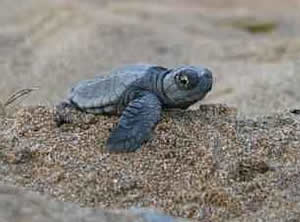
Life can be scary for endangered loggerhead sea turtles immediately after they hatch. After climbing out of their underground nest, the baby turtles must quickly traverse a variety of terrains for several hundred feet to reach the ocean.

While these turtles' limbs are adapted for a life at sea, their flippers enable excellent mobility over dune grass, rigid obstacles and sand of varying compaction and moisture content. A new field study conducted by researchers at the Georgia Institute of Technology is the first to show how these hatchlings use their limbs to move quickly on loose sand and hard ground to reach the ocean. This research may help engineers build robots that can travel across complex environments.

"Locomotion on sand is challenging because sand surfaces can flow during limb interaction and slipping can result, causing both instability and decreased locomotor performance, but these turtles are able to adapt," said Daniel Goldman, an assistant professor in the Georgia Tech School of Physics. "On hard-packed sand at the water's edge, these turtles push forward by digging a claw on their flipper into the ground so that they don't slip, and on loose sand they advance by pushing off against a solid region of sand that forms behind their flippers."

Details of the study were published online on February 10, 2010 in the journal Biology Letters. This research was supported by the Burroughs Wellcome Fund, National Science Foundation, and the Army Research Laboratory.

In collaboration with the Georgia Sea Turtle Center, biology graduate student Nicole Mazouchova studied the movement of sea turtle hatchlings of the species Caretta caretta at Jekyll Island on the coast of Georgia. She and research technician Andrei Savu worked from a mobile laboratory that contained a nearly three-foot-long trackway filled with dry Jekyll Island sand.

The trackway contained tiny holes in the bottom through which air could be blown. The air pulses elevated the granules and caused them to settle into a loosely packed solid state, allowing the researchers to closely control the density of the sand.

In addition to challenging hatchlings to traverse loosely packed sand in the trackway, the researchers also studied the turtles' movement on hard surfaces -- a sandpaper-covered board placed on top of the sand. Two high-speed cameras recorded the movements of the hatchlings along the trackway, and showed how the turtles altered their locomotion to move on different surfaces.

"We assumed that the turtles would perform best on rigid ground because it would not give way under their flippers, but our experiments showed that while the turtles' average speed on sand was reduced by 28 percent relative to hard ground, their maximal speeds were the same for both surfaces," noted Goldman.

The researchers' investigations showed that on the rigid sandpaper surface, the turtles anchored a claw located on their wrists into the sandpaper and propelled themselves forward. During the thrusting process, one of the turtle's shoulders rotated toward its body and its wrist did not bend, keeping the limb fully extended.

In contrast, on loosely packed sand, pressure from the thin edge of one of the turtle's flippers caused the limb to penetrate into the sand. The turtle's shoulder then rotated as the flipper penetrated until the flipper was perpendicular to the surface and the turtle's body lifted from the surface.

"The turtles dug into the loosely packed sand, lifted their bellies off the ground, lurched forward, stopped, and did it again," explained Goldman.

To extend their biological observations, Goldman and physics graduate student Nick Gravish designed an artificial flipper system in the laboratory. The flipper consisted of a thin aluminum plate that was inserted into and dragged along the trackway filled with Jekyll Island sand. Calibrated strain gauges mounted on the flipper provided force measurements during the dragging procedure.

"Our model revealed that a major challenge for rapid locomotion of hatchling sea turtles on sand is the balance between high speed, which requires large inertial forces, and the potential for failure through fluidization of the sand," explained Goldman. "We believe that the turtles modulate the amount of force they use to push into the sand so that it remains below the force required for the ground to break apart and become fluidlike."

Goldman and his team plan to conduct further field studies and laboratory experiments to determine if and how the turtles control their limb movements on granular media to avoid sand fluidization. They are also developing robots that move along granular media like the sea turtle hatchings.

"These research results are valuable for roboticists who want to know the minimum number of appendage features necessary to move effectively on land and whether they can just design a robot with a flat mitt and a claw like these turtles have," noted Goldman.

Saturday, February 27, 2010

How Can Accidental Captures of Loggerhead Turtles Be Reduced?


Spanish scientists have studied interactions between the loggerhead turtle (Caretta caretta) and fishing gear such as longline hooks used at the water surface, mass beachings, and the effects of climate change on these animals. In order to reduce captures of this marine species without causing economic losses for fishermen, the scientists are proposing that fishing in the summer should only be carried out by night and in areas more than 35 nautical miles from land.

Populations of loggerhead turtles (Caretta caretta) are in decline all over the world, and particularly in the Mediterranean Sea, where more than 20,000 animals are accidentally caught each year. Finding responsible and sustainable fisheries solutions was one of the prime objectives of this research study, published in the latest issue of the Journal of Applied Ichthyology.

Researchers from the Spanish Institute of Oceanography (IEO) in Malaga, the University of Malaga (UMA) and the Sea Classroom, also in Malaga, tested whether using different kinds of animal bait would reduce captures of loggerhead turtles, and how these changes could impact on fishing yields.

The scientists used real commercial fisheries data taken by scientific observers on board fishing boats. The results were clear. "Using fish as bait could greatly reduce incidental catches of loggerhead turtles, but could also severely affect catches of swordfish," José Carlos Báez, lead author and a researcher at the IEO, said.

The research team also showed that stopping using small molluscs such as squid as bait could not ensure that incidental catches of loggerhead turtles would be prevented, since "as an opportunistic predator it also preys on hooks baited with fish, and can find these more easily when molluscs are used," explains the expert.

The study proposes other measures that, the researchers say, would not involve modifying the equipment used in any way that "could result in low economic yields because of a decline in fish catches," says Báez. These techniques would reduce the number of turtles caught while maintaining fishermen's profits.

"Most accidental catches happen during the day, more than 35 nautical miles from the coast, and in the summer, meaning that it would be enough to limit longline fishing at these times and places in order to drastically reduce captures of this species," says Báez, who adds that these measures should be tested before being adopted.

Longline fishing is practised by 356 vessels in Spanish waters, and provides employment for many coastal towns. However, accidental captures of species such as the loggerhead turtle are also damaging to fishermen's interests, because of the economic losses caused and the time spent in freeing the turtles.

Sri Lanka pledges to protect sea turtles


The Sri Lankan government says that it is concerned about the welfare of sea turtles which live and breed on the island's southern coastline.
The authorities say turtle hatcheries are operating there which contravene conservation laws and that they will prosecute those people involved.
Sri Lanka is a vital habitat for sea turtles as five of the seven species come ashore here to lay their eggs.
Watching adult and newly-hatched turtles is also popular with tourists.
That seems to be contributing to the problems faced by these endearing reptiles.
The Sri Lankan Daily Mirror Online website says in a new report that hatcheries which use them for commercial or leisure purposes are harming the species.
Dead hatchling
Environment Minister Champika Ranawaka says that wildlife officers have informed all hatcheries that selling the turtles or using them as meat or for any other commercial purpose is illegal.
"They can only be used for educational purposes," he said. "We've investigated the illegal places and given them warnings not to do that."

Senior wildlife official Sarath Dissanayake told the BBC that turtle hatchlings should have the freedom to walk over the beach to the sea, but hatcheries were illegally putting walls and barriers in their way.
A tourist said he had recently been at a facility where guests were encouraged to pick up baby turtles and "set them free" into the ocean.
He said the place was like a zoo and that at least one hatchling appeared to be dead.
But one hatchery owner told the Daily Mirror Online he is protecting the animals, not profiting from them.

"They have asked us to hatch them on the beaches," he said, "but we can't do that.
"If we wanted to do that, we'd need at least 20,000 soldiers guarding these turtles, because people are hungry for them, most use them as meat."
But the authorities are not convinced. They are preparing new guidelines on how turtle hatcheries should be maintained and say that those who violate them will be prosecuted.By Charles Haviland BBC News, Colombo

Friday, February 26, 2010

Field study exposes how sea turtle hatchlings use their flippers to move quickly


Life can be scary for endangered loggerhead sea turtles immediately after they hatch. After climbing out of their underground nest, the baby turtles must quickly traverse a variety of terrains for several hundred feet to reach the ocean.While these turtles' limbs are adapted for a life at sea, their flippers enable excellent mobility over dune grass, rigid obstacles and sand of varying compaction and moisture content. A new field study conducted by researchers at the Georgia Institute of Technology is the first to show how these hatchlings use their limbs to move quickly on loose sand and hard ground to reach the ocean. This research may help engineers build robots that can travel across complex environments."Locomotion on sand is challenging because sand surfaces can flow during limb interaction and slipping can result, causing both instability and decreased locomotor performance, but these turtles are able to adapt," said Daniel Goldman, an assistant professor in the Georgia Tech School of Physics. "On hard-packed sand at the water's edge, these turtles push forward by digging a claw on their flipper into the ground so that they don't slip, and on loose sand they advance by pushing off against a solid region of sand that forms behind their flippers."Details of the study were published online on February 10, 2010 in the journal Biology Letters. This research was supported by the Burroughs Wellcome Fund, National Science Foundation, and the Army Research Laboratory.In collaboration with the Georgia Sea Turtle Center, biology graduate student Nicole Mazouchova studied the movement of sea turtle hatchlings of the species Caretta caretta at Jekyll Island on the coast of Georgia. She and research technician Andrei Savu worked from a mobile laboratory that contained a nearly three-foot-long trackway filled with dry Jekyll Island sand.The trackway contained tiny holes in the bottom through which air could be blown. The air pulses elevated the granules and caused them to settle into a loosely packed solid state, allowing the researchers to closely control the density of the sand.In addition to challenging hatchlings to traverse loosely packed sand in the trackway, the researchers also studied the turtles' movement on hard surfaces -- a sandpaper-covered board placed on top of the sand. Two high-speed cameras recorded the movements of the hatchlings along the trackway, and showed how the turtles altered their locomotion to move on different surfaces."We assumed that the turtles would perform best on rigid ground because it would not give way under their flippers, but our experiments showed that while the turtles' average speed on sand was reduced by 28 percent relative to hard ground, their maximal speeds were the same for both surfaces," noted Goldman.The researchers' investigations showed that on the rigid sandpaper surface, the turtles anchored a claw located on their wrists into the sandpaper and propelled themselves forward. During the thrusting process, one of the turtle's shoulders rotated toward its body and its wrist did not bend, keeping the limb fully extended.In contrast, on loosely packed sand, pressure from the thin edge of one of the turtle's flippers caused the limb to penetrate into the sand. The turtle's shoulder then rotated as the flipper penetrated until the flipper was perpendicular to the surface and the turtle's body lifted from the surface."The turtles dug into the loosely packed sand, lifted their bellies off the ground, lurched forward, stopped, and did it again," explained Goldman.To extend their biological observations, Goldman and physics graduate student Nick Gravish designed an artificial flipper system in the laboratory. The flipper consisted of a thin aluminum plate that was inserted into and dragged along the trackway filled with Jekyll Island sand. Calibrated strain gauges mounted on the flipper provided force measurements during the dragging procedure."Our model revealed that a major challenge for rapid locomotion of hatchling sea turtles on sand is the balance between high speed, which requires large inertial forces, and the potential for failure through fluidization of the sand," explained Goldman. "We believe that the turtles modulate the amount of force they use to push into the sand so that it remains below the force required for the ground to break apart and become fluidlike."Goldman and his team plan to conduct further field studies and laboratory experiments to determine if and how the turtles control their limb movements on granular media to avoid sand fluidization. They are also developing robots that move along granular media like the sea turtle hatchings."These research results are valuable for roboticists who want to know the minimum number of appendage features necessary to move effectively on land and whether they can just design a robot with a flat mitt and a claw like these turtles have," noted Goldman.

Monday, January 25, 2010

Thousands of turtles stunned by cold spell


More than 4,600 sea turtles were stranded by this month's prolonged cold snap in Florida and about 1,000 didn't survive but the impact on the upcoming nesting season will be minimal, at least locally and in the short-term, a state wildlife official said. Many of the cold-stunned turtles were weakened by chronic conditions and 44 were treated at Mote Marine Laboratory and Research Institute in Sarasota. But the majority — 95 percent — were cold-sensitive green turtles, an endangered species that rarely nests on area beaches. About two percent were loggerheads. Local beaches are used for nesting almost exclusively by loggerheads, a threatened species.

Wednesday, December 30, 2009

Sea turtle hospital news


There's one thing you can always count on if you're a volunteer at the turtle hospital: expect the unexpected. We've had plenty of surprises over the years, but when a functioning, juvenile Loggerhead with about half of her carapace smashed to smithereens arrived we couldn't do anything but stand there with our mouths open.

A very observant NOAA worker spotted her in the water and quickly contacted our former hospital intern (now state wildlife sea turtle biologist) Wendy Cluse for transport to our facility. And talk about a tricky transport. Ever try picking up a broken flowerpot while keeping the pot, dirt, roots and plant intact? Try doing something similar with a living, breathing one-hundred-
plus-pound sea turtle that's not happy about you trying to help her. There's no good way to move something that's been shattered into that many pieces. This was a serious impact injury; an impact with something big.

Our reaction upon admission was: this is a miracle. Not only did this girl get knocked for loop and shattered to pieces but she had been out there in that condition for at least several weeks. The exposed tissue, mostly lung, was showing signs of healing. After a thorough bath our yet unnamed patient was settled into a tank of shallow, fresh water to kill the hundreds of leeches that accompanied her to the hospital. And those were some big suckers – literally. We immediately implemented our standard regimen of antibiotics, treated her wounds and tried to keep her quiet to prevent further damage until the day of her surgery.

After an early morning wake-up call our girl was on her way to the NC State College of Veterinary medicine for some reconstructive work. Her welcoming committee included another hospital ex intern, Bobby Pederson who works as a vet tech at the college, as well as one of our turtle vets, Dr. Greg Lewbart, who would be supervising the surgery. After a lot of deriding the surgical team concentrated on locating the pieces and solving the puzzle. They slowly reassembled our miracle girl, using a total of eleven surgical steel plates and lots of screws. Many hours later "Oceans 11" (named for her eleven plates) was on her way back to KBSTRRC for a long recuperation.

Clearly, this is a critter with an amazing will to survive, and that makes our jobs a lot easier. She's got a very sweet personality and does everything she can to cooperate with us during her prolonged daily treatments. She's even beginning to get her appetite back. For a big turtle with a very large mouth she has excellent table manners, taking her food very gently and chewing well before swallowing. She's already showing signs of healing, developing scar tissue over the sections of exposed lung and other open areas. Her wounds, while numerous, were not very deep, so no major organs were seriously compromised. But it's going to take a long, long time and a lot of work on the part of our staff before Mother Ocean gets her 11 back.

Don't shop until you drop!

Log on to our website (www.seaturtlehospi
tal.org) and check out our revised and updated "Adopt A Rescued Sea Turtle" program for a unique holiday or special occasion gift. Review our list of patients up for adoption, and with one click you'll be on your way to playing a part in their feeding, medication and rehabilitation. There's a level of giving for every budget, every occasion. The hardest part? Deciding which of those smiling faces you love the most. Your feet and our turtles thank you!

Challenge yourself

We can't build our new facility without your support. One way to become part of new hospital is by signing up for "The Family Giving Challenge." First, visit our website: www.seaturtlehospit
al.org and request the official giving form from our Webmaster. Decide who's in your family, then put your game faces on and come up with some creative ways to get together your $1,000 donation for our building fund. You can be a family of one: or you can be the one in your family who spearheads this challenge. You make the rules.

When you're ready to submit your donation just fill out the form and mail it to us per the instructions. Your family name will appear on a plaque, which will be permanently displayed in our new facility. You can also make your donation anonymously if you wish. How proud will you be when you bring your friends and relatives through our new building and point to your family's name on the wall! You're literally getting in on the ground floor of our much-needed state-of-the art rehabilitation facility. Flipper hugs in advance.

You can't pay for this kind of dedication

A special thanks to all the volunteers who came through over the Thanksgiving holiday weekend when both our water and heating systems decided to take a few days off. When the heat pump that keeps our turtle water nice and toasty wouldn't toast, and various parts of our diva-like water system punked out on us our volunteers worked in shifts, long into the wee hours of the morning, to keep the turtles clean and warm. After a very long weekend things were back to normal – for now.

Questions, comments or to receive our monthly newsletter

Contact me at:
flippers@embarqmail.com with questions or comments. Contact me at: flippers@att.net to request to be added to the monthly e-mail newsletter. This column will appear in print every other week through next spring.

(Karen Sota is a volunteer at the Karen Beasley Sea Turtle Rescue and Rehabilitation Center, a.k.a. the turtle hospital. For more information on the sea turtle hospital go to www.seaturtehospita
l.org.)

Thursday, December 24, 2009

Turtles' Christmas Journey Tracked by Scientists


The journeys of two marine turtles around the world's oceans will be available to view online this Christmas, thanks to a new research project launched by the University of Exeter.

Noelle and Darwinia are two adult female leatherback turtles that nest in Gabon, Western Central Africa. The research team has fitted each turtle with a small satellite tracking device, which enables the scientists to monitor their precise movements and observe where and how deep they dive. The tracking began on 7 December 2009 and so far the turtles have travelled 800 miles between them.

Noelle and Darwinia are members of the world's largest nesting population of leatherback turtles, but their environment is threatened. The waters around Gabon are increasingly subject to industrial fishing and oil exploitation, particularly from nations outside West Africa, including countries in Europe.

Leatherbacks are of profound conservation concern around the world after populations in the Indo-Pacific crashed by more than 90 percent in the 1980s and 1990s. The International Union for Conservation of Nature (IUCN) lists leatherback turtles as critically endangered globally, but detailed population assessments in much of the Atlantic, especially Africa, are lacking.

A team from the University of Exeter, the Government of Gabon and a network of NGO's in country, including the Wildlife Conservation Society and Seaturtle Org, is now undertaking research to learn where these creatures go. The researchers hope their findings will enable government agencies to protect key areas from the impacts of fishing, oil exploitation and pollution.

The project has been funded by Defra's Darwin Initiative, which draws on the wealth of biodiversity expertise within the UK to help protect and enhance biodiversity around the world.

Dr Matthew Witt of the University of Exeter is a member of the project team. He said: "We are building a high precision model of how these amazing creatures use the seas near Gabon to breed. Our aim is that this will help inform management of fisheries and mineral exploration as well as feeding into ambitious plans to widen the network of marine protected areas in Gabon. It is only by having detailed information on where these creatures go that we can try to protect them."

"Sea turtles are the ancient mariners of the world" said Dr Howard Rosenbaum, Director of the Wildlife Conservation Society's Ocean Giants Program. "Understanding broader migration patterns and use of the nearshore habitat around their nesting beaches is a key component to their conservation."

The team hopes that the turtles' journeys will capture the public imagination over Christmas. Dr Witt continues: "It is exciting to see where these creatures travel and to delve into their lives in the vast South Atlantic Ocean. Over the Christmas period we will follow their movements with great interest with the hope that the information we gather can feed into truly useful approaches to help promote the protection of the species."

Their progress can now be viewed online:www.seaturtle.org/tracking.

About leatherback turtles

  • The leatherback is the largest sea turtle, reaching up to nearly two metres (6.5 feet) in length and 540 kg (1190 pounds) in weight.
  • Unlike other sea turtles, the leatherback does not have a hard shell. Its shell is made-up of a mosaic of small bones covered by firm, rubbery skin with seven longitudinal ridges.
  • Leatherbacks are the most widely spread marine turtles, and are found in the Pacific, Indian and Atlantic oceans, particularly in tropical regions but also in cooler higher latitude regions around Canada and the UK.
  • Leatherbacks are the deepest diving of all sea turtles. The deepest recorded dive is 1.2 km (3/4 mile), similar to that of sperm whales.
  • As with other reptiles, the sex of leatherback turtles is determined by the temperature of eggs during incubation. With leatherbacks, temperatures above 29 degrees centigrade (84 degrees Fahrenheit) will result in female hatchlings.
  • Leatherbacks are strong swimmers and tagged individuals have been known to cross ocean basins and are known to travel many thousands of kilometres in search of their jellyfish prey
    Adapted from materials provided by University of Exeter, viaEurekAlert!, a service of AAAS.

Wednesday, December 09, 2009

Record number of turtles strand on beaches


A total of 24 cold-stunned rare and endangered sea turtles were rescued off Cape Cod Bay beaches between Sunday afternoon and early this morning, one of the largest single-day totals ever, according to Massachusetts Audubon Society Wellfleet sanctuary director Robert Prescott.Five turtles were shipped Sunday to the New England Aquarium in Boston for treatment and rehabilitation - and of those, four died.As of this morning, four more endangered Kemp's ridley turtles had died at the Wellfleet sanctuary. The remaining 15, which were all ridley's except for one green sea turtle, were taken to the New England Aquarium today. At least two of those were dead on arrival, meaning their heartbeats were lower than one beat per minute.The aquarium is currently treating 52 sea turtles - one loggerhead, four greens and 47 Kemp's ridley turtles, according to spokesman Tony LaCasse.The sea turtles should already be headed back to warmer southern waters on their annual migration route, but they sometimes get caught by a change in the water and air temperature as the fall heads into winter.Their metabolisms shut down and winds push them up onto beaches where wind chill and dehydration can prove fatal.Audubon staff and volunteers patrol beaches regularly when winds blow onshore and water temperatures drop below 50 degrees.As a cold front, bringing high winds, swept over the Cape this weekend, Audubon sanctuary staff and trained volunteers marshaled to walk night patrols from Dennis to Wellfleet.They were aided by volunteers during the day and received numerous tips from others walking the beaches, Massachusetts Audubon naturalist Dennis Murley said. Most of the turtles were found on Brewster beaches.

Wednesday, November 11, 2009

Turtles are 'right-flippered'


Across a population studied by scientists, more turtles preferred to use their right rear flipper rather than their left when laying eggs. The result, published in the journal Behavioural Brain Research, is the first time a species of turtle has found to prefer one limb over another. The discovery adds to growing evidence that even lower vertebrates prefer to use one side of the body more often. Such preference is known by scientists as a "lateralised functional behaviour", and it usually indicates that an animal's brain function is also lateralised, with one side of the brain dominating control of certain tasks.We call this asymmetry in the use of the leatherback's flipper 'flipperedness' because 'handedness' is used in primates, 'footedness' in birds and 'pawedness' in rodents Studies on relatively small numbers of reptiles have shown that some species display lateralised behaviour. For example, cottonmouth snakes (Agkistrodon piscivorus) tend to prefer to coil one way more than the other, while upturned Mediterranean tortoises (Testudo hermanni) prefer to right their bodies to one side. But a team of US-based researchers led by Annette Sieg of Drexel University in Philadelphia, Pennsylvania investigated whether such a similar preference occurs across a large wild population of leatherback turtles (Dermochelys coriacea). When female leatherbacks come ashore to lay their eggs, they clear out an chamber for the eggs using repeated movements of their rear flippers. Then as they lay their eggs, they move one rear flipper back over the opening from which the eggs emerge, called the cloaca, obscuring it, perhaps to prevent the eggs being spotted by predators. The turtles do this spontaneously, and it is the only time when leatherbacks use a single flipper to perform a particular task. Dr Sieg and her colleagues observed flipper use among 361 females laying at the Playa Grande rookery on the northern Pacific Coast of Costa Rica. Over five years, they watched as these females laid eggs on 1889 occasions. Overall, the turtles preferred to use their right hind flippers 54% of the time. Although the preference is subtle, it is statistically significant, revealing a bias in flipper use at the population level.LEATHERBACK FACTS The turtles can grow up to 2.7m (8.8ft)Due to their size, adults have few natural predatorsThe species is endangeredThey are accidentally trapped in tuna and swordfish netsThey can weigh up to a tonne It also compares with the proportion of people or apes that are right or left-handed. For example, 54% of people across different cultures who have yet to learn how to write spontaneously prefer to use their right hands. In chimpanzees, 53.8% prefer to use one limb over the other. "We call this asymmetry in the use of the leatherback's flipper "flipperedness" because "handedness" is used in primates, "footedness" in birds and "pawedness" in rodents, other mammals and several amphibian species," the researchers write in the journal. The study is the first to show a limb preference among Testudinata, the group that comprises turtles and tortoises, and is the largest multi-year study of any spontaneous behaviour in a lower vertebrate. Why the turtles prefer to use one flipper more than the other remains a mystery. While researchers have recently found differences in brain structure between left- and right-handed primates, with the left and right brain hemispheres having slight structural differences, there is no evidence as yet that the left and right sides of a turtle's brain are different.

Wednesday, November 04, 2009

Remotely Operated Vehicles And Satellite Tags Aid Turtle Studies


Researchers are using a remotely operated vehicle (ROV) and satellite-linked data loggers to learn more about turtle behavior in commercial fishing areas and to develop new ways to avoid catching turtles in fishing gear. This marks the first time an ROV has been used to follow turtles in the wild to learn about their behavior and how they interact with their habitat.


Heather Haas, Henry Milliken, Kimberly Murray, and Eric Matzen of NOAA's Northeast Fisheries Science Center (NEFSC) laboratory in Woods Hole, Mass. and colleagues Ron Smolowitz and Matthew Weeks of Coonamessett Farm in East Falmouth, Mass,. have been tracking two juvenile loggerhead turtles with satellite-linked tags since August, and following other non-tagged loggerheads with an ROV.
The two juvenile loggerheads have been followed since August 24, when they were captured off New Jersey and equipped with satellite-linked data loggers that continually record water temperature, depth, location and time of day. The turtles are now about 30 miles off North Carolina.
"The most commonly caught sea turtles are juvenile loggerheads," Haas said. "Understanding their behaviors at sea, such as where they go in the water column and when, could help us reduce their chances of getting caught in nets and dredges."
With support from the commercial fishing industry, the team and fellow turtle scientist Jeff Seminoff from NOAA's Southwest Fisheries Science Center lab in La Jolla, Calif., spent three days in late August aboard the commercial scallop vessel F/V Kathy Anne from Barnegat Light, N.J., attempting to catch two juvenile loggerhead turtles to tag.
On August 24, the team captured two juvenile loggerheads and attached the data loggers to the turtles' shells. The instruments log and store data, and should stay affixed to the turtles for at least six months and could remain attached as long as 18 months or more. Data are relayed back to the lab via satellite when the animals are at the ocean's surface.
The two turtles were in the northern part of a controlled access scallop fishing area known as Elephant Trunk. Since being tagged, the turtles have been located in water depths between 165 and 230 feet and in water temperatures between 50 degrees Fahrenheit on the bottom to 72 degrees Fahrenheit on the surface. Temperatures are important because turtles get "cold-stunned" if the waters get too cold and can become stranded, a common occurrence on Cape Cod in the fall.
Haas, Milliken, Matzen and Murray all work in the Woods Hole Fisheries lab's Protected Species Branch, which studies marine mammals, sea turtles and sea birds. Loggerhead turtles, the most common sea turtle in U.S. coastal waters, are currently a threatened species under the Endangered Species Act.
Smolowitz has worked with the NEFSC group since 2002 trying to learn more about sea turtles. He has received a number of grants from the Atlantic sea scallop fishery's research set-aside program. He has also been contracted by NEFSC to develop technologies to reduce the numbers of turtles caught in scallop dredges, such as excluder devices and modified dredges that deflect turtles away from the dredge opening. The current project is being funded by NOAA Fisheries Service and the Atlantic sea scallop fishing industry.
"The commercial scallop industry understands the importance of this research and has been very supportive of our efforts to understand and reduce turtle bycatch," Milliken said. "There is still a lot to learn about turtle behavior. Knowing more would improve our ability to reduce bycatch and estimate turtle distribution and abundance. The tags and the ROV images will provide some insights, but are only the start."
Smolowitz says the F/V Kathy Anne is ideal for the turtle research studies because the commercial scallop vessel has a crow's nest atop the mast, making it easier to see turtles in the water. Approximately 50 turtles have been located and followed with the ROV. Researchers pay special attention to their behavior, including observing their feeding, swimming, how they interact with the ocean bottom and with each other.
"I view this pilot project as a chance to work out the kinks for a larger, more comprehensive effort to study turtle behavior in commercial fishing grounds," Haas said. "We timed this study to coincide with scallop fishing activity, and we are already gaining new and unique information on turtle behavioral patterns in the wild."
Adapted from materials provided by NOAA Fisheries Northeast Fisheries Science Center.

Tuesday, October 06, 2009

Sea turtle 'Suzie' swims 900km


Scientists hope the project will reveal the full range of the turtle populationA satellite tagged green turtle swam 900km in 28 days, visiting three UK overseas territories and revealing the migration routes taken by the species. The turtle, named Suzie by scientists, was released from the Turks and Caicos Islands at the end of June. She spent two months in their waters before starting to migrate. Scientists plan to tag six turtles, aiming to reveal the full range of the endangered green turtle and the critically endangered hawksbill turtle. Two male hawksbill turtles have been tagged within the past week, the most recent on Wednesday night local time. Scientists from the Turks and Caicos Islands Turtle Project have secured satellite transmitter tags to the animals' shells. These transmit when the turtles surface to breathe. Satellites receive the signals and calculate their locations. Scientists on the Turks and Caicos Islands will track the turtles' movements via the internet, using the a computer programme which can plot online maps of the animals' movements each day.Hawksbill turtle "Jerry" is released by Tommy Philips on 23 September The system revealed that Suzie began migrating on 1 September. She swam 820km straight to the British Virgin Islands. After a week there she set off again, swimming 120km to the waters of Anguilla. All three of them are UK overseas territories Suzie was caught and named by fishermen on South Caicos, according to Wesley Clerveaux, director of the country's department of environment and coastal resources. He said: "Our project officers on the island are putting up the maps of Suzie's journey on walls and notice boards each day and doing a great job of keeping the South Caicos locals informed. "They are very interested and will stop our officers in the street to ask 'where's Suzie at now?'. Other collaborators in the initiative are the School for Field Studies in Turks and Caicos, the UK-based Marine Conservation Society (MCS) and the University of Exeter. Peter Richardson of the MCS said: "Suzie's journey is a remarkable first. "She was the first turtle ever to be fitted with a satellite tag in the Turks and Caicos Islands. Her journey has told us, for the first time, that three of the UK Overseas Territories in the Caribbean, hundreds of kilometres apart, share green turtle populations." The MCS and the University of Exeter are working closely with the Turks and Caicos Islands Government to improve management of the turtle fishery. Of the UK Overseas Territories in the Caribbean, currently only the government of Anguilla has imposed a ban on all turtle fishing - for 15 years from 2005 - to allow populations to recover. By Judith Burns Science and Environment reporter, BBC news

Captive turtle found to have infectious disease


An Australian veterinary student said Monday she has documented the country's first known case of a bred-in-captivity turtle acquiring a highly infectious disease which could potentially spread to humans.Debbie Bannan said the freshwater turtle had never been in the wild, but managed to acquire a mycobacteria, a pathogen capable of infecting animals and humans, which ultimately led to its death."How did it get mycobacterium? We don't know that," she told AFP. "How does it get to a turtle in a fish tank in a little kid's room somewhere?"While there had been cases of this kind documented in the United States, this was the first of its type in Australia, she said."What was most concerning about this case was that the pathogen had never before been found in a captive aquatic reptile in Australia," she added.Bannan, who will this week present her findings to the Australian Veterinary Association's Unusual and Exotic Pet conference in Sydney, said as the popularity of so-called exotic pets grew, it was important to raise awareness about the proper care of such animals."If these infections are getting into our homes, we need to know how to recognise and treat them before they spread to other captive animals and humans," she said.

Thursday, September 24, 2009

Researchers Work To Keep Terrapin Turtle Off Endangered Species List


University of Alabama at Birmingham (UAB) researchers exploring strategies for conserving the Diamondback Terrapin along Alabama's Dauphin Island coastline are working to keep the once-celebrated turtle off the endangered species list.


The Diamondback Terrapin has been a national delicacy, a source of state taxes and a casualty of commercial development and victim of new predators, but now its prospects are improved by a UAB-based turtle hatchery that may accelerate the growth of the fledgling population.
In 2006, a UAB research team began its examination of conservation and recovery strategies for the Diamondback Terrapin in Alabama. After three years, biology professors Thane Wibbels, Ph.D., and Ken Marion, Ph.D., and doctoral student Andy Coleman concluded that the species was fighting for survival.
"This spring we began the captive rearing of the terrapin, opening up a hatchery at UAB," Coleman said. "With almost each weekly trip to Dauphin Island, we return to Birmingham with a new clutch of eggs. If we did not rescue them, raccoons would destroy as many as 90 percent of the eggs nesting naturally along the wetland beaches."
Commercial growth in the Dauphin Island area in recent decades has constricted the turtle population's habitat. New predators like raccoons and threats like crab traps also have been introduced into the environment. All of these factors have driven the animals to near-endangered species status, and losing the species could badly damage the local ecosystem by throwing the food chain out of whack. Terrapin are voracious snail eaters who use their strong jaws to break through snail shells.
"Our work along the Cedar Point marsh on Dauphin Island started with research into the threats posed by natural predators and man-made devices like crab traps, which can catch the turtles and lead to drowning," Wibbels said.
Wibbels said the early research efforts showed a population on the brink, a view confirmed in the 2004 Alabama Department of Conservation and Natural Resource's book Alabama Wildlife, in which the Diamondback terrapin was listed as a highest conservation concern.
Wibbels said the research quickly moved into its next phase: recovery of the terrapin population. Coleman, Wibbels and Marion identified strategies for decreasing predation and began field testing terrapin excluder devices (TEDs) on crab traps to protect the turtle population from becoming ensnared in the traps.
Coleman said increasing the turtle population is as important as reducing habitat threats. In the UAB hatchery, Diamondback Terrapin eggs are hatched in incubators, and the turtles are returned to Dauphin Island when they are large enough to avoid fend against birds and raccoons.
"Their natural instincts are amazing," Wibbels said. "When we return the young terrapins to the Cedar Point marsh area, they immediately head to marshland and don't give the Gulf Coast a second look - it's just an amazing example of how their instincts are hard-wired for their particular habitat."
Heading into the early 1900s, Diamondback terrapin stew was considered a top U.S. delicacy. In 1881, the New York Times reported that demand for the stew was met by a Diamondback Terrapin farm on Dauphin Island's Cedar Point. The farm was reported to be the second largest in the country for raising the Diamondback Terrapin with as many as 25,000 terrapins calling the spot home at the operation's peak. Around this time, the farm annually shipped 10,000 terrapin from Alabama to the U.S. Northeast, selling a dozen terrapin for as much as $90.
Famed biologist Archie Carr named the Diamondback terrapin the most expensive turtle in the world, pound for pound, in his 1952 Handbook of Turtles.
"To tell you how historically important the species was to the state's economy, the state legislature actually enacted a terrapin sales tax in 1923 to generate revenue," Wibbels said. "This is why we've acted so decisively; we did not want to see a part of Alabama history lost."
Funding support for this research has been provided by the Alabama Department of Conservation and Natural Resources, State Wildlife Grants Program and Alabama Center for Estuarine Studies.
Adapted from materials provided by University of Alabama at Birmingham.

Wednesday, September 16, 2009

Barcoding Endangered Sea Turtles


Conservation geneticists who study sea turtles have a new tool to help track this highly migratory and endangered group of marine animals: DNA barcodes. DNA barcodes are short genetic sequences that efficiently distinguish species from each other—even if the samples from which the DNA is extracted are minute or degraded. Now, a recently published research paper by scientists from the American Museum of Natural History and the University of Canberra, among other organizations, demonstrates that this technology can be applied to all seven sea turtle species and can provide insight into the genetic structure of a widely-dispersed and ancient group of animals."This is the first study to document DNA barcodes of all species of sea turtles from around the world," says Eugenia Naro-Maciel, Marine Biodiversity Scientist at the Center for Biodiversity and Conservation at the Museum and first author of the paper published in the early online edition of Molecular Ecology Resources. "These barcodes can be used to document biological diversity in a standardized fashion and for the conservation of these charismatic and ecologically important marine animals."DNA barcodes are relatively short segments of mitochondrial DNA. A region of the COI, or cox1 gene (cytochrome c oxidase subunit 1) has been agreed-upon by researchers as appropriate for barcoding, given that it is both highly variable and very specific. This portion of the genome mutates quickly enough to distinguish many closely related species but also slowly enough so that individuals within a species may have similar barcodes. Barcoding has been used to check the accuracy of caviar and red snapper labeling and to identify the presence of endangered whales in Asian markets, as well as other applications.Through the current study, the research team found that all seven sea turtle species can be consistently distinguished from each other by DNA barcodes. Samples were collected from 249 individuals from the Atlantic and Pacific Oceans, as well as from the Mediterranean Sea. Variation between species ranged from 1.68% to 13%, while variation within each species was relatively low, ranging from 0 to 0.9%. The genetic sequence from green turtles of the Eastern Tropical Pacific population, which can be distinguished from other green turtles by their darker coloration, was identical to one found in Australia.Analysis of the barcodes in this study used a comprehensive method based on diagnostic characters developed by co-author Rob DeSalle, curator in the Sackler Institute for Comparative Genomics at the Museum, and colleagues. This method contrasts with common approaches also employed in this study, which assign sequences to the most similar genetic group (and which may not be accurate because of the sometimes arbitrary thresholds for species identity). "With diagnostic characters, we can use gene sequences to compare different groups in a manner similar to classifying animals in the field based on their unique attributes, and in line with classical taxonomy," notes DeSalle.Naro-Maciel adds that "by identifying these animals to species and providing a standardized registry for documenting genetic diversity within this group, DNA barcoding promises to advance conservation and research." Highly migratory sea turtles face a myriad of threats worldwide from overharvest, fisheries interactions, habitat loss, climate change, pollution, disease, and other factors, and effective conservation measures are needed. The potential for DNA barcoding applications is significant: trade in the meat, eggs, leather, shell, and bone often means that the species identity or geographic origin of a product is difficult to ascertain using conventional means. Barcoding items collected by wildlife management could provide critical information and tools to those tracking international trade in wildlife products. In addition, animals trapped as fisheries bycatch or stranded onshore may be damaged beyond recognition, but identifiable through DNA barcoding. To assist in these efforts, barcode sequences from this study have been supplied to the Barcode of Life database and GenBank so that the data are freely available.This research was funded in part by the Royal Caribbean Ocean Fund, the Regina Bauer Frankenberg Foundation for Animal Welfare, and the Alfred P. Sloan Foundation. In addition to Naro-Maciel and DeSalle, authors include Brendan Reid (Columbia University), Nancy FitzSimmons (University of Canberra in Australia), Minh Le, Rob DeSalle, and George Amato (American Museum of Natural History).green sea turtle (Chelonia mydas)American Museum of Natural History

Monday, August 10, 2009

Hatching a plan to save the turtles of Terengganu (Malaysia)


IN the next year or so, a drive to Penarik will be an interesting one. And it is not just due to the scenic route, where coconut trees dot the sandy white beaches or the serene blue ocean.The Turtle Conservation Centre aims to restore depleted wild populations of freshwater, terrestrial and marine turtles in the country.It is because the site will also be home to the Turtle Conservation Centre (TCC).The objective of the centre, to be located on a 3.2ha plot, is the conservation of the species as well as a site for research and outreach programmes.Malaysian Nature Society president Tan Sri Dr Salleh Mohd Nor told the New Straits Times that these would include educational campaigns, volunteer and fund-raising activities. The TCC will also aim to restore the depleted wild populations of freshwater, terrestrial and marine turtles in the country, especially in northern Terengganu.Freshwater and marine turtle conservation work in Penarik is now carried out by three agencies, namely the state Fisheries Department, World Wide Fund for Nature Malaysia and Universiti Malaysia Terengganu. The establishment of the conservation centre in Penarik, which has been described in the past as a stronghold for the survival of river and painted terrapins, will allow for the coordination of activities by the three agencies.Even better, Yang di-Pertuan Agong Tuanku Mizan Zainal Abidin is poised to become its patron. Salleh said the king has consented to the setting up of the centre in Penarik, Setiu, "without hesitation" after the former had sought an audience with him in May."Hopefully, the centre will also become an ideal site for eco-tourism, which is a huge business worldwide and will have many spillover effects for the local community."Salleh, who is also the Sultan Mizan Royal Foundation deputy chairman, said some RM2.5 million in funds was needed to set up TCC. He said the centre would begin operations as early as next year.He said that MNS was willing to work with other related non-governmental organisations to make the centre a success. Former Universiti Malaysia Terengganu lecturer Prof Chan Eng Heng, who is the brains behind the centre, said the centre was modelled after the Mersey Tobeatic Research Institute in Nova Scotia, Canada.The centre will consist of an open-air hatchery, ponds and tanks for head-starting of freshwater turtles, breeding ponds and outdoor exhibits. Those interested in donating towards the centre can contact Salleh or Chan at MNS and http://mail.niot.res.in/cgi-bin/openwebmail/openwebmail-send.pl?sessionid=prince*mail.niot.res.in-session-0.643077025553076&folder=INBOX&page=1&sort=date&keyword=&searchtype=subject&action=composemessage&message_id=%3Ch5jh2j%2Bgm15%40eGroups.com%3E&compose_caller=read&to=enghengchan%40gmail.com respectively.