Showing posts with label conservation. Show all posts

Wednesday, April 21, 2010

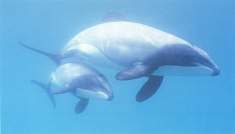
Rising conservationists fight to save pink dolphins of Hong Kong


The triangle of busy, brackish water that separates Hong Kong from the industrial belt of southern China seems an unlikely place to look for rare wildlife. But every week conservationist Janet Walker brings tourists out among the tall ships and container terminals, the refineries and one of the world's busiest airports, to get a glimpse of some unique creatures: bubblegum-pink dolphins.Few in Hong Kong knew of their existence here till the early 1990s when the government started reclaiming land in the heart of their habitat for the new airport. It was too late to halt that project, but environmentalists began to campaign to preserve the dolphins – a subspecies of the Indo-Pacific humpback – and their habitat in the face of the region's development juggernaut."Anywhere else in the world if you had pink dolphins in the backyard, the government would be making a lot of noise and preserving it," says Ms. Walker, spokeswoman for Hong Kong Dolphinwatch. "But this is Hong Kong."The effort to save the pink dolphins of the Pearl River Delta is in many ways representative of a broader battle over conservation in an island city used to extracting maximum gain from its meager real estate.Residents of a former British colony long identified with pure capitalism are increasingly asserting a claim to its more intangible assets – a unique natural and urban heritage.In the past few years, civic groups have stopped several massive reclamation projects, campaigned to preserve old street markets, and just last month, successfully lobbied to halt redevelopment of a strip of tenements from the 1950s known as tong lau in the Central district."Officials in senior positions today had their idea of development shaped in the 1970s, when building hardware was what defined Hong Kong and their careers," says Christine Loh, a former legislator and a founder of the Society for the Protection of the Harbour. "Today, it's about the software, and they don't get it… People want a better city to live in from every point of view – politics, education, health, and environment, and even social justice."Calls for preservation buildThe conservation movement here stems from the civic activism that took root in the ferment of the run-up to 1997, the year Britain returned Hong Kong to China, and it has since gathered strength.A turning point came in 2005 with the demolition of the iconic Star Ferry pier, says art curator and heritage activist John Batten. For more than 50 years, the pier hosted the ferry service that connects Hong Kong island with its mainland, a choppy seven-minute ride memorialized in countless films. The proposed relocation of the piers brought thousands of residents out to sit-ins and candlelight vigils.The pier was not saved, but the uproar showed the government how much people cared about the city's public spaces and history. It was, as Hong Kong's Chief Executive Donald Tsang acknowledged, an "awakening," one that reflected a postcolonial shift in a city once described as a "borrowed time in a borrowed place." The phrase, popularized by a 1968 book on Hong Kong, indicates the sense of transience experienced by Chinese and expat communities uncertain of the city's fate after 1997.Now "this is home, and we are here," says Ms. Loh.That shift is also demographic. Those born here in the 1970s and 1980s are coming of age now, Loh points out. They are better educated and "hooked into issues" in a way their parents never were. They are also frustrated with a political system in which full direct representation is years away, though they are more optimistic about the impact of dissent on government decisionmaking. A recent survey shows that nearly half of those under 30 think the government would or might change its policies in respone to widespread public opposition.Small victoriesDespite its victories, the conservation battle has been uphill. Many of Hong Kong's public spaces have already been lost, and what is being saved – such as the tong lau of Wing Lee Street – is seen by some as minor concessions.Similarly, conservationists were able to help avert a natural gas terminal being built in dolphin waters, but they are now struggling to halt a proposed 26-mile bridge connecting Hong Kong, Macau, and China that could cut right through their habitat.How well the dolphins are doing today depends on whom you ask, and is hard to verify because of the lack of scientific research. Officials claim they're thriving, though data from the Marine Mammal Stranding Program show the number of stranded dolphins found every year rose during the 1990s. Walker says it is harder to find them now on her tours, which she has led since 1997. At best, she suggests, their numbers are holding steady.Still, activists like Loh remain optimistic. Social movements are here to stay, she says. "[T]hey are the zeitgeist! They are irresistible."

Thursday, March 11, 2010

Malaysian turtles may face extinction


Conservationists warned Wednesday that Malaysians' voracious appetite for turtle eggs could drive the marine creatures to extinction on its shores.Turtle eggs are sold openly in markets in parts of Malaysia. Turtles once arrived in their thousands to lay eggs on Malaysian beaches, but are now increasingly rare due to poaching and coastal development.Environmental group WWF released a report saying that hundreds of thousands of turtle eggs are eaten in Malaysia every year, despite campaigns to get them off the menu."One of the contributing factors to the leatherback turtles' disappearance from our shores is egg consumption. We wouldn't want the same thing to happen to our green and hawksbill turtles," said WWF-Malaysia executive director Dionysius S.K. Sharma.The report commissioned by WWF-Malaysia and prepared by TRAFFIC Southeast Asia showed that the market demand for turtle eggs exceeded supply.It estimated that 422,000 eggs were traded in the northeastern state of Terengganu alone in 2007, more than twice the number of green turtle eggs laid in the state, and that eggs were being brought in from outside to meet demand.It said that contrary to popular belief, most consumers consider turtle eggs a "delicacy" and eat them for pleasure, not as a source of protein or for reputed medicinal or aphrodisiac effects."A change in attitude and behaviour is needed to turn the tide if we want to ensure the survival of turtles," Sharma said.Conservationists have urged the government to impose a nationwide ban on the consumption and commercial sale of turtle eggs.Sharma said that some 10,000 leatherback turtles nested in Terengganu every year in the 1950s but that this had been reduced to just 10 a year at present.

Thursday, February 18, 2010

Marine Protected Areas: A Solution for Saving the Penguin


Researchers from the Centre d'écologie fonctionnelle et évolutive (CNRS/Universités Montpellier 1, 2, 3/Montpellier SupAgro/CIRAD/EPHE) and the University of the Cape in South Africa (1) have shown that closing fishing zones in the ocean has a beneficial effect on Cape penguins, an endangered species endemic to Southern Africa that feeds exclusively on fish. This result comes from a unique experiment carried out by the researchers on two penguin colonies, with the collaboration of government authorities and the South African fishing industries.


These results are published on 10 February 2010 on the website of the journal Biology Letters.
The Cape penguin Spheniscus demersus (the only African penguin) is endangered as a result of the 60% decline in its worldwide population between 2001 and 2009. This decline can be attributed to a dearth of food, due to displacement of the banks of sardines and anchovies which these birds feed on. Competition with the fisheries which exploit the last remaining fish around the South African penguin colonies exacerbates the threat to the species. Faced with this crisis situation, and working with researchers and the South African fish industries, the South African governmental agency overseeing fisheries (Marine and Coastal Management) closed to fishing in January 2009 a 20-km radius ocean area around the largest Cape penguin colony (on the island of St Croix, Algoa Bay). A "witness" zone around another penguin colony (Bird Island), 50 km east of St Croix in the same bay, has remained open to fishing in order to enable researchers to compare penguin feeding behaviors.
The researchers studied the food-seeking behavior of 91 birds in these two colonies, thanks to GPS recorders, in 2008 and 2009, namely before and after the area was closed to fishing. The miniature recorders, in watertight hydrodynamic boxes, were attached to the feathers at the base of the birds' backs with adhesive. The goal was to record the latitude and longitude of the birds every minute, and the hydrostatic pressure (diving depth) every second. These data made it possible to calculate the effort each bird expended in searching for food, in terms of the length of time spent traveling, the distance covered, the number, depth and location of dives.
The results are striking: In 2008, before the area was closed to fishing, the St Croix penguins mainly fished (75% of dives) more than 20 km from their colony, covering up to 150 km in two days in their search for food. In 2009, on the other hand, only 3 months after the area had been closed to fishing, 70% of dives were less than 20 km away, within the protected marine area. The time devoted to searching for food also decreased by 30%, which reduced their daily energy expenditure by 40%. By way of comparison, the area within which the Bird Island penguins (the control colony) searched for food remained the same both years, with the penguins even expending more energy searching for food in 2009.
This experiment shows the immediate benefits of the creation of a Marine Protected Area for the preservation of an endangered top marine predator species. The study confirms the negative impact of industrial fishing on feeding conditions for African penguins and also demonstrates the crucial importance of Marine Protected Areas (2) on endangered species conservation. When appropriately defined, these areas can facilitate the restoration of ocean ecosystems (3) damaged by the combined effects of climate change and overfishing.
Notes:
(1) Of the Percy FitzPatrick Institute of African Ornithology.
(2) The 1992 Rio convention stipulates that 10% of marine surfaces be protected. Nonetheless, only 0,8% of these surfaces is currently reserves. In this context, the creation of Marine Protected Areas (MPA) which help preserve marine predators which feed on mobile prey such as ocean fish, is urgent. This strategy is nonetheless controversial, as it is difficult, in open water, to clearly delimit PMAs which aim to preserve species as mobiles as superior predators and their prey. The general principle is that these reserves must be very large in order to encompass the vast habitats of marine predators; this makes it more difficult to set them up and manage them.
(3) Plankton, both phytoplankton and zooplankton, fish (notably sardines and anchovies), all living organisms in the water column between the ocean surface and bottom and which play a central role in the marine ecosystem.

Friday, February 12, 2010

Marine Protected Areas : A Solution for Saving the Penguin


Researchers from the Centre d'écologie fonctionnelle et évolutive (CNRS/Universités Montpellier 1, 2, 3/Montpellier SupAgro/CIRAD/EPHE) and the University of the Cape in South Africa (1) have shown that closing fishing zones in the ocean has a beneficial effect on Cape penguins, an endangered species endemic to Southern Africa, which feeds exclusively on fish.

This result comes from a unique experiment carried out by the researchers on two penguin colonies, with the collaboration of government authorities and the South African fishing industries.

These results are published on 10 February 2010 on the website of the journal Biology Letters.

The Cape penguin Spheniscus demersus (the only African penguin) is endangered as a result of the 60% decline in its worldwide population between 2001 and 2009. This decline can be attributed to a dearth of food, due to displacement of the banks of sardines and anchovies which these birds feed on. Competition with the fisheries which exploit the last remaining fish around the South African penguin colonies exacerbates the threat to the species. Faced with this crisis situation, and working with researchers and the South African fish industries, the South African governmental agency overseeing fisheries (Marine and Coastal Management) closed to fishing in January 2009 a 20-km radius ocean area around the largest Cape penguin colony (on the island of St Croix, Algoa Bay). A "witness" zone around another penguin colony (Bird Island), 50 km east of St Croix in the same bay, has remained open to fishing in order to enable researchers to compare penguin feeding behaviors.

The researchers studied the food-seeking behavior of 91 birds in these two colonies, thanks to GPS recorders, in 2008 and 2009, namely before and after the area was closed to fishing. The miniature recorders, in watertight hydrodynamic boxes, were attached to the feathers at the base of the birds' backs with adhesive. The goal was to record the latitude and longitude of the birds every minute, and the hydrostatic pressure (diving depth) every second. These data made it possible to calculate the effort each bird expended in searching for food, in terms of the length of time spent traveling, the distance covered, the number, depth and location of dives.

The results are striking: In 2008, before the area was closed to fishing, the St Croix penguins mainly fished (75% of dives) more than 20 km from their colony, covering up to 150 km in two days in their search for food. In 2009, on the other hand, only 3 months after the area had been closed to fishing, 70% of dives were less than 20 km away, within the protected marine area. The time devoted to searching for food also decreased by 30%, which reduced their daily energy expenditure by 40%. By way of comparison, the area within which the Bird Island penguins (the control colony) searched for food remained the same both years, with the penguins even expending more energy searching for food in 2009.

This experiment shows the immediate benefits of the creation of a Marine Protected Area for the preservation of an endangered top marine predator species. The study confirms the negative impact of industrial fishing on feeding conditions for African penguins and also demonstrates the crucial importance of Marine Protected Areas (2) on endangered species conservation. When appropriately defined, these areas can facilitate the restoration of ocean ecosystems (3) damaged by the combined effects of climate change and overfishing.

(1) Of the Percy FitzPatrick Institute of African Ornithology.

(2) The 1992 Rio convention stipulates that 10% of marine surfaces be protected. Nonetheless, only 0,8% of these surfaces is currently reserves. In this context, the creation of Marine Protected Areas (MPA) which help preserve marine predators which feed on mobile prey such as ocean fish, is urgent. This strategy is nonetheless controversial, as it is difficult, in open water, to clearly delimit PMAs which aim to preserve species as mobiles as superior predators and their prey. The general principle is that these reserves must be very large in order to encompass the vast habitats of marine predators; this makes it more difficult to set them up and manage them.

(3) Plankton, both phyto and zoo, fish (notably sardines and anchovies), all living organisms in the water column between the ocean surface and bottom and which play a central role in the marine ecosystem.

Monday, January 11, 2010

Steps to save rare dolphins~Hector's Dolphin


Last summer, on a yacht sailing from Lyttelton to Akaroa, something magical happened to Aescleah Hawkins.She looked overboard, and there they were: dozens of Hector's dolphins, among the world's smallest and rarest marine mammals, racing the boat."I can't really explain it. I felt this amazing longing to want to help them, because they are endangered."I couldn't physically fathom the fact that over 30 years, basically, their entire population has been wiped out through human activity."So the 15-year-old from Huntsbury, Christchurch, has swapped boat shoes for hiking boots.In March she will walk 45km in an attempt to raise $30,000 towards World Wildlife Fund's Hector's dolphin conservation efforts."What is helping me is that I am not an official, I am not older. I'm from the new generation that needs to step up and do something," says Hawkins (whose first name is pronounced "Ashley").Three years ago, conservation groups estimated there were only 7270 Hector's dolphins in the wild, from a 1970s population of more than 26,000.Extinction, says Hawkins, should take "thousands and thousands of years" - not three decades. She will walk from Lyttelton to Akaroa on March 5-7, with 11 others, including her mum, friends, and Tourism Canterbury chairman and Black Cat cruises chief executive, Paul Bingham.The Avonside Girls' High student took part in a similar walk in London when she was nine years old, raising funds for the Bengal tiger."I wanted to do something for a New Zealand endangered species. In 100 years' time, or 1000 years' time, people should still be able to see Hector's dolphins."You know, the moa, even though it's like an indigenous bird, I've never seen one."To me, it's not as special as something that's here and now. I want Hector's to be around for the here and now and in the future."The World Wildlife Fund will use any money raised to support its campaign to protect dolphins from the impacts of trawling and set net fishing.Chris Howe, WWF New Zealand executive director, says the plight of the Hector's dolphin - found only in New Zealand - is "a national conservation emergency" but scientific study had indicated that, with full protection from human threats, its population could recover.http://www.stuff.co.nz/environment/3218541/Steps-to-save-rare-dolphins

Thursday, December 31, 2009

Rescue frees Steller sea lion tethered for days to Race Rocks, unable to feed


A male Stellar sea lion entangled in ropes got help from Department of Fisheries and Oceans and Vancouver Aquarium staff.
Victoria, B.C. - A juvenile male Steller sea lion is expected to make a full recovery after being entangled in ropes that had tethered it for days at Race Rocks.

A team of marine-mammal experts performed a brief but tricky rescue on the four- to five-year-old male Thursday that ended with the mammal swimming free.

It was an unusual but fortunate situation to have the 320-kilogram animal tethered to the rocks at the ecological reserve in the Strait of Juan de Fuca and unable to swim away.

"With any kind of sedating, the [sea lions'] first response is to jump in the water and they sink and drown," said Paul Cottrell, Pacific marine mammal co-ordinator with the Department of Fisheries and Oceans.

"We got confirmation on Wednesday it was actually tethered."

Twisted rope anchored in the rocks at the surf line was wound very tightly around the animal's left flipper. That meant the sea lion had a small circle to travel but couldn't feed. The animal appeared to be underweight, said Cottrell.

"It's often unfortunately the case that with the technology we have available, we have limited options for some of these animals," said Martin Haulena, a veterinarian with the Vancouver Aquarium.

It takes time for a sedation dart to take effect, which means human helpers can't approach a creature in distress immediately, he said.

"The really great part here for us — not for the animal, obviously — was the animal was tethered to the rock. We thought it was one of the best chances we've had in a long time for disentangling a large Steller sea lion."

There were significant challenges in getting close to the sea lion to deliver the dart while fighting currents on bouncy seas, Haulena said.

A fisheries officer took the rescuers out from Pedder Bay and navigated the swift currents and big swells where the sea lion was tethered.

The crew had to work fast after giving the sea lion a drug reversing the effects of the sedative while they worked to get the rope off its flipper.

"The sea lion was able to lift its head and keep breathing but wasn't really able to generate any big motions," Haulena.

The operation took a very short time, he said. Normally, they would have taken blood sample for further analysis but this time they decided not to delay things more than necessary.

The wound appeared clean and has a good chance of healing, Haulena said.

"Based on quite a few entanglements we've done, I'd say this animal has a really good chance of recovery," he said.

This is about as far from a clinical setting as you can get but it can be interesting, Haulena said. "That's the fun work — we apply medicine to neat species in bizarre places."

Race Rocks is a prime place to spot entangled Steller sea lions because they like to gather there and are visible by boaters and the Lester B. Pearson College's eco-guardian.

This one, once released, appeared a little dopey but had no trouble swimming away, said Cottrell.

This incident highlights the dangers man-made materials pose to marine fish and animals, he said.

Wednesday, December 30, 2009

Zoning the Ocean May Help Endangered Whales to Recover


Scientists in Scotland, Canada and the US have proposed a new method to identify priority areas for whale conservation. The team's findings, published in Animal Conservation, suggest that even small protected areas, identified through feeding behaviour, can benefit highly mobile marine predators such as killer whales.

"There are enormous challenges associated with setting conservation priorities for such mobile and migratory species as whales," said lead author Erin Ashe, a PhD student at the University of St Andrews. "However the topic was important enough to bring together 200 managers, scientists, and government and NGO representatives from 40 countries for the first International Conference on Marine Mammal Protected Areas."

The annual censuses conducted by the Center for Whale Research indicate that the endangered southern resident killer whale population found in the waters of British Columbia, Canada and Washington State, USA now numbers only 87 animals. In addition to high contaminant levels, food limitation and repeated disturbance from boats represent serious threats to the whales' recovery.

Throughout the study, co-authored with Drs Dawn Noren, NOAA NMFS Northwest Fisheries Science Center and Rob Williams, University of Washington, Ashe mapped locations where killer whales were observed feeding.

"Protecting even small patches of water can provide conservation benefits, as long as we choose the spots wisely," said Ashe. "We followed individually recognisable whales for hours on end and mapped where they were engaged in resting, feeding and social activities."

The team realised that feeding habitat is important to these whales for two reasons. Chinook salmon, the preferred prey of the whales, has also declined in the region and the whales are thought to be food-limited. Also, killer whales are more responsive to whale watching boat traffic when engaged in feeding activities than when they are travelling.

The authors observed that these two conservation threats are linked, so mitigation measures ought to consider the threats simultaneously. They argue that management strategies to protect feeding hotspots should confer greater conservation benefit than those that protect habitat generically.

The team's research identified a small area in which whales were almost three times as likely to be feeding as they were in the rest of the region. By interviewing managers and environmental educators, the team were able ensure their candidate area was large enough to be biologically meaningful while being small enough to allow effective management of human activities within those boundaries. This information could also be incorporated into NOAA Fisheries' recent proposal to create a Marine Protected Area for killer whales.

For some species, critical habitat is immediately apparent from casual observation. Killer whales strand on special beaches in Patagonia (Argentina) to capture seals. A few key lagoons provide obviously important breeding habitat for grey whales in Baja, Mexico. In most cases, identifying critical habitat for whales, dolphins and porpoise is complex, and requires statistical analysis.

"Ashe et al.'s research suggests that the successful conservation of southern resident killer whales depends on paying attention to their feeding behaviour," said Erich Hoyt, Head of the Critical Habitat MPA Program at the Whale and Dolphin Conservation Society and author of Marine Protected Areas for Whales, Dolphins and Porpoises. "Their research has cleverly indicated a relatively small MPA that could nevertheless be helpful here -- especially if the proposed no-go area applies to all boat traffic (except for emergency situations). MPAs are rarely the complete answer. So much more will need to be done here to ensure the future supply of Chinook salmon that these whales depend on."

"Zoning the ocean is a new concept and is rife with human conflict," said Dr Joe Gaydos, science advisor to Puget Sound Partnership and Chief Scientist for the SeaDoc Society. "Science is our most objective tool for balancing species recovery and human needs and work like Ashe's is critical if we're going to ask boaters and fishermen to leave important areas for the whales."

Tuesday, September 08, 2009

FWC urges manatee awareness on Labor Day weekend


Labor Day weekend means that more boaters than ever will be sharing the waterways with Florida's endangered manatee. As of Sept. 2, the Florida Fish and Wildlife Conservation Commission (FWC) reports 340 manatees have died in 2009, with 73 of those fatalities resulting from watercraft strikes. The FWC reminds boaters to be extra cautious and obey manatee speed zone signs as they head out for the holiday weekend on the state's waterways. During the warm weather, as manatees move throughout Florida's estuaries and rivers, boaters can help keep the manatees safe by following a few simple guidelines. "We ask boaters to stay in marked channels, wear polarized sunglasses to improve visibility below the water surface and obey posted boat-speed zones," said Kipp Frohlich, leader of the FWC's Imperiled Species Management Section. "Using poles, paddles or trolling motors when in close proximity to manatees and having someone onboard scan the water when under way can go a long way to protecting manatees from harm." Boaters should scan the water near or in front of the boat - looking for swirls resembling a large footprint, a repetitive line of half-moon swirls, a mud trail or a snout or fluke (tail) breaking the water's surface. "Manatee protection is a high priority for the FWC," said Carol Knox, manatee management-plan coordinator. "We are committed to conservation actions that reduce the number of human-caused manatee deaths." Enforcement of manatee protection zones and efforts to inform boaters about manatee conservation also is a priority for FWC's law enforcement officers. Besides slowing down, obeying speed zones and following the FWC's recommendations, residents can help manatees survive by purchasing the specialty manatee license plate. The funds collected for these plates go directly into manatee research and conservation. If you see a manatee in distress or a dead manatee, please call the FWC Wildlife Alert Hotline at 888-404-FWCC (3922). The FWC urges boaters to be on the lookout this weekend for manatees in coastal estuaries and rivers with access to either the Gulf of Mexico or Atlantic Ocean.(FWC photo)

Thursday, July 30, 2009

Scotts Valley Man Gets Personal with Whales to Stop Whaling


Scotts Valley, Calif- Committed to Whale conservation through the arts Bryant Austin of Scotts Valley travels the world taking photos of whales that no one has ever dared to take before.What makes Austin's work stand out? He is the only person in the world to take high resolution life-size underwater photographs of whales and he is self taught. A series of photographs are composed along the whale's body at distances less than eight feet. The resulting images are then digitally blended together to form a seamless high resolution to-scale photograph.But committed to preservation Austin says "Hopefully I wont be the only one for much longer, I want more people to explore this work and these compositions." Most people have only ever seen about 10% of the whale. By communicating their true-scale and depth Austin hopes to unveil their mystery. Entire seasons are invested in search of whales who exhibit inquisitive and accepting behavior. Austin lets the whales come to him, "it is something entirely on their terms." According to Austin and his non-profit team, the Marine Mammal Conservation Through the Arts, sometimes they wait three months developing relationships with the whales. Once they trust him, he is able to capture them at their most relaxed, from just feet away. Over time he says the whales start to respect you. "They are very big, the closer they come to you the more real they become. Sometimes they reach out and touch you. As long as you remain motionless they will just swim around you" says Austin. Austin's collection is scheduled for touring exhibitions in Norway, Japan, and the annual International Whaling Commission meetings. "I am interested in serving audiences that have no interest in whales, who have no reason to be moved by whales" He plans to exhibit his work in Whaling nations to help raise awareness of the great mammal. He says that is important for people to see whales in this way so that they can have a memory of them so that they start to understand them.

Wednesday, July 29, 2009

New regs proposed for Puget sound killer whales

NOAA's Fisheries Service is proposing new rules on vessel traffic aimed at further protecting Southern Resident killer whales in Washington's Puget Sound. These large marine mammals, the subject of intense curiosity from kayakers to tourists crowding the decks of commercial whale-watching vessels, were added to the Endangered Species list in late 2005.The proposed rules would prohibit vessels from approaching any killer whale closer than 200 yards and forbid vessels from intercepting or parking in the path of a whale. In addition, the proposed regulations would set up a half-mile-wide no-go zone along the west side of San Juan Island from May 1 through the end of September where generally no vessels would be allowed."The idea here is to give these remarkable animals even more real, meaningful protection," said Barry Thom, acting head of the agency's Northwest regional office. "Without it, we would undercut the hard work we are all doing to recover the species by improving the sound's water quality and recovering salmon, the killer whale's primary food."The fisheries agency said there would be exemptions to the rules for some vessels, including those actively fishing commercially, cargo vessels travelling in established shipping lanes, and government and research vessels. The no-go zone would also have limited exceptions for land owners accessing private property adjacent to it.While Southern Resident whales are also threatened by degraded water quality in the sound and lack of prey, primarily salmon, biologists have known for years that vessel traffic may be tied to their low numbers.The whales, which depend on their highly sophisticated sonar to navigate and find food, can be affected by underwater noise from boats and disturbed by vessels that approach too close or block their paths. The population peaked at 97 animals in the 1990s and then declined to 79 in 2001. It currently stands at 85 whales. The agency's recovery plan, released in early 2008, calls for actions to reduce disturbance from vessels.If adopted, the earliest the rule would take effect would be May 2010. The agency said it will hold public meetings Sept. 30 in Seattle and Oct. 5 in Friday Harbor for people to learn more about the proposed rules. The public comment period on them closes Oct. 27.NOAA understands and predicts changes in the Earth's environment, from the depths of the ocean to the surface of the sun, and conserves and manages our coastal and marine resources.

Telur Rangers hit the road to save turtles (Malaysia)


All it took was a website, and turtles now have three young women fighting to keep them alive.Chong Heuy Meim, 29, Nelleisa Omar, 26, and Grace Duraisingham, 26, will be travelling throughout Peninsular Malaysia to collect 100,000 signatures from Malaysians in support of WWF-Malaysia's "Egg=Life" campaign.Their mode of transport – a decked-out Volkswagen Beetle, sponsored by AMC Motors.Calling themselves Telur Rangers, the group will stop at various states to educate the public on turtle conservation and to obtain signatures for the WWF petition calling for a ban on the sale and consumption of turtle eggs."I was sent a website on the plight of the turtles and decided to do something about it. After talking to my colleague (Huey Meim), we came up with this idea. We approached WWF-Malaysia with it and they loved it," said Nelleisa.News of the road trip reached Grace, a field biologist for WWF who is passionate about turtles. She immediately jumped at the chance to be part of the project."If we can get people to change their mindset and stop eating turtle eggs, it's a huge step," said Grace.According to WWF-Malaysia, there were 10,000 leatherback nests in Rantau Abang each year during the 1950s but there are now less than 10.The trip began at Carrefour, Tropicana City Mall here, yesterday and will end on Aug 8.To find out the Telur Rangers' schedule and follow them on their journey, visit their daily-updated blog at http://www.telurrangers.blogspot.com/

Monday, July 06, 2009

Coalition of Conservation Organizations, Scientists Calls on White House and Congress to Protect Corals

The Coral Reef Alliance, Greenpeace USA, WWF, Sierra Club, and SeaWeb are among a large coalition of 44 conservation organizations and more than 100 marine scientists urging the White House and U.S. Congress to undertake strong coral protection. San Francisco, California (PRWEB) July 2, 2009 -- The Coral Reef Alliance (http://www.coral.org) has created a coalition of 44 marine conservation and stakeholder groups and 117 marine scientists to ask the White House and U.S. Congress to undertake the following measures for coral reef protection: Reauthorization of the U.S. Coral Reef Conservation Act of 2000; Enactment of meaningful reductions in carbon dioxide emissions; Effective conservation of at least 30 percent of coral reef and reef-associated coastal resources in U.S. states and territories using marine protected areas; and Support for ocean education and citizen-science programs to create an educated public that understands and is committed to ocean conservation.Leading scientists and conservationists across the nation have joined the coalition, which has sent signed letters to the White House and the U.S. Congress, urging them to act. The coalition includes groups such as The Ocean Foundation, Center for Biological Diversity, World Wildlife Fund, Reef Check Foundation, NAUI and PADI Worldwide, Fugro Earth Data, Surfrider Foundation, and Sierra Club. "The major threats to coral reefs are well known and the Coral Reef Conservation Act is an opportunity to address them," said Brian Huse, Executive Director of the Coral Reef Alliance (CORAL). "Through this important legislation, Congress has a fantastic opportunity to advance the protection of these important and irreplaceable marine ecosystems." Despite their appearances, corals are neither rocks nor plants. Corals are animals that provide marine species with food, fertile habitat for reproduction, and safe havens from predators. Reefs provide more than $15 billion in fisheries and tourism services around the world, and one billion people in Asia alone depend on fish caught in coral reef waters. Coral reefs are in decline around the world. A report issued last month states that the overall live coral cover for reefs in the Florida Keys has diminished by 50 to 80 percent in the past ten years. Many factors have influenced the decline of coral reefs, including climate change, overfishing, nutrient pollution, vessel impacts, invasive species, and disease. Scientists say that 20 percent of the world's coral reefs have already been destroyed, and another 24 percent may be lost within our lifetime if human impacts on corals are not reduced."Global action is needed to reduce greenhouse gasses and ensure the future of coral reefs," said Dr. Andrew Baker of the University of Miami--one of the 117 scientists who signed the letters. The U.S. Coral Reef Conservation Act is currently awaiting reauthorization in Congress. The legislation is sponsored by Representative Madeleine Bordallo of Guam, and was marked up by the House Committee on Natural Resources in April 2009. Similar legislation awaits introduction in the Senate. "Movement in the Senate is needed now for timely passage of this important legislation," said Brian Huse. "We are urging constituents to contact their congressional representatives and ask them to make corals legislation a priority in the 111th Congress." The Act currently authorizes grants for coral reef conservation activities. New provisions include increasing the status of protection for corals in all U.S. waters; supporting community-based approaches to coral reef stewardship; strengthening U.S. international coral reef conservation efforts; and authorizing increased funding to protect these threatened habitats. The Coral Reef Alliance (CORAL) unites and empowers communities to save coral reefs. It provides tools, education, and inspiration to residents of coral reef destinations to support local projects that benefit both reefs and people.

Thursday, May 21, 2009

Conservation Groups Welcome Government’s ‘First Big Step’ to Protect Coral Sea


Conservation groups today welcomed the announcement by Federal Environment Minister Peter Garrett to establish a Conservation Zone over the entire Coral Sea within Australian waters and called on the Minister to ensure sufficient resources for his Department to carry out a full and prompt assessment of the area.The conservation groups believe the Minister's announcement signals a clear intent by the Government to permanently protect this tropical marine jewel in its entirety, a decision that would make the Coral Sea the largest protected area on Earth."Despite its environmental and historic importance, less than one percent of Australia's Coral Sea is protected from extractive industries and its future is not secure," said Elise Hawthorne of the Pew Environment Group Australia. "The extraordinary historic and natural value of the Coral Sea offers the Australian Government an unparalleled opportunity to protect a vast area of the world's threatened ocean, right next to the Great Barrier Reef."In September last year, a unique alliance including Australia's leading tropical marine scientists, former Chiefs of the Navy, and regional, national and international conservation groups launched a call for the Coral Sea to be protected as a no-take marine reserve in recognition of the region's importance to Australia's national maritime history and its natural heritage.The Coral Sea has an important maritime history. In May 1942, it was the site of a naval engagement that turned the tide of World War II in the Pacific. A number of Allied and Japanese ships were sunk during the Battle of the Coral Sea and more than 200 sailors lost their lives; they should be allowed to remain undisturbed.In addition, the Coral Sea hosts spectacular coral reefs, remote islands, towering underwater mountains and deep-sea canyons. Its abundant wildlife includes approximately 25 species of whales, dolphins, sea turtles, sharks and rays; seabirds; large ocean fish such as tuna, marlin, barracuda and swordfish and a diverse range of corals and reef fish."The Coral Sea is one of the last remaining places on Earth where populations of large ocean fish - sharks, tuna and billfish - have not been drastically reduced," said Nicola Temple of the Australian Marine Conservation Society. "With 90% of large ocean fish gone from the world's oceans over the last 50 years due to overfishing, this makes the Coral Sea worthy of a high level of protection.""The proposed Heritage Park lies between the Great Barrier Reef Marine Park and our maritime boundary with Papua New Guinea, the Solomon Islands and New Caledonia. Due to its remoteness from land, the Coral Sea has remained relatively unspoiled," said Steve Ryan of the Cairns and Far North Environment Centre."The Coral Sea (within Australian jurisdiction) is about 1 million square kilometres," said Chris Smyth of the Australian Conservation Foundation. "A single large no-take reserve, like a National Park on land, is the most appropriate way to protect it, in order to conserve the highly mobile ocean species found in the area."For a full copy of An Australian Coral Sea Heritage Park report that describes the natural and maritime heritage value of the Coral Sea, see: http://www.globaloceanlegacy.org/resources/CoralSea_Web_100808.pdf Source: Pew

Wednesday, May 20, 2009

Nations launch plan to save 'Amazon of the seas'


Leaders from six nations have agreed to work jointly to save Southeast Asia's massive Coral Triangle, considered the world's richest underwater wilderness.The leaders of East Timor, Indonesia, Malaysia, Papua New Guinea, the Philippines and the Solomon Islands signed off on proposals to expand maritime sanctuaries and no-fishing zones during talks in Indonesia.The Coral Triangle Initiative calls for stronger international cooperation to combat illegal fishing and environmental destruction in an area half the size of the United States and home to half the world's coral reefs."The Coral Triangle is a globally recognised treasure. It is unique, there is nothing like it on Earth," Indonesian President Susilo Bambang Yudhoyono said of the region, which has been compared to the Amazon rainforest for its biodiversity.Scientists say a combination of climate change, overfishing and pollution is destroying ecosystems in the Triangle, which is a vital source of food for millions of people and a nursery for maritime life from turtles to tuna.Under the initiative, the littoral countries agreed to expand protected ocean reserves by millions of hectares (acres) and establish joint strategies for identifying key ecosystems and species for conservation.The initiative calls for fishing to be banned from 20 percent of each major coastal habitat in the Triangle such as coral reefs, mangrove forests and seagrass areas, but set no specific time target.It also sets targets ranging between 2012 and 2020 for the designation and establishment of "priority seascape" marine reserves and stronger legislation and planning to curb overfishing and protect threatened species.The agreement also calls for the establishment within four years of a plan to help coastal and small island ecosystems adapt to consequences of climate change such as rising sea levels, warming waters and increases in acidity.Indonesia -- a massive archipelago of 17,000 islands -- said it would set aside 20 million hectares (49.4 million acres) of maritime conservation parks by 2020, up from 13.4 million currently.The overall plan however contained no solid combined target on the protected areas.The agreement was praised by environmental groups as a rare example of high-level leaders backing an ambitious conservation plan.Conservation International head Peter Seligmann said in a statement, "in 30 years of conservation work, I have never seen anything like this; six leaders signing a commitment to protect their marine resources for the wellbeing of their citizens and future generations."A report by environmental group WWF this week said climate change could wipe out the Coral Triangle by century's end if nations do not commit to deep cuts in emissions of greenhouse gases blamed for global warming.The death of the reefs could leave more than 100 million people without livelihoods, triggering destabilising mass migrations to cities and neighbouring countries, it said.A new round of international climate change talks to replace the Kyoto Protocol will take in the Danish capital Copenhagen in December.

Tuesday, May 12, 2009

Rules Proposed To Save The World's Coral Reefs


An international team of scientists has proposed a set of basic rules to help save the world's imperiled coral reefs from ultimate destruction.Their proposal is being unveiled at the World Ocean Conference 2009 in Manado, Indonesia, where leaders of six regional governments plus Australia and the United States are meeting to declare the largest-ever marine reserve in world history, the Coral Triangle Initiative."The catastrophic decline in the world's coral reefs demands urgent management responses on two fronts," say the researchers from the Australian Research Council's Centre of Excellence for Coral Reef Studies (CoECRS), The Australian Museum, Woods Hole Oceanographic Institution, James Cook, Perpignan and the United Nations Universities and The Nature Conservancy.These are the "...reduction of immediate direct threats such as climate change, over-fishing and water pollution, and actions to protect or enhance the resilience of reef ecosystems in the face of existing and unavoidable future threats," they say.The key to saving threatened coral ecosystems is to maintain the links (connectivity) between reefs allowing larvae to flow between them and re-stock depleted areas, the team led by Pew Fellow Dr Laurence McCook of Australia's Great Barrier Reef Marine Park Authority (GBRMPA) argues."Ecological connectivity is critically important to the resilience of coral reefs and other ecosystems to which they are linked," says Dr McCook. "The ability of reefs to recover after disturbances or resist new stresses depends critically on the supply of larvae available to reseed populations of key organisms, such as fish and corals. For reefs to survive and prosper they must in turn be linked with other healthy reefs."The researchers propose six `rules of thumb' for keeping coral ecosystems viable, based on the results of research carried out in the Bohol Sea in the Philippines, the Great Barrier Reef in Australia, and Kimbe Bay in Papua New Guinea.These rules are:allow margins of error in extent and nature of protection, as insurance against unforeseen threats; spread risks among areas; aim to create networks of protected areas which (a) protect all the main types of reef creatures, processes and connections, known and unknown; (b) achieve sufficient protection for each type of reef habitat type, and for the whole region; (c) achieve maximum protection for all reef processes (d) contain several examples of particular reef types to spread the risk; protect whole reefs where possible; place buffer zones around core areas. allow for reef species to spread over a range of distances, especially 20–30 km; and use a range of conservation approaches, including marine protected areas. The rules are designed to operate in a range of situations, including where detailed scientific knowledge of local coral reefs and their species is sparse, the team says in a review article in the journal Coral Reefs. Protecting reef connectivity and allowing reef species to freely recharge depleted areas is vital to ensuring that coral reefs remain resilient in the face of mounting human and climatic pressures. To ignore the protection of connectivity until sufficient scientific data was available on all reefs would mean allowing reefs to continue to degrade for many decades to come. "The risks of inadequate management arising from ignoring connectivity are greater than those associated with any scientific uncertainty," the researchers say.The work was funded jointly by the World Bank Coral Reef Targeted Research program and the ARC Centre of Excellence for Coral Reef Studies."The Coral Triangle Initiative is one of the most important marine conservation measures ever undertaken anywhere in the world and the first to span several countries. It involves the six nations of Indonesia, the Philippines, Malaysia, Papua New Guinea, East Timor and the Solomon islands, and is as much about nation building and food security as it is about reef conservation" says Professor Terry Hughes, Director of the CoECRS, attending the Coral Triangle meeting today in Manado.The `rules of thumb' proposed in the research paper were an example of the sort of science being carried out across the region which will assist the Coral Triangle Initiative to achieve its goals, he said.

Obama won't fight global warming with bear rules


The Obama administration, which promised a sharp break from the Bush White House on global warming, declared Friday it would stick with a Bush-era policy against expanding protection for climate-threatened polar bears and ruled out a broad new attack on greenhouse gases.To the dismay of environmentalists, Interior Secretary Ken Salazar refused to rescind a Bush administration rule that says actions that threaten the polar bear's survival cannot be considered when safeguarding the iconic mammal if they occur outside the bear's Arctic home.The rule was aimed at heading off the possibility that the bear's survival could be cited by opponents of power plants and other facilities that produce carbon dioxide, a leading pollutant blamed for global warming.The Endangered Species Act requires that a threatened or endangered species must have its habitat protected. Environmentalists say that in the case of the polar bear, the biggest threat comes from pollution — mainly carbon dioxide from faraway power plants, factories and cars — that is warming the Earth and melting Arctic sea ice.Salazar agreed that global warming was "the single greatest threat" to the bear's survival, but disagreed that the federal law protecting animals, plants and fish should be used to address climate change."The Endangered Species Act is not the appropriate tool for us to deal with what is a global issue, and that is the issue of global warming," said Salazar, echoing much the same view of his Republican predecessor, Dirk Kempthorne, who had declared the polar bear officially threatened and in need of protection under the federal species law.Kempthorne at the same time issued the "special rule" that limited the scope of the bear's protection to actions within its Arctic home.The iconic polar bear — some 25,000 of the mammals can be found across the Arctic region from Alaska to Greenland — has become a symbol of the potential ravages of climate change. Scientists say while the bear population has more than doubled since the 1960s, as many as 15,000 could be lost in the coming decades because of the loss of Arctic sea ice, a key element of its habitat.Environmentalists and some members of Congress had strongly urged Salazar to rescind the Bush regulation, arguing the bear is not being given the full protection required under the species law.Others, including most of the business community, argue that making the bear a reason for curtailing greenhouse gases thousands of miles from its home would cause economic chaos.Reaction to Salazar's decision Friday was sharply divided.Alaska Gov. Sarah Palin hailed the decision as a "clear victory for Alaska" because it removes the link between bear protection and climate change and should help North Slope oil and gas development. Both of Alaska's senators and its only House member also praised the decision and rejected claims the bear won't be protected.Sen. James Inhofe of Oklahoma, a global warming skeptic and the ranking Republican on the Senate Environment Committee, applauded Salazar "for making the right call and applying a commonsense approach to the Endangered Species Act" and climate.But environmentalists and some of their leading advocates in Congress were disappointed."The polar bear is threatened, and we need to act," said Sen. Barbara Boxer, D-Calif., who chairs the environment panel, adding that she disagreed with Salazar's decision not to revoke the Bush regulation.Andrew Wetzler, director of wildlife conservation at the Natural Resources Defense Council, said the Endangered Species Act should be part of the government's arsenal in fighting climate change "and it shouldn't be unilaterally disarming itself for no reason.""For Salazar to adopt Bush's polar bear extinction plan is confirming the worst fears of his tenure as secretary of interior," said Noah Greenwald, of the Center for Biological Diversity, which along with the NRDC and Greenpeace has a lawsuit pending challenging the bear rule.Salazar noted that he has overturned a string of Bush-era regulations, including last week restoring a requirement that agencies consult with the government's most knowledgeable biologists when taking actions that could harm species. "We must do all we can to protect the polar bear," he said, but that using the species protection law "is not the right way to go." The way to deal with climate change is a broad cap on greenhouse gases, he said. Congress is considering cap-and-trade legislation forcing a reduction on greenhouse gases, and, separately, the Environmental Protection Agency has begun working on a climate regulation under the Clean Air Act. Last month, the EPA declared carbon dioxide from burning fossil fuels and other greenhouse gases a danger to public health. The last word is still to be heard on linking species protection and climate change. Earlier this week, the U.S. Fish and Wildlife Service began a review of whether the American pika, a tiny rabbit relative living in high altitudes of 10 Western states, is threatened by climate change because the mountain areas are becoming warmer. The American pika is no polar bear, but the arguments may be the same. By H. JOSEF HEBERT, Associated Press Writer H. Josef Hebert, Associated Press Writer – Fri May 8, 5:43 pm ETWASHINGTON

Killer whales face cull after finding taste for rare otters


FOR conservationists it is the ultimate dilemma. Marine biologists are discussing a cull of killer whales because the predators are destroying other endangered sea mammals. They are concerned by new research linking a huge population slump in species such as sea otters, Steller's sea lions and harbour seals to the changed feeding habits of some killer whales, or orcas, as they are also known. The main prey of these orcas has traditionally been great whales such as grey whales and sperm whales, but hunting by humans has cut the numbers of those species to far below their natural level. Professor James Estes, an expert in the population dynamics of sea mammals at the University of California, Santa Cruz, believes that, faced with a shortage of food, some groups of Pacific orcas have altered their diets. Each killer whale is capable of eating several otters or seals a day. Estes, whose research will be published in the Philosophical Transactions journal of the Royal Society, said: "Killer whales are the world's largest carnivores. They are fast and effective killers and they need a lot of food to keep going. "They live in groups and I believe some of those groups are now preying on small marine mammals like sea otters and sea lions." His views are backed by many eyewitness reports of killer whales attacking smaller mammals, some of which can be swallowed whole. Other experts have been prompted to consider culling killer whales. Callum Roberts, professor of marine biology at York University and author of The Unnatural History of the Sea, said: "Steller's sea lions and sea otters are high on the conservation agenda, and seeing past success in rebuilding populations slipping away is agonising for those who have battled to bring them back from the edge of extinction. The possibility that killer whales are responsible creates the ultimate conservation dilemma: should we kill the killers?" Estes is very cautious about such ideas, partly because he believes the science needs to be more certain and because pred-ator control programmes are seldom successful. A cull would also cause an outcry among conservationists. "Culling killer whales might solve the problem but it would have a huge political dimension. A lot of people involved in conservation are nervous about this issue," he said. Estes, however, remains deeply concerned that the current population levels of sea otters, Steller's sea lions and some seal species is so low that they are at risk of extinction. Although exact numbers are unknown, the population of these species has dwindled to about 10,000-20,000, a fraction of their natural levels. Such animals were intensively hunted for their fur, oil, meat and blubber from the 18th century onwards but their numbers began to recover after they were all given protection in the early 20th century. Last century, however, industrial whaling wiped out most of the great whale populations in the Pacific, Atlantic and Southern Ocean. "It seems likely that killer whales expanded their diets to include a higher percentage of sea otters and other sea mammals after the reduction in great whale numbers caused by postworld war two industrial whaling," said Estes. Killer whales are found in oceans around the world. Their global population is thought to be 100,000-200,000 but around 90% of these live mainly on fish. It is the remaining 10%, a separate subtype, that prey on whales and other sea mammals.

Fight to save the 'Amazon of the oceans'


With its pleasure boats dipping on the horizon and clustered tourist restaurants, the Indonesian island of Nusa Lembongan looks little like the edge of a great wilderness.But according to scientists, this small and scrubby island off Bali is one corner of a huge marine ecosystem touted as the most diverse on earth -- and a key environmental battleground for a planet grappling with climate change.The area is known as the Coral Triangle, and stretching across six nations between the Indian and Pacific oceans -- Indonesia, Malaysia, the Philippines, East Timor, Papua New Guinea and the Solomon Islands -- it is impressive in scale.About half the size of the continental United States, the triangle is home to more than half the world's coral reefs, three-quarters of its coral species and key stocks of fish that help feed the world."People have compared the Coral Triangle's biodiversity richness to the Amazon," said Abdul Halim, the head of The Nature Conservancy's (TNC) Coral Triangle Centre.But, as in the Amazon, the area's huge biodiversity is matched by a daunting set of challenges.Overfishing, climate change and impoverished communities are all taking their toll on the region.As nations meet in the Indonesian city of Manado in the coming week for the World Oceans Conference, the Coral Triangle is being touted as a key target in efforts to conserve the health of the oceans, to both battle climate change and adapt to its consequences.A meeting of leaders from the six nations of the Coral Triangle Initiative, which was formed in 2007, is set to launch a plan to save the region, which has already been pledged hundreds of millions of dollars by international donors.However, those involved in conserving the region say it will be a hard fight.Slipping under the clear waters off Lembongan, the threat of destruction can seem distant. Fish from across the colour spectrum flit among bright corals in a concentration of life unthinkable on land.Scientists say the area has withstood the pressures of human misuse and nature better than most, and that is precisely what makes it so important."It has the highest diversity anywhere on the planet, if you talk about marine life," said Lida Pet Soede, the head of environmental group WWF's Coral Triangle Initiative Network."It has the most species of corals, the most species of fish, every other marine organism.... All sorts of stuff, it has the most of it," she said.The Coral Triangle's variety of species means life here has an in-built coping mechanism to deal with outside stresses, and serves as the "nursery of the seas" for species facing collapse elsewhere, Soede said.About 30 percent of the world's tuna is caught here and populations are relatively healthy but by no means beyond threat.Unlike other massive coral reefs, such as Australia's threatened Great Barrier Reef, the area has also proved resistant to the effects of climate change, thanks to a constant welling of water between the Pacific and Indian oceans that keeps temperatures relatively stable.But as temperatures rise and industrial fishing fleets in other parts of the world are forced to ever more obscure and deep corners for dwindling catches, the stresses on the Coral Triangle are likely to prove too much, Soede said. "As reserves everywhere else are going down the pressure is on, everyone is going to want to come here," she said. "It's very likely that this will be one of the last areas where you still have significant production of seafood, but this area will not be able to feed the world. "It's not just about fish and food but the very fact of certain species that we don't even know exist... that may be the cure for HIV. "If that particular organism or particular ecosystem is gone before we figure it out, it's a big loss. About 120 million people living in the Coral Triangle depend on the seas for their livelihoods, and although they are among the greatest potential victims of the collapse of local ecosystems, they also often play the role of vandals. Spread out on thousands of islands across porous national borders, many living in impoverished communities have turned to poisoning fish with cyanide or blowing them up with dynamite, said Marthen Welly, who runs a TNC programme at Nusa Lembongan and its neighbouring islands. "Middlemen tie up the fishermen with debt for life. The fishermen have to pay back their debts by selling fish every day, but it's the middlemen who set the price and they set it as low as possible," he said. "Sometimes fishermen know that using bombs and cyanide breaks the law and wrecks the reefs, but they're also squeezed." The approach of non-governmental organisations and governments has been to try to introduce alternative livelihoods and get communities on board in protecting the environment through so-called Marine Protected Areas (MPAs). If everything goes to plan, Nusa Lembongan will soon be covered by one of the MPAs, which already spread over about 10,000 hectares (24,750 acres) in Indonesia. The area has been a relative success without outside help. Tourist dollars and the introduction of seaweed farming in the 1980s have lifted local farmers and fishermen out of desperate poverty, and put conservation on the agenda. "Before there was seaweed we could count with our hands who could eat. They were the ones with big plots of land that could plant trees, corn, coconuts," said 37-year-old seaweed farmer Wayan Suwarbawa, who is working with the TNC. "Even though we're just farmers, we're obliged to spread the importance of preserving sea ecosystems," he said. But even if other areas -- which in most Coral Triangle countries tend to be much poorer -- can replicate the successes of Nusa Lembongan, the root of the problem remains with climate change and a growing global population hungry for fish, WWF's Soede said. "If you don't take away the drivers like unsustainable consumption patterns or other influences then your conservation dollar on the ground is not going to be very effective. It's pretty much a waste," she said.

Ban may protect three Hawaii fish species


Local fishers may soon be prevented from taking three families of popular reef fish from a small section of the Maui coastline as a way to help the beleaguered corals in that area recover.The Department of Land and Natural Resources board recently approved a ban on the taking of parrotfish, surgeonfish and chubs, along with sea urchins, along a roughly one-mile section of the coast in North Ka'anapali.Members of all three herbivorous fish families and the urchins are important grazers of seaweed, which has overtaken much of the coral along that section of the shoreline.The ban, if approved by Gov. Linda Lingle, would mark the first time the state has adopted protections for specific species as a broader strategy for restoring the health of a reef in a particular area."This is a very proactive approach," said Cynthia Hunter, an assistant professor of marine biology at the University of Hawai'i-Manoa. If it proves effective, as has been the case in other places outside Hawai'i, the approach could be used elsewhere locally where similar conditions exist, Hunter said.The ban would apply to the nearshore waters from Keka'a Point to Honokowai Beach Park, and that section would become the Kahekili Herbivore Fisheries Management Area.The new marine management plan still must be approved by Lingle before it takes effect. Her spokesman yesterday said the plan's rules would go through the regular review process once received from the board.feeding also bannedRussell Sparks, education specialist with the agency's Division of Aquatic Resources' Maui office, said the coral in the affected area has declined by about 50 percent over the past 14 years, and the fish population there also is not at the level it should be, when compared with similar environments.The decline in parrotfish, surgeonfish, chubs and sea urchins has contributed to the surge in invasive seaweeds that are overtaking the corals, and the aim of the new program is to protect the fish that are critical to keeping the seaweed, or algae, in check, according to Sparks, who oversaw the development of the new management plan. He said other factors, such as land-based pollution, also have contributed to the degradation of the reefs.The Kahekili plan also would entail a ban on people feeding the fish — similar to what is in place at Hanauma Bay on O'ahu.A feeding ban is important, especially in an area with many tourists, so that the fish don't get full on artificial food and will continue their natural role of feeding on seaweed, Sparks said.Sparks said the proposal has been about two years in the making and differs from other approaches the state previously has taken to protect marine areas.In some instances, the state banned the taking of any marine life from an area, mostly because the area is considered special, such as Hanauma Bay, he said. In other instances, the state created protections for certain species because of their dwindling numbers or to resolve conflicts among ocean users.But this is the first time the state is attempting to outlaw the taking of specific species to achieve the broader goal of restoring the reef's health, Sparks said. "This approach we're doing is really ... unique," he said.hawaiians' rightsThe strategy has not been without controversy.At a public hearing in Lahaina in February, the department was criticized for singling out fishing practices.Many opponents said they believe that land-based pollution, overdevelopment and general overuse of the reefs are bigger problems affecting coral condition than overfishing. Concerns about restricting Native Hawaiian harvesting rights also were raised at the hearing."As a Native Hawaiian (who) is of this ahupua'a, we have rights to gather within our ahupua'a at any time for any reason to sustain and better our health and living conditions in any way we see fit," said Lahaina resident Ui'lani Kapu in written testimony.But scientists, fishers and others voiced support for the plan."Protecting herbivorous fish populations in an area off Kahekili should result in an increase in fish populations, an increase in fish size, a decrease in algae growth and a healthier reef ecosystem overall," wrote Alan Friedlander, a UH zoology professor.The proposal was approved unanimously by the DLNR board, Sparks said. Violations, if deemed criminal, would be classified as petty misdemeanors subject to fines. A first-time offense, for instance, would result in a fine of not less than $100.Because the reefs of the main Hawaiian Islands generally have been on the decline, scientists and others have urged the state to be more aggressive in using marine protected areas and other policies to help safeguard and restore the health of the nearshore ecosystems.By Rob Perez Advertiser Staff Writer

Tuesday, April 21, 2009

Critics of offshore drilling pack Calif. hearing


Environmentalists dressed as polar bears, sea turtles and jellyfish were among dozens of people who packed a public hearing Thursday to press Interior Secretary Ken Salazar not to open new areas of the West Coast to oil drilling.The public forum, the last of four such meetings around the country with Salazar, also drew state and federal lawmakers concerned about the effects any expansion of offshore drilling could have on the region's economy and natural beauty."Our state is saying clearly to you today, no," Sen. Barbara Boxer told Salazar at the opening of the hearing at the UC San Francisco Mission Bay campus. The California Democrat said the state's coastline is a huge economic asset "just as it is."President Barack Obama has said his focus is on the need to develop renewable energy sources — biomass, solar and wind energy and research into electric-hybrid transportation — and to shift away from oil dependence, but a sweeping ban on drilling across much of the country's coastal waters was scrapped last October.So far, Salazar has been cautious when discussing offshore drilling, and has called for more study and public input before final decisions are made.At a news conference outside the hearing, he said he hoped to be able to release details of the Obama administration's energy plan — which would set forth details about offshore and onshore development — sometime this year. He would not be more specific."My high expectations are that this will happen in 2009, and that we'll have a map and a way forward," Salazar said.Supporters of ramping up offshore oil drilling say it would provide state, federal and local governments with revenue in a down economy and help the country lessen its dependence on foreign oil."Right now we import 60 to 65 percent of our oil from a foreign country," said Joe Sparano, president of the Western States Petroleum Industry, to hisses from the audience. "There are 10 billion barrels of oil off the shore of California. That would allow us to replace California's foreign imports for 35 years."There are 1.7 billion acres offshore that could be opened to drilling for oil and natural gas under a current proposal, according to a report by the Interior Department's Minerals Management Service.